
Catalogue Search | MBRL


Are you sure you want to remove the book from the shelf?

{{itemTitle}}
715
result(s) for
"Military interrogation"
Sort by:

Interrogration, intelligence and security : controversial British techniques
Examines the origins and effects of the use of interrogation techniques known as the 'five techniques'. Through its in-depth analysis, the book reveals how British forces came to use such controversial methods in counter-insurgency, counter-terrorism and internal security contexts. This book will be of particualr interest to security professionals, academics and members of the public interested in the torture debate, intelligence, the military, counter-insurgency, counter-terrorism, foreign policy and law enforcement. -- P. [4] of cover.
Book
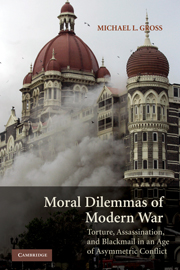
Moral Dilemmas of Modern War
Asymmetric conflict is changing the way that we practise and think about war. Torture, rendition, assassination, blackmail, extortion, direct attacks on civilians, and chemical weapons are all finding their way to the battlefield despite longstanding international prohibitions. This book offers a practical guide for policy makers, military officers, students, and others who ask such questions as: do guerillas deserve respect or long jail sentences? Are there grounds to torture guerillas for information or assassinate them on the battlefield? Is there room for nonlethal weapons to subdue militants and safeguard the lives of noncombatants? Who are noncombatants in asymmetric war? What is the status of civilians who shelter and aid guerillas? And, do guerillas have any right to attack civilians, particularly those who aid and shelter members of the stronger army? If one side can expand the scope of civilian vulnerability, then why can't the other?
eBook

Partly cloudy : ethics in war, espionage, covert action, and interrogation
Partly Cloudy: Ethics in War, Espionage, Covert Action, and Interrogation explores a number of wrenching ethical issues and challenges faced by military and intelligence personnel. It provides a robust and practical approach to analyzing ethical issues in war and intelligence operations, and applies careful reasoning to issues of vital importance today, not only for soldiers, intelligence professionals, and policy makers, but also for the citizens they serve and protect.
This new edition has been updated throughout and includes new contents, to deal with critical issues such as torturing detainees, using espionage to penetrate terrorist cells, mounting covert actions to undermine hostile regimes, practicing euthanasia on the battlefield as mercy-killing, or using targeted killings as a means to fight insurgencies.
Partly Cloudy provides an excellent introduction to the field for students, instructors, and practitioners who are interested in the ethical challenges faced by public servants.
eBook

The dark side : the inside story of how the war on terror turned into a war on American ideals
In the days immediately following September 11th, the most powerful people in the country were panic-stricken. Radical decisions about how to combat terrorists and strengthen national security were made in a state of chaos and fear, but the key players, Vice President Cheney and his powerful, secretive adviser David Addington, used the crisis to further a long-held agenda to enhance presidential powers to a degree never known in U.S. history, and obliterate Constitutional protections that define the very essence of the American experiment. This is a dramatic account of how the United States made terrible decisions in the pursuit of terrorists around the world--decisions that not only violated the Constitution, but also hampered the pursuit of Al Qaeda. Whatever the short-term gains, there were incalculable losses in terms of moral standing, our country's place in the world, and its sense of itself.--From publisher description.

Torture and Impunity
Many Americans have condemned the “enhanced interrogation” techniques used in the War on Terror as a transgression of human rights. But the United States has done almost nothing to prosecute past abuses or prevent future violations. Tracing this knotty contradiction from the 1950s to the present, historian Alfred W. McCoy probes the political and cultural dynamics that have made impunity for torture a bipartisan policy of the U.S. government. During the Cold War, McCoy argues, the U.S. Central Intelligence Agency covertly funded psychological experiments designed to weaken a subject’s resistance to interrogation. After the 9/11 terrorist attacks, the CIA revived these harsh methods, while U.S. media was flooded with seductive images that normalized torture for many Americans. Ten years later, the U.S. had failed to punish the perpetrators or the powerful who commanded them, and continued to exploit intelligence extracted under torture by surrogates from Somalia to Afghanistan. Although Washington has publicly distanced itself from torture, disturbing images from the prisons at Abu Ghraib and Guantanamo are seared into human memory, doing lasting damage to America’s moral authority as a world leader.
eBook

Consequence : a memoir
This \"is the story of Eric Fair, a kid who grew up in the shadows of crumbling Bethlehem Steel plants nurturing a strong faith and a belief that he was called to serve his country. It is a story of a man who chases his own demons from Egypt, where he served as an Army translator, to a detention center in Iraq, to seminary at Princeton, and eventually, to a heart transplant ward at the University of Pennsylvania\"--Amazon.com.
Book
Partly cloudy
Partly Cloudy : Ethics in War, Espionage, Covert Action, and Interrogation explores a number of wrenching ethical issues and challenges faced by military and intelligence personnel. It provides a robust and practical approach to analyzing ethical issues in war and intelligence operations, and applies careful reasoning to issues of vital importance today, not only for soldiers, intelligence professionals, and policy makers, but also for the citizens they serve and protect. This new edition has been updated throughout and includes new contents, to deal with critical issues such as torturing detainees, using espionage to penetrate terrorist cells, mounting covert actions to undermine hostile regimes, practicing euthanasia on the battlefield as mercy-killing, or using targeted killings as a means to fight insurgencies
eBook

The dark side : the inside story of how the war on terror turned into a war on American ideals
In the days immediately following September 11th, the most powerful people in the country were panic-stricken. Radical decisions about how to combat terrorists and strengthen national security were made in a state of chaos and fear, but the key players, Vice President Cheney and his powerful, secretive adviser David Addington, used the crisis to further a long-held agenda to enhance presidential powers to a degree never known in U.S. history, and obliterate Constitutional protections that define the very essence of the American experiment. This is a dramatic account of how the United States made terrible decisions in the pursuit of terrorists around the world--decisions that not only violated the Constitution, but also hampered the pursuit of Al Qaeda. Whatever the short-term gains, there were incalculable losses in terms of moral standing, our country's place in the world, and its sense of itself.--From publisher description.
Book
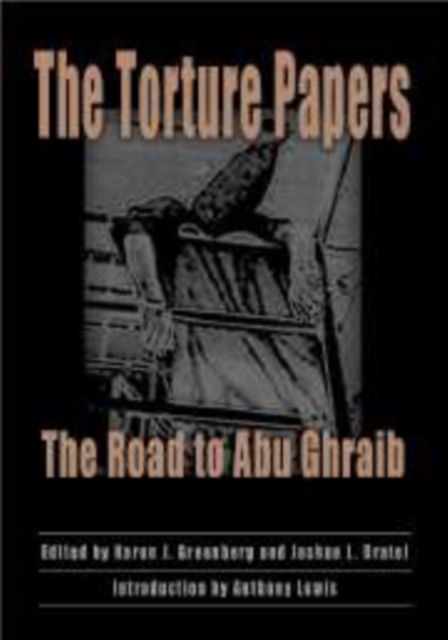
The Torture Papers: The Road to Abu Ghraib
The Torture Papers document the so-called 'torture memos' and reports which US government officials wrote to prepare the way for, and to document, coercive interrogation and torture in Afghanistan, Guantanamo, and Abu Ghraib. These documents present for the first time a compilation of materials that prior to publication have existed only piecemeal in the public domain. The Bush Administration, concerned about the legality of harsh interrogation techniques, understood the need to establish a legally viable argument to justify such procedures. The memos and reports document the systematic attempt of the US Government to prepare the way for torture techniques and coercive interrogation practices, forbidden under international law, with the express intent of evading legal punishment in the aftermath of any discovery of these practices and policies.
eBook