
Catalogue Search | MBRL


Are you sure you want to remove the book from the shelf?

{{itemTitle}}
294
result(s) for
"Minarets."
Sort by:

Variations of natural frequencies of masonry minarets due to environmental effects
It is very important to distinguish the reason of change in natural frequencies of structures either caused by a possible damage or environmental conditions (temperature and humidity). In this study, the changes in the dynamic properties of masonry and reinforced concrete minarets under environmental effects, such as temperature and humidity, were investigated. The masonry minarets of İskenderpaşa, Hacı Kasım, and Tavanlı Mosques and the reinforced concrete minarets of Karadeniz Technical University, Dilaveroğlu and Papatya Mosques in Trabzon were monitored by ambient vibration test method, and the relationship between natural frequencies and temperature and humidity was tried to be determined. For this purpose, the natural frequencies of these minarets were measured at certain intervals under different temperature and humidity conditions over a period of approximately 6 months. The vibration measurement system which was developed by our research team was used in the measurements. From the data collected by these measurements, the variation intervals of the natural frequencies (the smallest and the highest values), the percentages of change and their relations with temperature and humidity were revealed. This relationship was determined using linear–non-linear simple and multiple regression analyses. From this study, it was found that the natural frequencies change under environmental effects, such as temperature and humidity, and this rate of change was approximately 7%. There was moderate correlation in Tavanlı, Dilaveroğlu, and Papatya Minarets, and strong correlation in Hacı Kasım Minaret.
Journal Article

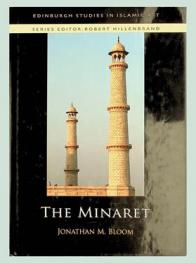
The minaret
Bloom reveals that the Minaret, long understood to have been invented in the early years of Islam as the place from which the muezzin gives the call to prayer, was actually invented some two centuries later to be a visible symbol of Islam. Drawing on buildings, archaeological reports, medieval histories, geographies, and early Arabic poetry, he reinterprets the origin, development, and meanings of the minaret and provides a sweeping historical and geographical tour of the minaret's position as the symbol of Islam.
Book
Block masonry equation-based model updating of a masonry minaret and seismic performance evaluation
This paper investigates a masonry minaret's current condition and seismic performance, namely Alacakapı Mir-Alay Şah Ali Bey (The short form is Alacakapı Minaret). Two prayer halls surround the Alacakapı minaret. One of these prayer halls was severely damaged by the Sivrice-Elazığ earthquake on January 24, 2020. The other prayer hall is moderately damaged and still waiting for restoration and reinforcing solutions. The severely damaged hall was demolished. Due to the demolished hall, boundary conditions and clear height changed. Two surfaces are considered to be fixed supports. One is the bottom side, and the other is the vertical side. To determine the current condition of the minaret, first, dynamic identification is conducted by five accelerometers. Then destructive and non-destructive tests were performed to determine material properties. After that, a solid model was generated, and model calibration was conducted. Eight different formulations were considered for the model calibration proposed in the literature, reflecting a homogenized material approach that includes brick-and-mortar units. Three different mortar strengths were considered to obtain the best material properties that demonstrate the actual situation of the minaret. Local damage is realized when comparing the finite element model and operational modal analysis results. Finally, six different earthquake records were selected to determine the seismic response of Alacakapı Minaret to determine vulnerable locations for retrofit solutions.
Journal Article


Optimisation, Synthesis, and Characterisation of ZnO Nanoparticles Using Leonotis ocymifolia (L. ocymifolia) Leaf Extracts for Antibacterial and Photodegradation Applications
This work presents a green synthesis route, which utilises extracts from an indigenous plant in South Africa, eastern and southern Africa that is understudied and underutilised, for preparing zinc oxide nanoparticles (ZnO NPs). This study involved optimisation of the green synthesis method using Leonotis ocymifolia (L.O.) extracts and performing comparative studies on the effects of using different zinc (Zn) salt precursors; zinc sulphate heptahydrate (Z001) and zinc acetate dihydrate (Z002) to synthesise the ZnO NPs. The comparative studies also compared the L.O-mediated ZnO NPs and chemical-mediated ZnO NPs (Z003). The as-prepared ZnO NPs were tested for their effectiveness in the photodegradation of methylene blue (MB) dye. Furthermore, antibacterial studies were conducted using the agar well diffusion method on Escherichia coli (E. coli) and Staphylococcus aureus (S. aureus) bacteria. The structural, morphological, and optical characteristics of the synthesised ZnO NPs were analysed using XRD, FTIR, SEM, EDS, DRS, and BET techniques. The XRD results indicated that the L.O-mediated ZnO NPs had smaller crystallite sizes (18.24–19.32 nm) than their chemically synthesised counterparts (21.50 nm). FTIR confirmed the presence of biomolecules on the surface of the L.O-mediated NPs, and DRS analysis revealed bandgap energies between 3.07 and 3.18 eV. The EDS results confirmed the chemical composition of the synthesised ZnO NPs, which were made up of Zn and O atoms. Photocatalytic studies demonstrated that the L.O-mediated ZnO NPs (Z001) exhibited a superior degradation efficiency of the MB dye (89.81%) compared to chemically synthesised ZnO NPs (56.13%) under ultraviolet (UV) light for 240 min. Antibacterial tests showed that L.O-mediated ZnO NPs were more effective against S. aureus than E. coli. The enhanced photocatalytic and antibacterial properties of L.O-mediated ZnO NPs highlight their potential for environmental remediation and antimicrobial applications, thus supporting sustainable development goals.
Journal Article

Seismic Damage Assessment of Minarets: Insights from the 6 February 2023 Kahramanmaraş Earthquakes, Türkiye
Minarets, with their tall spires and intricate architectural designs, stand as iconic symbols of religious and cultural identity in many regions worldwide. Their slender profiles and unique structural characteristics make them particularly vulnerable to seismic forces during earthquakes. Türkiye, a country rich in history and culture, was struck by two devastating earthquakes of M7.7 and M7.6 on 6 February 2023. The epicenters were in the Pazarcık and Elbistan districts of Kahramanmaraş province. These earthquakes severely affected the city’s 11 districts, causing significant structural damage. Among the affected structures were the iconic symbols of the city’s architectural heritage, the minarets. This study investigates seismic damage to minarets incurred during the 2023 earthquakes, focusing specifically on the Four-Legged Minaret located in the province of Diyarbakır. For this purpose, modal and nonlinear time history analyses were performed on the historical Four-Legged Minaret. The analysis results indicate that the Pazarcık earthquake produced higher base shear forces and peak displacement values compared to the Elbistan earthquake. Stress concentrations were predominantly observed in the transition zone between the minaret’s base and cylindrical body. The damage patterns obtained from numerical simulations showed strong agreement with field observations. The study emphasizes the critical importance of using site-representative seismic inputs, and, at the same time, identifies vulnerable regions that should be prioritized in conservation and strengthening efforts for slender historical masonry structures.
Journal Article

History of Mosque Architecture in Lahore
The mosque has served as one of the most important institutions of the Muslim world at all times. This paper outlines the religious function of a mosque and explains the architectural scheme to fulfill the required function. Numerous historical mosques have been built by the Muslims in different parts of the world. These are famous on account of their attractive architecture, attention to detail and wider horizontal as well as vertical arrangements. The city of Lahore possesses a heritage of different civilizations, which include Pathan, Mughal, Sikh and British. A number of historic mosques built from the Pathan to the British period were surveyed to analyze early mosque architecture. The study of the prominent congregational mosques, before the establishment of Pakistan and the post-independence mosques shows influence from the Prophet’s (SAW) Mosque in Madina-al-Munawara. An analysis concludes that historical mosques were magnificent and a great source of inspiration for the post-independence mosque architecture. Thus, there is a need to conserve them with all their original architectural and decorative features for future generations.
Journal Article

Structural and geotechnical investigations on Sivrice earthquake (Mw = 6.8), January 24, 2020
The earthquake in Sivrice, the district of Elazığ, took place at 20:55 (with local time, GMT+3) on January 24, 2020, with a magnitude of 6.8 in Turkey. This earthquake was felt in some districts and villages of Malatya as well as Elazig province and caused loss of life and property. After the earthquake, on-site investigations were carried out in the earthquake area. It was observed that liquefaction and lateral spreading occurred in alluvium soil deposits that are considered to be close to surface at lake shores and reservoir of the dams, but no soil-induced damage was observed in the city center. It is understood that extensive geotechnical investigations should be carried out in order to prevent damage to the structures due to soil problems in case of larger earthquakes. The common observed structural damages in the reinforced concrete (RC) buildings occurred due to short column effect, large and heavy overhangs, beam discontinuity, workmanship defects, and lack of control. Along with the masonry buildings in Elazig center and villages, damages that occurred in traditional stone masonry houses at the villages of Elazığ and Malatya had been examined, and causes had been investigated. Different levels of damage occurred widely in masonry minarets that did not meet adequate engineering service. In this study, geotechnical and structural damages have been investigated, and suggestions have been presented for the preparation of the region in question on active faults for possible earthquakes.
Journal Article

Numerical Investigation of A Historic Masonry Minaret Subjected To Seismic Excitation
Minarets which have a slender body are one of the most characteristic elements of mosques. They are sensitive structures against horizontal loads such as seismic and wind due to their thin and tall geometry. Therefore, it has been seen that significant damages have occurred in the minarets because of severe earthquakes. In this study, the seismic behavior of the historical Uşak Ulu Mosque minaret was investigated with nonlinear time history analysis. Firstly, the 3D model of the masonry minaret was created with Abaqus (Abaqus 2010). To simulate the more real behavior of the structure, a detailed survey was carried out. For the characteristic features of the materials used in the minaret, studies in the literature were taken into consideration. The damages occurring in the transition segment of the minaret were verified with the finite element method. The seismic analyses indicated that the minaret needed to be strengthen. Then, the insufficient minaret was partially strengthened with steel fabric-reinforced concrete mixture (SFRCM) composites. The Concrete Damage Plasticity (CDP) material model was used in the nonlinear time history analyses. As a result of the finite element analyses, it was concluded that the concrete minarets might be strengthened from the inner surface with the Steel Fabric-Reinforced Concrete Mixture method in safety. In addition, partial reinforcement from the inner surface of the minaret had been found to significantly reduce damage values.
Journal Article