
Catalogue Search | MBRL


Are you sure you want to remove the book from the shelf?

{{itemTitle}}
11,724
result(s) for
"Mindfulness (Psychology)"
Sort by:

Attention : beyond mindfulness
This book shows, the way we think about attention is usually through its instrumentality, by what can be achieved if we give something enough of it--say, a crisply written report, a newly built bookcase, or even a satisfied child who has yearned for engagement. Yet in losing ourselves to the objects of our fixation, we often neglect the process of attention itself. Exploring everything from attention's effects on our neurons to attention deficit disorder, from the mindfulness movement to the relationship between attention and creativity, it examines attention in action through many disciplines and ways of life. Along the way, the book offers interviews with an astonishing cast of creative people--from composers to poets to artists to psychologists--including John Luther Adams, Stephen Batchelor, Sue Blackmore, Guy Claxton, Edmund de Waal, Rick Hanson, Jane Hirshfield, Wayne Macgregor, Iain McGilchrist, Garry Fabian Miller, Alice and Peter Oswald, Ruth Ozeki, and James Turrell.
Book

The Mindful Social Worker
Mindfulness and social work values go hand in hand and this book is the perfect guide in self-care for social workers who want to incorporate mindfulness into their working lives to positive effect. Looking after your mental health in your working life is so important so that you can do the best job you can and learning mindfulness is a great way to incorporate this.
Studies have suggested that mindful social workers can have greater emotional awareness with less emotional reactivity, develop stronger interpersonal skills, and other valuable skills that are important for a relationship-based practice. The Mindful Social Worker gives the reader mindfulness guidance to not only improve themselves but also see how this can have an impact on their work.
In this book, the reader will be provided with practice tools such as meditation and relaxation techniques to help the practitioner to be more present and have a stronger propensity to reflection. Case study reflection and self-assessments are also used in this book to enable any practitioner from students and the newly qualified to the experienced social worker or care professional.
This is all done within the framework of professional standards for Social Work education and practice, showing how much mindfulness can relate to the social work profession.
eBook


Fostering Mindfulness
An essential guide to mindfulness activities and strategies that help students cultivate the skills they need for self-regulation, stress management, and learning. Simple activities and practices throughout the book are designed to strengthen areas of the brain that allow students to better manage their attention, emotions, and behavior in the classroom and beyond. Child-friendly language is used to explain mindfulness, physiology, and brain science. This practical book shows you how to incorporate mindfulness in your classroom practice in just minutes a day, and includes definitions, teaching tips, and activities for * making mindful breathing a core foundational practice * using the five senses as anchors for mindfulness * helping students recognize, name, and manage their feelings * exploring the connection between body and mind through movement * incorporating practices that encourage students to focus their attention in the present moment * creating and using a Peace Corner in the classroom that is devoted to self-regulation and self-care * developing habits of mind that are central to resilience This comprehensive resource offers step-by-step instructions, scripts, activity sheets, ready-to-use templates, and scientific insights. Based on extensive classroom experience, this highly readable book includes stories from teachers who successfully incorporate mindfulness in their classroom practice. Ideal for new and experienced teachers, Fostering Mindfulness is committed to building skills that nurture attention, cognitive and emotional development, and overall well-being.
eBook


Resilience@Work Mindfulness Program: Results From a Cluster Randomized Controlled Trial With First Responders
A growing body of research suggests that resilience training can play a pivotal role in creating mentally healthy workplaces, particularly with regard to protecting the long-term well-being of workers. Emerging research describes positive outcomes from various types of resilience training programs (RTPs) among different occupational groups. One specific group of workers that may benefit from this form of proactive resilience training is first responders. Given the nature of their work, first responders are frequently exposed to stressful circumstances and potentially traumatic events, which may impact their overall resilience and well-being over time.
This study aimed to examine whether a mindfulness-based RTP (the Resilience@Work [RAW] Mindfulness Program) delivered via the internet can effectively enhance resilience among a group of high-risk workers.
We conducted a cluster randomized controlled trial (RCT) comprising 24 Primary Fire and Rescue and Hazmat stations within New South Wales. Overall, 12 stations were assigned to the 6-session RAW Mindfulness Program and 12 stations were assigned to the control condition. A total of 143 active full-time firefighters enrolled in the study. Questionnaires were administered at baseline, immediately post training, and at 6-month follow-up. Measurements examined change in both adaptive and bounce-back resilience as well as several secondary outcomes examining resilience resources and acceptance and mindfulness skills.
Mixed-model repeated measures analysis found that the overall test of group-by-time interaction was significant (P=.008), with the intervention group increasing in adaptive resilience over time. However, no significant differences were found between the intervention group and the control group in terms of change in bounce-back resilience (P=.09). At 6-month follow-up, the group receiving the RAW intervention had an average increase in their resilience score of 1.3, equating to a moderate-to-large effect size compared with the control group of 0.73 (95% CI 0.38-1.06). Per-protocol analysis found that compared with the control group, the greatest improvements in adaptive resilience were observed among those who completed most of the RAW program, that is, 5 to 6 sessions (P=.002).
The results of this RCT suggest that mindfulness-based resilience training delivered in an internet format can create improvements in adaptive resilience and related resources among high-risk workers, such as first responders. Despite a number of limitations, the results of this study suggest that the RAW Mindfulness Program is an effective, scalable, and practical means of delivering online resilience training in high-risk workplace settings. To the best of our knowledge, this is the first time a mindfulness-based RTP delivered entirely via the internet has been tested in the workplace.
Australian New Zealand Clinical Trials Registry ACTRN12615000574549; https://www.anzctr.org.au/Trial/Registration/TrialReview.aspx?id=368296 (Archived by WebCite at http://www.webcitation.org/75w4xtrpw).
Journal Article


The Mindfulness Teaching Guide
One must embody mindfulness in order to teach it well. As mindfulness-based interventions (MBI) grow in popularity, teachers need tools for effective teaching. The Mindfulness Teaching Guide offers a thorough and practical guide for mindfulness teachers and professionals, offering a systematic approach to developing the teaching methods, skills, and competencies needed to become a proficient mindfulness teacher.
eBook

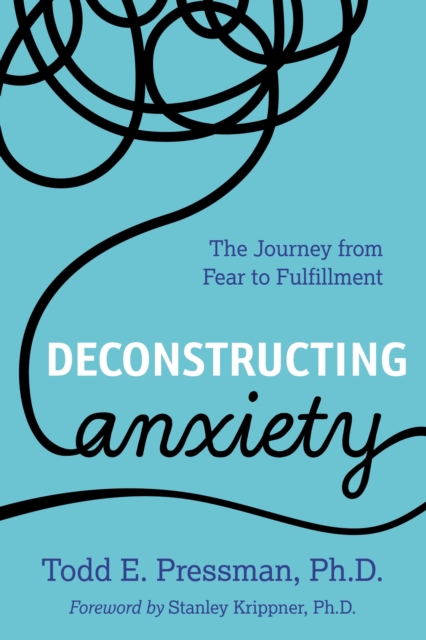
Deconstructing anxiety: a powerful new approach for understanding and treating anxiety disorders
In Deconstructing Anxiety, Pressman provides a new and comprehensive understanding of fear's subtlest mechanisms. In this model, anxiety is understood as the wellspring at the source of all clients' problems. Tapping into this source therefore holds the clues not only for how to escape fear, but how to release the very causes of suffering, paving the way to a profound sense of peace and satisfaction in life. With strategically developed exercises, this book offers a unique, integrative approach to healing and growth, based on an understanding of how the psyche organizes itself around anxiety. It provides insights into the architecture of anxiety, introducing the dynamics of the \"core fear\" (the fundamental interpretation of danger in the world) and \"chief defense\" (for protecting oneself from threat). It elaborates the ways in which clients build personalities upon the foundations of these dynamics and isolate themselves. Replete with processes that bring the theoretical background into technicolor, therapists of all schools of psychotherapeutic thought will find this book useful and applicable in their practice.
eBook