
Catalogue Search | MBRL


Are you sure you want to remove the book from the shelf?

{{itemTitle}}
5,600
result(s) for
"Minorities China."
Sort by:

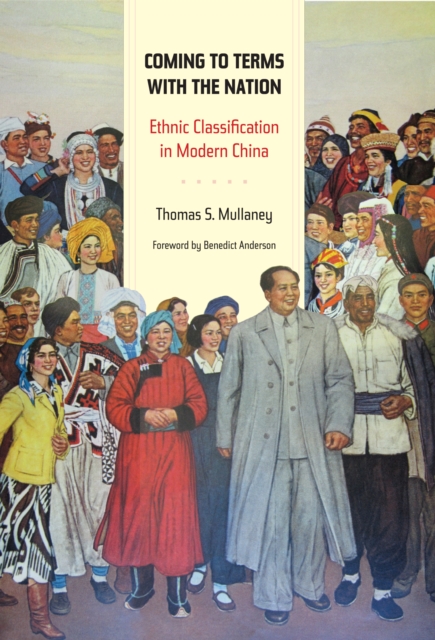
Coming to terms with the nation
China is a vast nation comprised of hundreds of distinct ethnic communities, each with its own language, history, and culture. Today the government of China recognizes just 56 ethnic nationalities, or minzu, as groups entitled to representation. This controversial new book recounts the history of the most sweeping attempt to sort and categorize the nation's enormous population: the 1954 Ethnic Classification project (minzu shibie). Thomas S. Mullaney draws on recently declassified material and extensive oral histories to describe how the communist government, in power less than a decade, launched this process in ethnically diverse Yunnan. Mullaney shows how the government drew on Republican-era scholarship for conceptual and methodological inspiration as it developed a strategy for identifying minzu and how non-Party-member Chinese ethnologists produced a \"scientific\" survey that would become the basis for a policy on nationalities.
eBook

China's Ethnic Minorities and Globalisation
China's fifty-five officially recognised ethnic minorities form about 8% of the Chinese population, with over 100 million people, and occupy over 60% of China's territory. They are very diverse, and the degree of modernisation among them varies greatly. This book examines the current state of China's ethnic minorities at a time when ethnic affairs and globalisation are key forces affecting the contemporary world. It considers the fields of policy, economy, society and international relations, including the impact of globalisation and outside influences.
1. Introduction 2. Historical Background, 1949–89 3. Minorities Politics, 1989–2002 4. The Economies of the Minorities 5. The Realm of the Mind, Religion and Education 6. Population, Women and Family 7. International Relations 8. Conclusion
Colin Mackerras is Foundation Professor in the School of International Business and Asian Studies, Griffith University, Australia. A leading China specialist, his research work focuses on two main areas: China's ethnic minorities, and its regional theatre, especially Peking Opera.
eBook


Minority languages, education and communities in China
Thebook outlines the evolution and role of minority languages locally and nationally; it investigates current educational language policies in minority areas; and it assesses the social and economic outcomes of language change for communities in contemporary China.
eBook

Modern China's Ethnic Frontiers
The purpose of this book is to examine the strategies and practices of the Han Chinese Nationalists vis-à-vis post-Qing China’s ethnic minorities, as well as to explore the role they played in the formation of contemporary China’s Central Asian frontier territoriality and border security.
The Chinese Revolution of 1911, initiated by Sun Yat-sen, liberated the Han Chinese from the rule of the Manchus and ended the Qing dynastic order that had existed for centuries. With the collapse of the Qing dynasty, the Mongols and the Tibetans, who had been dominated by the Manchus, took advantage of the revolution and declared their independence. Under the leadership of Yuan Shikai, the new Chinese Republican government in Peking in turn proclaimed the similar \"five-nationality Republic\" proposed by the Revolutionaries as a model with which to sustain the deteriorating Qing territorial order. The shifting politics of the multi-ethnic state during the regime transition and the role those politics played in defining the identity of the modern Chinese state were issues that would haunt the new Chinese Republic from its inception to its downfall.
Modern China's Ethnic Frontiers will be of interest to students and scholars of Chinese history, Asian history and modern history.
Hsiao-ting Lin is a Research Fellow at the Hoover Institution, Stanford University, USA.
Prologue 1. Early Years and Early Strategies 2. Frontier Politics in Metropolitan China 3. In Search of a New Territorial Base 4. War and New Frontier Designs 5. War and Opportunities 6. Reconfiguring Ethnic Frontier Territoriality Epilogue: The End of the Journey
eBook

Mystifying China's southwest ethnic borderlands
The Confucian notion of “Harmony with difference” (he er bu tong) has great political and cultural resonance in contemporary China, which propagates the quest for a pluralist harmony between cultural and ethnic components of society. In an attempt to examine a range of responses to this state-envisioned ideal of accommodating ethnic differences, this book analyzes the literary and cultural discourses that surround three minority regions in Southwest China — Dali, which was once the location of the ancient Nanzhao and Dali Kingdoms; the homeland of the matrilineal Mosuo known as the Country of Women; and the Tibetan areas associated with utopian Shangri-La. This book borrows Foucault’s concept of “heterotopia” to address the contradictory and often simultaneously existing views of the minority region as rich treasure house of tradition and as intractable barrier to modern development which combine to give rise to productive tensions in scholastic and artistic creations. Through reconstituting and performing the myths and legends of or about minority culture, the representations of the three places turn into heterotopias which are posed between the mythical and the real in different ways. Functioning as a self-reflective mirror, they simultaneously offer images of the actual habitats of the ethnic other which have been subject to socialist projects of modernity, and become a viable means by which to exert material effects on the real landscape. Products of a fascination with alternative social spaces, the three mystified lands all contain conceptualizations of harmony — be it spiritual, gender-based or ecological — that are conceivably absent in the imperfect actuality of the Chinese heartland. In conclusion, these aesthetically constructed spaces of the other negotiate and enrich the discourse of “Harmony with difference,” reacting to ethnic politics in PRC history and creating an audience that grows attentive to the traditions of minorities.
eBook