
Catalogue Search | MBRL


Are you sure you want to remove the book from the shelf?

{{itemTitle}}
4,759
result(s) for
"Minorities Education Social aspects."
Sort by:

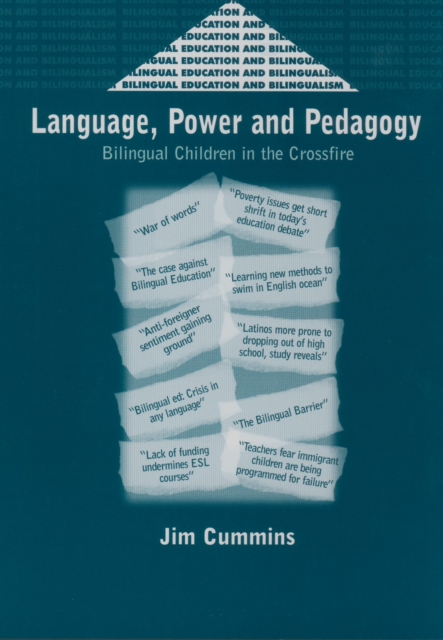
Language, power and pedagogy
Population mobility is at an all-time high in human history. One result of this unprecedented movement of peoples around the world is that in many school systems monolingual and monocultural students are the exception rather than the rule, particularly in urban areas. This shift in demographic realities entails enormous challenges for educators and policy-makers. What do teachers need to know in order to teach effectively in linguistically and culturally diverse contexts? How long does it take second language learners to acquire proficiency in the language of school instruction? What are the d.
eBook

Power, race, and higher education : a cross-cultural parallel narrative
Power, Race, and Higher Education' is a parallel narrative written by two scholars. Kakali Bhattacharya, who is a South Asian woman who immigrated to the United States to pursue her graduate degrees and eventually became an academic. Kent Gillen is a White man who focuses on completing his doctoral studies under Kakali's supervision. Kent comes to a crossroad where he has to interrogate his sociocultural position, how he benefits from a White supremacist system, even if he did not ask for any of the benefits or had his personal plights. Embedded in the dilemmas are implications for cross-cultural qualitative research, understanding of how whiteness functions, and how we attend to our deepest wounds as we work to become allies and build bridges. This book can be used in undergraduate and graduate courses in race and culture studies in the social sciences and humanities, qualitative methods courses, and graduate classes that help students with writing up qualitative research. Individual graduate students and professors who advise graduate students may benefit from this text.
Book
Condition or Process? Researching Race in Education
The question of why we need to think about how we research race demands a conceptualization of race that captures both its social construction and its temporal evolution. We need both an understanding of race and clarity about how we talk about it in our design and conduct of research, and in how we interpret and apply it in our findings. As a field, we can use research on race and racism in education to help construct social change. Our purpose with this volume is to underscore the persistence of the discriminatory actions-processes-and the normalization of the use of race (and class)-conditions-to justify the existing and growing disparity between the quality of life and opportunity for middle-class and more affluent Whites and that for people of color and people of color who live in poverty. As editors of this volume, we wonder what more we could learn and understand about the process and condition of race if we dare to ask bold questions about race and racism and commit to methods and analyses that respect the experiences and knowledges of our research participants and partners.
eBook

Studies in Japanese Bilingualism
Studies in Japanese Bilingualism helps dissolve the myth of Japanese homogeneity by explaining the history of this construct and offering twelve empirical studies on different facets of language contact in Japan, including Ainu revitalisation, Korean language maintenance, creative use of Ryukyuan languages in Okinawa, English immersion, and language use by Nikkei immigrants, Chinese \"War Orphans\" and bicultural children, as well as codeswitching and language attrition in Japanese contexts.
eBook

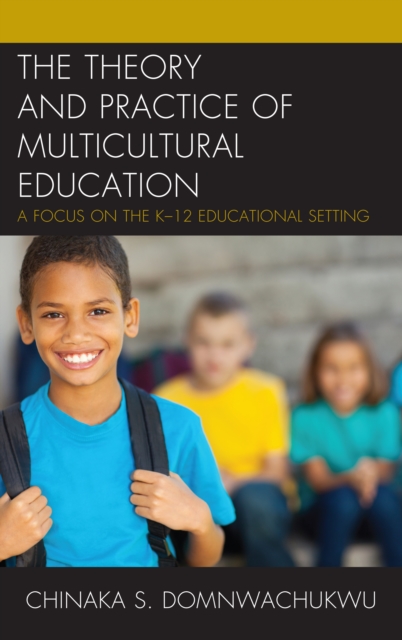
The theory and practice of multicultural education
Theory and Practice of Multicultural Education: A Focus on the K-12 Educational Setting provides an in-depth discussion of the principles and practice of multicultural education in the K-12 classrooms. Building on a theory of multicultural education as a learner-centered pedagogy, the book begins with a discussion of the learner and the educational process, addresses the issues of culture, worldview, and their implications for the educational process. The historical foundations of multicultural education, as well as the practical steps to doing multicultural education in a K-12 classroom were discussed extensively with practical tips for teachers on how to do multicultural education in the K-12 setting.
eBook


Making a difference in the lives of bilingual, bicultural children
As the conservative political mood of [the USA] eliminates programs for the increasing numbers of bilingual children, educators are nevertheless expected to teach linguistically and culturally diverse learners with limited background knowledge and resources. This edited volume challenges \"mainstream\" educators to critically examine how to best meet the needs of bilingual/bicultural children in contemporary America. The volume contains the following contributions: Peter McLaren: Foreword; Lourdes Díaz Soto: Introduction: The political, the dialogic, and the critical. Part I: The need for critical understanding: 1. Haroon Kharem, Leila E. Villaverde: Teacher allies: The problem of the color line; 2. Ryan Moser: Bilingual abolitionists: Shadows of facism - propaganda of the Third Reich and the English-Only Movement; 3. Lyudmila Bryzzheva: From Vygotsky to Bakhtin: Grand theories and teaching practices; 4. Colin Lankshear/Michele Knobel: Doom or mortal kombat? Bilingual literacy in the \"Mainstream\" classroom; 5. Ladislaus M. Semali: The case of repressed native or indigenous languages; 6. Richard De Gourville: What's policy gotta do wit dis? Part II: Becoming aware of children's daily realities: 7. Cathy Gutierrez-Gomez: Golden Eagle goes to kindergarten; 8. Miryam Espinosa-Dulanto: Are schools prepared to support excellence for nonmainstream children? Latino/a Voices as a Response; 9. Irene Pabon: A life span / Toda una vida: The pain and the struggle that will strike / El dolor y la lucha que embiste; 10. Lynus Yamuna: My story and the Melanesian knowledge; 11. Rebecca Blum-Martínez: Parents as guardians of the mother tongue. Part III: Promising practices: 12. María de la Luz Reyes/Lisa Costanzo: On the threshold of biliteracy: A first-grader's personal journey; 13. Jofen Wu Han/Gisela Ernst-Slavit: Here they come: Creating rich language-learning environments for Chinese-speaking kindergarten students; 14. Jocelynn Smrekar: Early childhood bilingual classrooms; 15. María E. Fránquiz: Caring literacy and identity struggles: The transformation of a Chicano student; 16. Jim Cummins: Rights and responsibilities of educators of bilingual / bicultural children. (DIPF/Verlag/Kr.).
Book