
Catalogue Search | MBRL


Are you sure you want to remove the book from the shelf?

{{itemTitle}}
126,768
result(s) for
"Minorities Education."
Sort by:


No Longer Separate, Not Yet Equal
Against the backdrop of today's increasingly multicultural society, are America's elite colleges admitting and successfully educating a diverse student body? No Longer Separate, Not Yet Equal pulls back the curtain on the selective college experience and takes a rigorous and comprehensive look at how race and social class impact each stage--from application and admission, to enrollment and student life on campus. Arguing that elite higher education contributes to both social mobility and inequality, the authors investigate such areas as admission advantages for minorities, academic achievement gaps tied to race and class, unequal burdens in paying for tuition, and satisfaction with college experiences. The book's analysis is based on data provided by the National Survey of College Experience, collected from more than nine thousand students who applied to one of ten selective colleges between the early 1980s and late 1990s. The authors explore the composition of applicant pools, factoring in background and \"selective admission enhancement strategies\"--including AP classes, test-prep courses, and extracurriculars--to assess how these strengthen applications. On campus, the authors examine roommate choices, friendship circles, and degrees of social interaction, and discover that while students from different racial and class circumstances are not separate in college, they do not mix as much as one might expect. The book encourages greater interaction among student groups and calls on educational institutions to improve access for students of lower socioeconomic status.
eBook


Social justice through multilingual education
The principles for enabling children to become fully proficient multilinguals through schooling are well known. Even so, most indigenous/tribal, minority and marginalised children are not provided with appropriate mother-tongue-based multilingual education. This book asks why this is, and shows how it can be done. Most Indigenous and minority children are not provided with multilingual education, which would enable them to succeed both in school and in society. In this important book, experts from around the world show how multilingual education can be provided, and what it can achieve.
eBook

Supplementary schools and ethnic minority communities : a social positioning perspective
This book provides a unique perspective into the world of supplementary schooling, exploring both the social positioning of these schools and the ethnic minority communities they serve. The author presents a close examination of the establishment and functioning of supplementary schools which offers a fresh and novel insight into acculturation processes. Drawing on empirical data gathered from staff interviews, classroom observations and interactive recordings, this book explores the operation of supplementary schools as sites of identity construction where the community identities are preserved, defended, renegotiated and reconstructed. The various modes of construction are indicative of the acculturation experiences of ethnic minority communities and the ways in which these communities negotiate residence in one country whilst having roots in another. This book therefore offers a revealing conceptualization of supplementary schools, not merely as educational spaces, but socio-political enterprises that are situated within and respond to various historical, social and political contexts. This pioneering work will appeal to students and scholars in the fields of education, migration and identity.
Book
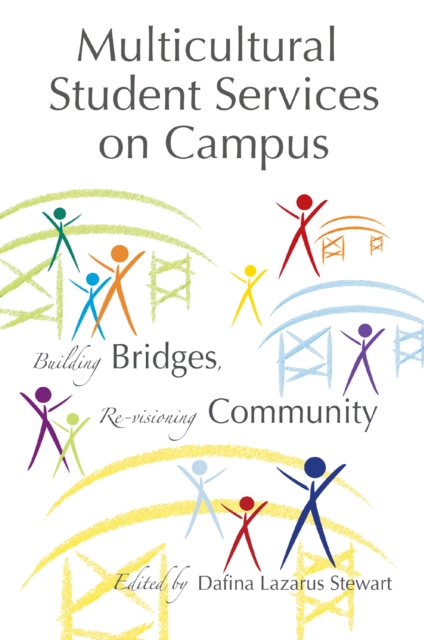
Multicultural Student Services on Campus
Co-published with For new professionals in multicultural student services (MSS), this book constitutes a thorough introduction to the structure, organization, and scope of the services and educational mission of these units. For senior practitioners it offers insights for re-evaluating their strategies, and inspiration to explore new possibilities.The book discusses the history and philosophy of MSS units; describes their operation; asserts the need for integration and coherence across the multiple facets of their work and how their role is influenced by the character and type of their institutions; and considers the challenges and opportunities ahead. The theme Building Bridges, Re-Visioning Community reflects the dual role of MSS. They \"build bridges\" between underrepresented student populations and the broader institutional environment, between different groups of student populations, and across differences in cultural values and traditions. At a time of increasing diversity on campus, their role is also to champion the \"re-visioning\" or redefinition of what constitutes community in higher education - in other words to reach beyond serving their traditional constituencies to educate for multicultural competence, and advocate for social justice across the campus commons.This book is organized in four sections moving the reader from the past to the present to the future, and from a service mission to an educational one. Part One reviews the purposes for which MSS were created, and the evolution of their vision, concluding an overview of how units perceive their needs and challenges today.Part Two addresses a range of issues - such as race/ethnicity, sexual orientation / gender identity, and religion/faith diversity - commonly addressed by MSS, and, in recognizing the tensions inherent in serving such disparate constituencies, advances ideas for bringing greater integration and coherence to their work.Part Three considers how institutional context influences the
eBook

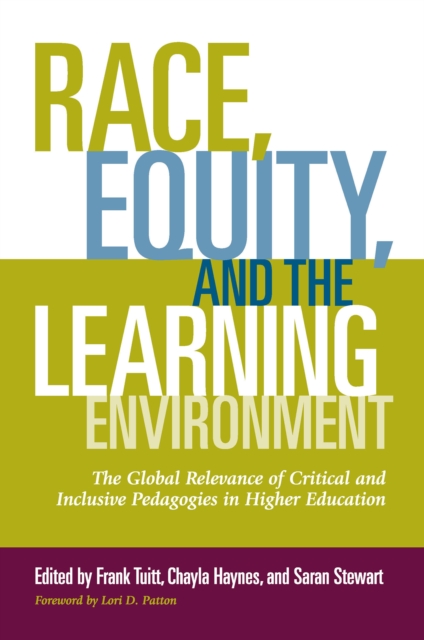
Race, Equity, And the Learning Environment
At a time of impending demographic shifts, faculty and administrators in higher education around the world are becoming aware of the need to address the systemic practices and barriers that contribute to inequitable educational outcomes of racially and ethnically diverse students.Focusing on the higher education learning environment, this volume illuminates the global relevance of critical and inclusive pedagogies (CIP), and demonstrates how their application can transform the teaching and learning process and promote more equitable educational outcomes among all students, but especially racially minoritized students.The examples in this book illustrate the importance of recognizing the detrimental impact of dominant ideologies, of evaluating who is being included in and excluded from the learning process, and paying attention to when teaching fails to consider students varying social, psychological, physical and/or emotional needs.This edited volume brings CIP into the realm of comparative education by gathering scholars from across academic disciplines and countries to explore how these pedagogies not only promote deep learning among students, but also better equip instructors to attend to the needs of diverse students by prioritizing their intellectual and social development; creating identity affirming learning environments that foster high expectations; recognizing the value of the cultural and national differences that learners bring to the educational experience; and engaging the whole student in the teaching and learning process.
eBook
We demand
This title is part of American Studies Now and available as an e-book first. Visit ucpress.edu/go/americanstudiesnow to learn more.
In the post-World War II period, students rebelled against the university establishment. In student-led movements, women, minorities, immigrants, and indigenous people demanded that universities adapt to better serve the increasingly heterogeneous public and student bodies. The success of these movements had a profound impact on the intellectual landscape of the twentieth century: out of these efforts were born ethnic studies, women's studies, and American studies.
In We Demand, Roderick A. Ferguson demonstrates that less than fifty years since this pivotal shift in the academy, the university is moving away from \"the people\" in all their diversity. Today the university is refortifying its commitment to the defense of the status quo off campus and the regulation of students, faculty, and staff on campus. The progressive forms of knowledge that the student-led movements demanded and helped to produce are being attacked on every front. Not only is this a reactionary move against the social advances since the '60s and '70s-it is part of the larger threat of anti-intellectualism in the United States.
eBook