
Catalogue Search | MBRL


Are you sure you want to remove the book from the shelf?

{{itemTitle}}
24
result(s) for
"Minorities United States Economic conditions 21st century."
Sort by:

The good immigrant : 26 writers reflect on America
Presents essays by first- and second-generation immigrant writers on the realities of immigration, multiculturalism, and marginalization in an increasingly divided America.
Book

Beyond Discrimination
Nearly a half century after the civil rights movement, racial inequality remains a defining feature of American life. Along a wide range of social and economic dimensions, African Americans consistently lag behind whites. This troubling divide has persisted even as many of the obvious barriers to equality, such as state-sanctioned segregation and overt racial hostility, have markedly declined. How then can we explain the stubborn persistence of racial inequality? InBeyond Discrimination: Racial Inequality in a Post-Racist Era, a diverse group of scholars provides a more precise understanding of when and how racial inequality can occur without its most common antecedents, prejudice and discrimination.
Beyond Discriminationfocuses on the often hidden political, economic and historical mechanisms that now sustain the black-white divide in America. The first set of chapters examines the historical legacies that have shaped contemporary race relations. Desmond King reviews the civil rights movement to pinpoint why racial inequality became an especially salient issue in American politics. He argues that while the civil rights protests led the federal government to enforce certain political rights, such as the right to vote, addressing racial inequities in housing, education, and income never became a national priority. The volume then considers the impact of racial attitudes in American society and institutions. Phillip Goff outlines promising new collaborations between police departments and social scientists that will improve the measurement of racial bias in policing. The book finally focuses on the structural processes that perpetuate racial inequality. Devin Fergus discusses an obscure set of tax and insurance policies that, without being overtly racially drawn, penalizes residents of minority neighborhoods and imposes an economic handicap on poor blacks and Latinos. Naa Oyo Kwate shows how apparently neutral and apolitical market forces concentrate fast food and alcohol advertising in minority urban neighborhoods to the detriment of the health of the community.
As it addresses the most pressing arenas of racial inequality, from education and employment to criminal justice and health,Beyond Discriminationexposes the unequal consequences of the ordinary workings of American society. It offers promising pathways for future research on the growing complexity of race relations in the United States.
eBook

Ten Americas: a systematic analysis of life expectancy disparities in the USA
Nearly two decades ago, the Eight Americas study offered a novel lens for examining health inequities in the USA by partitioning the US population into eight groups based on geography, race, urbanicity, income per capita, and homicide rate. That study found gaps of 12·8 years for females and 15·4 years for males in life expectancy in 2001 across these eight groups. In this study, we aimed to update and expand the original Eight Americas study, examining trends in life expectancy from 2000 to 2021 for ten Americas (analogues to the original eight, plus two additional groups comprising the US Latino population), by year, sex, and age group.
In this systematic analysis, we defined ten mutually exclusive and collectively exhaustive Americas comprising the entire US population, starting with all combinations of county and race and ethnicity, and assigning each to one of the ten Americas based on race and ethnicity and a variable combination of geographical location, metropolitan status, income, and Black–White residential segregation. We adjusted deaths from the National Vital Statistics System to account for misreporting of race and ethnicity on death certificates. We then tabulated deaths from the National Vital Statistics System and population estimates from the US Census Bureau and the National Center for Health Statistics from Jan 1, 2000, to Dec 31, 2021, by America, year, sex, and age, and calculated age-specific mortality rates in each of these strata. Finally, we constructed abridged life tables for each America, year, and sex, and extracted life expectancy at birth, partial life expectancy within five age groups (0–4, 5–24, 25–44, 45–64, and 65–84 years), and remaining life expectancy at age 85 years.
We defined the ten Americas as: America 1—Asian individuals; America 2—Latino individuals in other counties; America 3—White (majority), Asian, and American Indian or Alaska Native (AIAN) individuals in other counties; America 4—White individuals in non-metropolitan and low-income Northlands; America 5—Latino individuals in the Southwest; America 6—Black individuals in other counties; America 7—Black individuals in highly segregated metropolitan areas; America 8—White individuals in low-income Appalachia and Lower Mississippi Valley; America 9—Black individuals in the non-metropolitan and low-income South; and America 10—AIAN individuals in the West. Large disparities in life expectancy between the Americas were apparent throughout the study period but grew more substantial over time, particularly during the first 2 years of the COVID-19 pandemic. In 2000, life expectancy ranged 12·6 years (95% uncertainty interval 12·2–13·1), from 70·5 years (70·3–70·7) for America 9 to 83·1 years (82·7–83·5) for America 1. The gap between Americas with the lowest and highest life expectancies increased to 13·9 years (12·6–15·2) in 2010, 15·8 years (14·4–17·1) in 2019, 18·9 years (17·7–20·2) in 2020, and 20·4 years (19·0–21·8) in 2021. The trends over time in life expectancy varied by America, leading to changes in the ordering of the Americas over this time period. America 10 was the only America to experience substantial declines in life expectancy from 2000 to 2019, and experienced the largest declines from 2019 to 2021. The three Black Americas (Americas 6, 7, and 9) all experienced relatively large increases in life expectancy before 2020, and thus all three had higher life expectancy than America 10 by 2006, despite starting at a lower level in 2000. By 2010, the increase in America 6 was sufficient to also overtake America 8, which had a relatively flat trend from 2000 to 2019. America 5 had relatively similar life expectancy to Americas 3 and 4 in 2000, but a faster rate of increase in life expectancy from 2000 to 2019, and thus higher life expectancy in 2019; however, America 5 experienced a much larger decline in 2020, reversing this advantage. In some cases, these trends varied substantially by sex and age group. There were also large differences in income and educational attainment among the ten Americas, but the patterns in these variables differed from each other and from the patterns in life expectancy in some notable ways. For example, America 3 had the highest income in most years, and the highest proportion of high-school graduates in all years, but was ranked fourth or fifth in life expectancy before 2020.
Our analysis confirms the continued existence of different Americas within the USA. One's life expectancy varies dramatically depending on where one lives, the economic conditions in that location, and one's racial and ethnic identity. This gulf was large at the beginning of the century, only grew larger over the first two decades, and was dramatically exacerbated by the COVID-19 pandemic. These results underscore the vital need to reduce the massive inequity in longevity in the USA, as well as the benefits of detailed analyses of the interacting drivers of health disparities to fully understand the nature of the problem. Such analyses make targeted action possible—local planning and national prioritisation and resource allocation—to address the root causes of poor health for those most disadvantaged so that all Americans can live long, healthy lives, regardless of where they live and their race, ethnicity, or income.
State of Washington, Bloomberg Philanthropies, Bill & Melinda Gates Foundation.
Journal Article

Incarceration & social inequality
In the last few decades, the al contours of American social inequality have been transformed by the rapid growth in the prison and jail America's prisons and jails have produced a new social group, a group of social outcasts who are joined by the shared experience of incarceration, crime, poverty, racial minority, and low education. [...] carcerai inequalities are intergenerational, affecting not just those who go to prison and jail but their families and children, too.
Journal Article

Composition, Concentration and Deprivation: Exploring their Association with Social Cohesion among Different Ethnic Groups in the UK
Although studies in the US have shown an association between the ethnic residential composition of an area and reports of decreased social cohesion among its residents, this association is not clear in the UK, and particularly for ethnic minority groups. The current study analyses a merged dataset from the 2005 and 2007 Citizenship Survey to assess the evidence for an association between social cohesion and ethnic residential concentration, composition and area deprivation across different ethnic groups in the UK. Results of the multilevel regression models show that, after adjusting for area deprivation, increased levels of social cohesion are found in areas of greater ethnic residential heterogeneity. Although different patterns emerge across ethnic groups and the measure of social cohesion used, findings consistently show that it is area deprivation, and not ethnic residential heterogeneity, which erodes social cohesion in the UK.
Journal Article

Nation of Cowards
In a speech from which Nation of Cowards derives its title, Attorney General Eric Holder argued forcefully that Americans today need to talk more-not less-about racism. This appeal for candid talk about race exposes the paradox of Barack Obama's historic rise to the US presidency and the ever-increasing social and economic instability of African American communities. David H. Ikard and Martell Lee Teasley maintain that such a conversation can take place only with passionate and organized pressure from black Americans, and that neither Obama nor any political figure is likely to be in the forefront of addressing issues of racial inequality and injustice. The authors caution blacks not to slip into an accommodating and self-defeating \"post-racial\" political posture, settling for the symbolic capital of a black president instead of demanding structural change. They urge the black community to challenge the social terms on which it copes with oppression, including acts of self-imposed victimization.
eBook

Arab Detroit 9/11
Since the terrorist attacks of September 11, 2001, Detroit's large and nationally prominent Arab and Muslim communities have faced heightened prejudice, government surveillance, and political scapegoating, yet they have also enjoyed unexpected gains in economic, political, and cultural influence. Museums, festivals, and cultural events flourish alongside the construction of new mosques and churches, and more Arabs are being elected and appointed to public office. Detroit's Arab population is growing even as the city's non-Arab sectors, and the state of Michigan as a whole, have steadily lost population. In Arab Detroit 9/11: Life in the Terror Decade, a follow-up to their volume Arab Detroit: From Margin to Mainstream (Wayne State University Press, 2000), editors Nabeel Abraham, Sally Howell, and Andrew Shryock present accounts of how life in post-9/11 Detroit has changed over the last ten years.Abraham, Howell, and Shryock have assembled a diverse group of contributors whose essays range from the scholarly to the artistic and include voices that are Palestinian, Iraqi, Yemeni, and Lebanese; Muslim and Christian; American born and immigrant. The book is divided into six sections and begins with wide-angle views of Arab Detroit, looking first at how the community fits within greater Detroit as a whole, then presenting closer portraits of Arab Detroit's key ethnonational and religious subgroups. More personal, everyday accounts of life in the Terror Decade follow as focus shifts to practical matters such as family life, neighborhood interactions, going to school, traveling domestically, and visiting home countries. Finally, contributors consider the interface between Arab Detroit and the larger society, how this relationship is maintained, how the War on Terror has distorted it, and what lessons might be drawn about citizenship, inclusion, and exclusion by situating Arab Detroit in broader and deeper historical contexts.In Detroit, new realities of political marginalization and empowerment are evolving side by side. As they explore the complex demands of life in the Terror Decade, the contributors to this volume create vivid portraits of a community that has fought back successfully against attempts to deny its national identity and diminish its civil rights. Readers interested in Arab studies, Detroit culture and history, transnational politics, and the changing dynamics of race and ethnicity in America will enjoy the personal reflection and analytical insight of Arab Detroit 9/11.
eBook

Abandoned in the heartland
Urban poverty, along with all of its poignant manifestations, is moving from city centers to working-class and industrial suburbs in contemporary America. Nowhere is this more evident than in East St. Louis, Illinois. Once a thriving manufacturing and transportation center, East St. Louis is now known for its unemployment, crime, and collapsing infrastructure. Abandoned in the Heartland takes us into the lives of East St. Louis’s predominantly African American residents to find out what has happened since industry abandoned the city, and jobs, quality schools, and city services disappeared, leaving people isolated and imperiled. Jennifer Hamer introduces men who search for meaning and opportunity in dead-end jobs, women who often take on caretaking responsibilities until well into old age, and parents who have the impossible task of protecting their children in this dangerous, and literally toxic, environment. Illustrated with historical and contemporary photographs showing how the city has changed over time, this book, full of stories of courage and fortitude, offers a powerful vision of the transformed circumstances of life in one American suburb.
eBook

Confronting the Challenges in Reconnecting Urban Planning and Public Health
Although public health and urban planning emerged with the common goal of preventing urban outbreaks of infectious disease, there is little overlap between the fields today. The separation of the fields has contributed to uncoordinated efforts to address the health of urban populations and a general failure to recognize the links between, for example, the built environment and health disparities facing low-income populations and people of color. I review the historic connections and lack thereof between urban planning and public health, highlight some challenges facing efforts to recouple the fields, and suggest that insights from ecosocial theory and environmental justice offer a preliminary framework for reconnecting the fields around a social justice agenda.
Journal Article
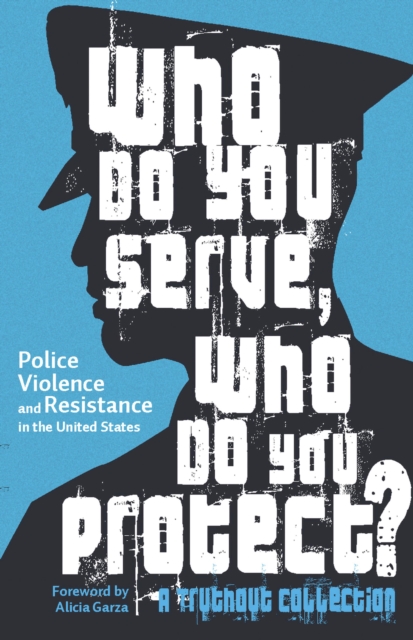
Who do you serve, who do you protect? : police violence and resistance in the United States
What is the reality of policing in the United States? Do the police keep anyone safe and secure other than the very wealthy? How do recent police killings of young black people in the United States fit into the historical and global context of anti-blackness?This collection of reports and essays (the first collaboration between Truthout and Haymarket Books) explores police violence against black, brown, indigenous and other marginalized communities, miscarriages of justice, and failures of token accountability and reform measures. It also makes a compelling and provocative argument against calling the police.Contributions cover a broad range of issues including the killing by police of black men and women, police violence against Latino and indigenous communities, law enforcement's treatment of pregnant people and those with mental illness, and the impact of racist police violence on parenting, as well as specific stories such as a Detroit police conspiracy to slap murder convictions on young black men using police informant and the failure of Chicago's much-touted Independent Police Review Authority, the body supposedly responsible for investigating police misconduct. The title Who Do You Serve, Who Do You Protect? is no mere provocation: the book also explores alternatives for keeping communities safe.Contributors include William C. Anderson, Candice Bernd, Aaron Cant, Thandi Chimurenga, Ejeris Dixon, Adam Hudson, Victoria Law, Mike Ludwig, Sarah Macaraeg, and Roberto Rodriguez.
eBook