
Catalogue Search | MBRL


Are you sure you want to remove the book from the shelf?

{{itemTitle}}
27,664
result(s) for
"Minority teachers"
Sort by:

Diversifying the teaching force in transnational contexts : critical perspectives
\"Diversifying the teaching force has become a priority in many migrant-receiving jurisdictions worldwide with the growing mismatch between the ethnic backgrounds, cultures, languages, and religions of teachers and those of students and families. Arguments for diversification tend to be couched in terms of disproportionate representation and students from minority backgrounds needing positive role models, yet research identifies other compelling reasons for diversification, including the fact that teachers of migrant backgrounds often possess outstanding qualifications when multilingualism and internationally obtained education and experience are taken into account, and the fact that all students, including majority-background students, benefit from a diversity of role models in schools. Nevertheless, the process of diversification is fraught with complexity. Depending on the context, systemic discrimination, an oversupply of teachers in the profession generally, and outdated hiring policies and practices can all impede efforts to diversify the teaching force. This volume comprises original research from Canada, the U.S., Germany, Ireland, Scotland, and England that problematizes issues of diversifying the teaching force and identifies promising practices. A foreword written by Charlene Bearhead of the National Centre for Truth and Reconciliation questions the very purpose of education in and for diverse societies. An introduction written by the editors defines key concepts and establishes a rationale for diversifying the teaching force in migrant-receiving contexts. Following this, key international scholars offer empirical perspectives using a range of methodologies and theories rooted in critical social science paradigms. The volume informs future research, programming, and policy development in this area.\"--Back cover.
Book

Support and Retain Educators of Color
\"Support and Retain Educators of Color\" sets school leaders on the path to creating a culturally diverse environment where all students and teachers can thrive. Multiple studies have explored the benefits of teacher diversity and strategies to recruit educators of color, but few focus on how to retain them. As professional demands on teachers intensify, many are leaving the classroom--and educators of color, already underrepresented in the field, are walking away at higher rates than their white counterparts. Research indicates the presence of educators of color benefits all students, so we must act now to lessen this financially and culturally costly turnover. Andrea Terrero Gabbadon presents six principles to guide school leaders in their efforts to support and retain educators of color: (1) Acknowledge that teacher diversity matters; (2) Cultivate reflection and self-awareness; (3) Assess and plan for action; (4) Commit to sustainable and high-impact instructional supports; (5) Foster supportive environments for culturally responsive approaches; and (6) Lead for an inclusive community. Featuring voices from teachers in the field, research-based strategies and solutions, and recommendations for resources to enhance understanding and practice, \"Support and Retain Educators of Color\" is a vital tool for leadership intent on cultivating an affirming, validating, and inclusive school environment to serve a diverse population of staff and students.
eBook

Millennial teachers of color
Millennial Teachers of Color explores the opportunities and challenges for creating and sustaining a healthy teaching force in the United States. Millennials are the largest generational cohort in American history, with approximately ninety million members and, of these, roughly 43 percent are people of color. This book, edited by prominent teacher educator Mary E. Dilworth, considers the unique qualities, challenges, and opportunities posed by that large population for the teaching field. Noting that a diverse teaching and learning community enhances student achievement, particularly for the underserved and underachieving preK-12 student population, Dilworth argues that efforts to recruit, groom, and retain teachers of color are out-of-date and inadequate. She and the contributors offer fresh looks at these millennials and explore their views of the teaching profession; focus attention on Latino/a millennials and their relation to schools and teaching; and consider how these young teachers feel about teaching for social justice. The book is intended to disrupt the current line of inquiry that suggests by simply increasing the number of teachers of color equity has been established. Readers will gain insights on this unique and valuable group of prospective and practicing preK-12 educators and understanding of the need for more contemporary approaches to recruitment, preparation, hiring, and placement.--Provided by publisher.
Book
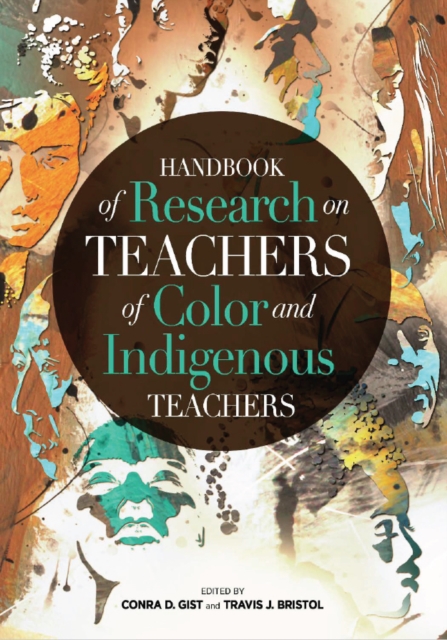
Handbook of Research on Teachers of Color and Indigenous Teachers
Teachers of Color and Indigenous Teachers are underrepresented in public schools across the United States of America, with Black, Indigenous, and People of Color making up roughly 37% of the adult population and 50% of children, but just 19% of the teaching force. Yet research over decades has indicated their positive impact on student learning and social and emotional development, particularly for Students of Color and Indigenous Students. A first of its kind, the Handbook of Research on Teachers of Color and Indigenous Teachers addresses key issues and obstacles to ethnoracial diversity across the life course of teachers’ careers, such as recruitment and retention, professional development, and the role of minority-serving institutions. Including chapters from leading researchers and policy makers, the Handbook is designed to be an important resource to help bridge the gap between scholars, practitioners, and policy makers. In doing so, this research will serve as a launching pad for discussion and change at this critical moment in our country’s history. The volume’s goal is to drive conversations around the issue of ethnoracial teacher diversity and to provide concrete practices for policy makers and practitioners to enable them to make evidence-based decisions for supporting an ethnoracially diverse educator workforce, now and in the future.
eBook


Modeling Mentoring Across Race/Ethnicity and Gender
While mentorship has been shown to be critical in helping graduate students persist and complete their studies, and enter upon and succeed in their academic careers, the under-representation of faculty of color and women in higher education greatly reduces the opportunities for graduate students from these selfsame groups to find mentors of their race, ethnicity or gender.Recognizing that mentoring across gender, race and ethnicity inserts levels of complexity to this important process, this book both fills a major gap in the literature and provides an in-depth look at successful mentorships between senior white and under-represented scholars and emerging women scholars and scholars of color. Following a comprehensive review of the literature, this book presents chapters written by scholars who share in-depth descriptions of their cross-gender and/or cross-race/ethnicity mentoring relationships. Each article is co-authored by mentors who are established senior scholars and their former protégés with whom they have continuing collegial relationships. Their descriptions provide rich insights into the importance of these relationships, and for developing the academic pipeline for women scholars and scholars of color. Drawing on a comparative analysis of the literature and of the narrative chapters, the editors conclude by identifying the key characteristics and pathways for developing successful mentoring relationships across race, ethnicity or gender, and by offering recommendations for institutional policy and individual mentoring practice. For administrators and faculty concerned about diversity in graduate programs and academic departments, they offer clear models of how to nurture the productive scholars and teachers needed for tomorrow's demographic of students; for under-represented students, they offer compelling narratives about the rewards and challenges of good mentorship to inform their expectations and the relationships they will develop as protégés.
eBook


Untying the double bind
Racially and ethnically minoritized students are now the majority in U.S. public schools. This demographic change, along with heightened attention to racial injustice and evidence regarding the importance of Black teachers, has renewed a decades-old push to increase their numbers. Redesigning teacher education and development to support the recruitment and retention of Black teachers requires ongoing critical understanding of their racialized experiences. Uncritical approaches to workplace diversification perpetuate deficit attitudes toward Black students and unfairly burden Black teachers. Authors Christopher J. Cormier, Elizabeth Bettini, and Kristabel Stark describe challenges novice Black teachers often face, and they suggest critical considerations for this conversation within teacher education programs and schools.
Journal Article

The beauty and the burden of being a Black professor
It has been well chronicled that Black professors have experienced a long history of inequities and inequalities within the academic space. This volume explores the experiences, challenges and triumphs experienced by Black professors. Including personal essays written by Black professors, this volume showcases personal insights and inspirational stories from leading Black scholars across the US. It highlights and problematizes the uncomfortable truth of the lack of diversity in many higher education institutions in order to further discussions on the topic of race in academia, and to assist academics of color in preparing for their careers. Future academics will gain a sense of how to launch their careers, stay productive in research, teaching and service, and avoid the racial-related malaise that can hinder new academics of color. By presenting discussions on professional development, and emphasizing the challenges and triumphs experienced by Black professors across disciplines, this book provides advice for junior Black scholars on how to navigate academe and tackle the challenges that Black scholars often face.
BOOK
Centering educators of color in teacher preparation
Traditional teacher education and alternative teacher preparation programs struggle to recruit and retain prospective and early-career educators of color. To address this challenge, Jalene Tamerat and Clifford Lee recount their experiences as teachers and teacher educators-of color. They propose a reframing of pedagogies, curricula, and programmatic structures so they will more effectively center the cultural assets and critical perspectives among future educators of color. They share their personal reflections and offer an overview of the current educational landscape to contextualize and ground their recommendations for how teacher training programs can be more attuned to the needs of teacher candidates from minoritized and historically marginalized backgrounds.
Journal Article