
Catalogue Search | MBRL


Are you sure you want to remove the book from the shelf?

{{itemTitle}}
14
result(s) for
"Minstrel music United States History and criticism."
Sort by:

Blackface nation : race, reform, and identity in American popular music, 1812 - 1925
As the United States transitioned from a rural nation to an urbanized, industrial giant between the War of 1812 and the early twentieth century, ordinary people struggled over the question of what it meant to be American. As Brian Roberts shows in 'Blackface Nation', this struggle is especially evident in popular culture and the interplay between two specific strains of music: middle-class folk and blackface minstrelsy. The Hutchinson Family Singers, the Northeast's most popular middle-class singing group during the mid-nineteenth century, are perhaps the best example of the first strain of music. The group's songs expressed an American identity rooted in communal values, with lyrics focusing on abolition, women's rights, and socialism. Blackface minstrelsy, on the other hand, emerged out of an audience-based coalition of Northern business elites, Southern slaveholders, and young, white, working-class men, for whom blackface expressed an identity rooted in individual self-expression, anti-intellectualism, and white superiority. Its performers embodied the love-crime version of racism, in which vast swaths of the white public adored African Americans who fit blackface stereotypes even as they used those stereotypes to rationalize white supremacy. By the early twentieth century, the blackface version of the American identity had become a part of America's consumer culture while the Hutchinsons' songs were increasingly regarded as old-fashioned.
Book

The Creolization of American Culture
This study examines the artworks, letters, sketchbooks, music collection, and biography of the painter William Sidney Mount (1807–1868) as a lens through which to see the multiethnic antebellum world that gave birth to blackface minstrelsy. Christopher J. Smith uses Mount's depictions of black and white vernacular fiddlers, banjo players, and dancers to open up fresh perspectives on cross-ethnic cultural transference in Northern and urban contexts, showing how rivers, waterfronts, and other sites of interracial interaction shaped musical practices by transporting musical culture from the South to the North and back. The \"Africanization\" of Anglo-Celtic tunes created minstrelsy's musical \"creole synthesis,\" a body of melodic and rhythmic vocabularies, repertoires, tunes, and musical techniques that became the foundation of American popular music.
eBook

Spirituals and the birth of a black entertainment industry
In the first book-length treatment of postbellum spirituals in theatrical entertainments, Sandra Jean Graham mines a trove of resources to chart the spiritual's journey from the private lives of slaves to the concert stage. Graham navigates the conflicting agendas of those who, in adapting spirituals for their own ends, sold conceptions of racial identity to their patrons. In so doing they laid the foundation for a black entertainment industry whose artistic, financial, and cultural practices extended into the twentieth century.
Book

Spirituals and the Birth of a Black Entertainment Industry
Spirituals performed by jubilee troupes became a sensation in post-Civil War America. First brought to the stage by choral ensembles like the Fisk Jubilee Singers, spirituals anchored a wide range of late nineteenth-century entertainments, including minstrelsy, variety, and plays by both black and white companies. In the first book-length treatment of postbellum spirituals in theatrical entertainments, Sandra Jean Graham mines a trove of resources to chart the spiritual's journey from the private lives of slaves to the concert stage. Graham navigates the conflicting agendas of those who, in adapting spirituals for their own ends, sold conceptions of racial identity to their patrons. In so doing they lay the foundation for a black entertainment industry whose artistic, financial, and cultural practices extended into the twentieth century. A companion website contains jubilee troupe personnel, recordings, and profiles of 85 jubilee groups. Please go to: http://www.press.uillinois.edu/books/graham/spirituals/
eBook

Ragged but right : black traveling shows, \coon songs,\ and the dark pathway to blues and jazz
The commercial explosion of ragtime in the early twentieth century created previously unimagined opportunities for black performers. However, every prospect was mitigated by systemic racism. The biggest hits of the ragtime era weren't Scott Joplin's stately piano rags. \"Coon songs,\" with their ugly name, defined ragtime for the masses, and played a transitional role in the commercial ascendancy of blues and jazz.
InRagged but Right, now in paperback, Lynn Abbott and Doug Seroff investigate black musical comedy productions, sideshow bands, and itinerant tented minstrel shows. Ragtime history is crowned by the \"big shows,\" the stunning musical comedy successes of Williams and Walker, Bob Cole, and Ernest Hogan. Under the big tent of Tolliver's Smart Set, Ma Rainey, Clara Smith, and others were converted from \"coon shouters\" to \"blues singers.\"Throughout the ragtime era and into the era of blues and jazz, circuses and Wild West shows exploited the popular demand for black music and culture, yet segregated and subordinated black performers to the sideshow tent. Not to be confused with their nineteenth-century white predecessors, black, tented minstrel shows such as the Rabbit's Foot andSilas Green from New Orleansprovided blues and jazz-heavy vernacular entertainment that black southern audiences identified with and took pride in.
eBook

Ring Shout, Wheel About
In this ambitious project, historian Katrina Thompson examines the conceptualization and staging of race through the performance, sometimes coerced, of black dance from the slave ship to the minstrel stage. She shows how these performances informed white European and American understandings of race, influenced interactions between whites and blacks, and often held conflicting meanings in enslaved people's lives. Drawing on travel journals, slave narratives, popular literature, and historical sources, Thompson explicates how black dance was used by whites to justify enslavement, perpetuate the existing racial hierarchy, and mask the brutality of the domestic slave trade. Whether on slave ships, at the auction block, or on plantations, whites often used coerced performances to oppress and demean the enslaved. As Thompson explains, however, blacks' \"backstage\" dance often served quite a different purpose. Through creolization and other means, enslaved people preserved some native musical and dance traditions and invented or adopted new traditions that built community and even aided rebellion.Thompson shows how these traditions evolved into nineteenth-century minstrelsy and, ultimately, raises the question of whether today's mass media performances and depictions of African Americans are so very far removed from their troublesome roots.
eBook

The Soul of Pleasure
Show business is today so essential to American culture it's hard to imagine a time when it was marginal. But as David Monod demonstrates, the appetite for amusements outside the home was not \"natural\": it developed slowly over the course of the nineteenth century.The Soul of Pleasureoffers a new interpretation of how the taste for entertainment was cultivated. Monod focuses on the shifting connection between the people who built successful popular entertainments and the public who consumed them. Show people discovered that they had to adapt entertainment to the moral outlook of Americans, which they did by appealing to sentiment.
TheSoul of Pleasureexplores several controversial forms of popular culture-minstrel acts, burlesques, and saloon variety shows-and places them in the context of changing values and perceptions. Far from challenging respectability, Monod argues that entertainments reflected and transformed the audience's ideals. In the mid-nineteenth century, sentimentality not only infused performance styles and the content of shows but also altered the expectations of the theatergoing public. Sentimental entertainment depended on sensational effects that produced surprise, horror, and even gales of laughter. After the Civil War the sensational charge became more important than the sentimental bond, and new forms of entertainment gained in popularity and provided the foundations for vaudeville, America's first mass entertainment. Ultimately, it was American entertainment's variety that would provide the true soul of pleasure.
eBook
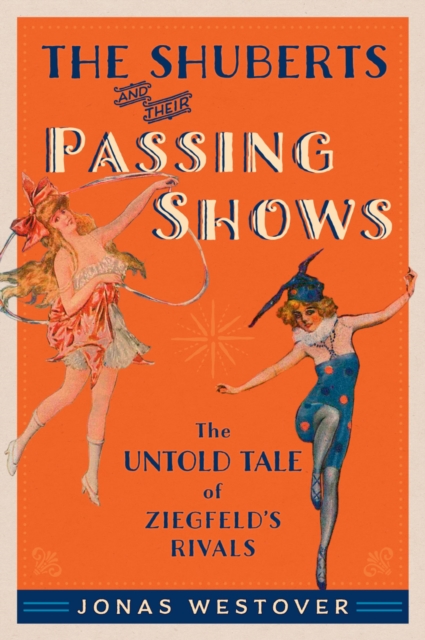
The Shuberts and Their Passing Shows
Starting in 1912, the Shubert brothers produced an extravagant series of revues called The Passing Shows. Each year, a new edition would be crafted, featuring new musical styles, the latest dance fads, and some of the biggest stars of the day. Including dozens of chorus women and men, these revues were hits both in New York’s Winter Garden Theater and on tour. This book examines these shows in depth, with a look at their creators and content. Challenging the notion that Ziegfeld and his Follies were the only important revues of the era, this work details the remarkable efforts put forth by a whole host of incredible personalities. Especially intriguing is the story of the relationship between the Shuberts and Ziegfeld, told using in-house memos, personal letters, and documents packed away for a century. And finally, when Ziegfeld died, the Shuberts were part of shaping their former rival’s legacy, in part using the amazing theatrical machine they had developed for their own revues. Fred and Adele Astaire, George Gershwin, Joan Crawford, and Ed Wynn are among the stars still remembered today who were a part of the series, but they performed alongside many others who have fallen out of the limelight. This book brings those stars, their songs, and stories back to life, making the Broadway of the 1910s and 1920s seem like yesterday.
eBook
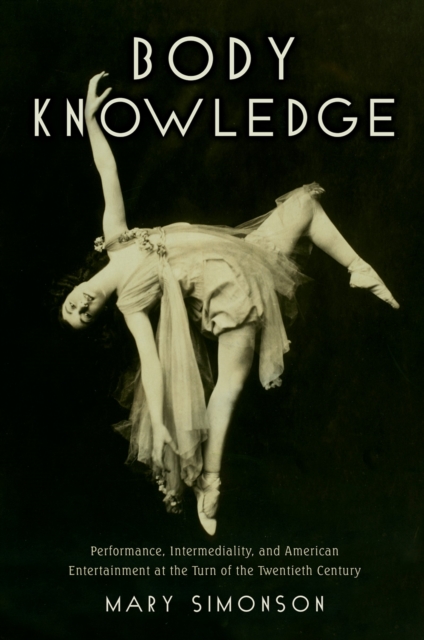
Body Knowledge
In the early twentieth century, female performers regularly appeared on the stages and screens of American cities. Though advertised as dancers, mimics, singers, or actresses, they often exceeded these categories. Instead, their performances adopted an aesthetic of intermediality, weaving together techniques and elements drawn from a wide variety of genres and media, including ballet, art music, photography, early modern dance, vaudeville traditions, silent film, and more. Onstage and on-screen, performers borrowed from existing musical scores and narratives, referred to contemporary shows, films, and events, and mimicked fellow performers, skating neatly across various media, art forms, and traditions. The performances and conceptions of art that emerged were innovative, compelling, and deeply meaningful. This book examines these performances and the performers behind them, focusing particularly on the ways in which they negotiated turn-of-the-century American social and cultural issues, including technological developments and commodification, new modes of perception, evolving understandings of the body and the self, and shifting conceptions of gender, race, and sexual identity. Tracing the various modes of intermediality at work on- and offstage, Body Knowledge re-imagines early twentieth-century art and entertainment as both fluid and convergent.
eBook

Out of Sight
\"A product of old-fashioned, back-wearying, foundational scholarship, yet very readable, this book is certain to feature importantly in future studies of early jazz and its prehistory. Highly recommended.\" --Library Journal
\"This volume makes possible the study of the rise of black music in the days that paved the way for the Harlem Renaissance--the brass bands, the banjo and mandolin clubs, the male quartets, and theatrical companies. Summing up: Essential.\" --ChoiceOutstanding Academic Title
A landmark study, based on thousands of music-related references mined by the authors from a variety of contemporaneous sources, especially African American community newspapers,Out of Sightexamines musical personalities, issues, and events in context. It confronts the inescapable marketplace concessions musicians made to the period's prevailing racist sentiment. It describes the worldwide travels of jubilee singing companies, the plight of the great black prima donnas, and the evolution of \"authentic\" African American minstrels. Generously reproducing newspapers and photographs,Out of Sightputs a face on musical activity in the tightly knit black communities of the day.
Drawing on hard-to-access archival sources and song collections, the book is of crucial importance for understanding the roots of ragtime, blues, jazz, and gospel. Essential for comprehending the evolution and dissemination of African American popular music from 1900 to the present,Out of Sightpaints a rich picture of musical variety, personalities, issues, and changes during the period that shaped American popular music and culture for the next hundred years.
eBook