
Catalogue Search | MBRL


Are you sure you want to remove the book from the shelf?

{{itemTitle}}
2
result(s) for
"Mobilité sociale dans la littérature."
Sort by:

Embodied economies : diaspora and transcultural capital in Latinx Caribbean fiction and theater
\"How do upwardly mobile Latinx Caribbean migrants leverage their cultural heritage to buy into the American Dream? In the neoliberal economy of the United States, the discourse of white nationalism compels upwardly mobile immigrants to trade in their ties to ethnic and linguistic communities to assimilate to the dominant culture. For Latinx Caribbean immigrants, exiles, and refugees this means abandoning Spanish, rejecting forms of communal inter-dependence, and adopting white, middle-class forms of embodiment to mitigate any ethnic and racial identity markers that might hinder their upwardly mobile trajectories. This transactional process of acquiring and trading in various kinds of material and embodied practices across traditions is a phenomenon author Israel Reyes terms \"transcultural capital,\" and it is this process he explores in the contemporary fiction and theater of the Latinx Caribbean diaspora. In chapters that compare works by Lin-Manuel Miranda, Nilo Cruz, Edwin Sánchez, Ángel Lozada, Rita Indiana Hernández, Dolores Prida, and Mayra Santos Febres, Reyes examines the contradictions of transcultural capital, its potential to establish networks of support in Latinx enclaves, and the risks it poses for reproducing the inequities of power and privilege that have always been at the heart of the American Dream. Embodied Economies shares new perspectives through its comparison of works written in both English and Spanish, and the literary voices that emerge from the US and the Hispanic Caribbean\"-- Provided by publisher.
BOOK
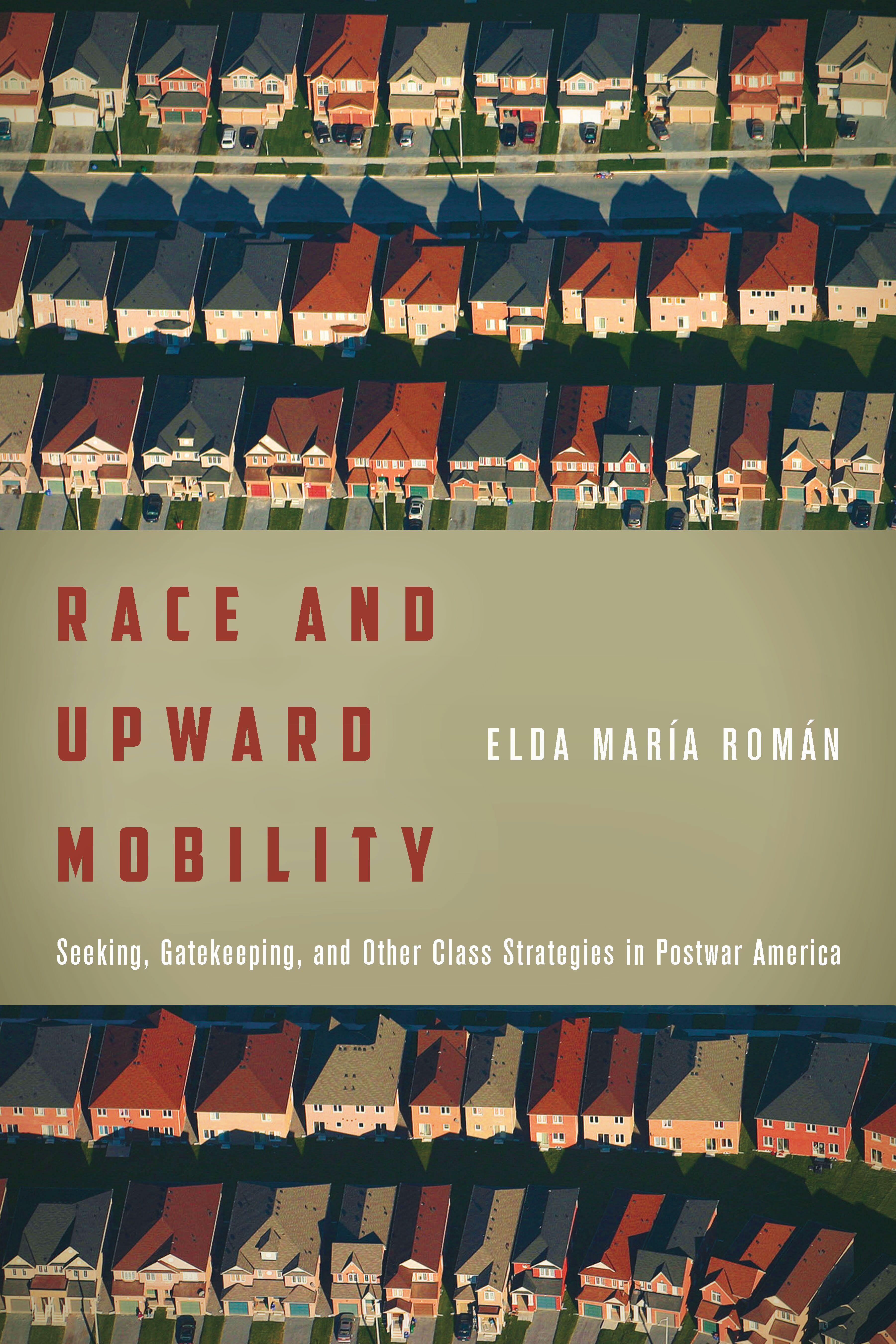
Race and upward mobility : seeking, gatekeeping, and other class strategies in postwar America
Over the course of the twentieth and twenty-first centuries, Mexican American and African American cultural productions have seen a proliferation of upward mobility narratives: plotlines that describe desires for financial solvency, middle-class status, and social incorporation. Yet the terms \"middle class\" and \"upward mobility\"—often associated with assimilation, selling out, or political conservatism—can hold negative connotations in literary and cultural studies. Surveying literature, film, and television from the 1940s to the 2000s, Elda María Román brings forth these narratives, untangling how they present the intertwined effects of capitalism and white supremacy. Race and Upward Mobility examines how class and ethnicity serve as forms of currency in American literature, affording people of color material and symbolic wages as they traverse class divisions. Identifying four recurring character types—status seekers, conflicted artists, mediators, and gatekeepers—that appear across genres, Román traces how each models a distinct strategy for negotiating race and class. Her comparative analysis sheds light on the overlaps and misalignments, the shared narrative strategies, and the historical trajectories of Mexican American and African American texts, bringing both groups' works into sharper relief. Her study advances both a new approach to ethnic literary studies and a more nuanced understanding of the class-based complexities of racial identity.
eBook