
Catalogue Search | MBRL


Are you sure you want to remove the book from the shelf?

{{itemTitle}}
103,085
result(s) for
"Models, Chemical"
Sort by:

Introduction to numerical methods with application to chemical engineering
Many chemical engineering departments in diverse universities around the world, including the one in King Saud University include in the curriculum a course designed to teach numerical methods applied to chemical engineering. This book is essentially a compilation of the notes the three authors have used to teach this course over the years. We have covered in the textbook the numerical techniques that are most useful to the chemical engineer and that have wide applications. As an introduction to the book we included a chapter dealing with some practical considerations in numerical methods. The concepts of errors, conditioning of a problem and stability of algorithms were introduced to show the student to what extent he should trust any numerical values obtained by solving a problem in a digital computer. tt from Preface (p. v).
Book

Computational Models for Polydisperse Particulate and Multiphase Systems
Providing a clear description of the theory of polydisperse multiphase flows, with emphasis on the mesoscale modelling approach and its relationship with microscale and macroscale models, this all-inclusive introduction is ideal whether you are working in industry or academia. Theory is linked to practice through discussions of key real-world cases (particle/droplet/bubble coalescence, break-up, nucleation, advection and diffusion and physical- and phase-space), providing valuable experience in simulating systems that can be applied to your own applications. Practical cases of QMOM, DQMOM, CQMOM, EQMOM and ECQMOM are also discussed and compared, as are realizable finite-volume methods. This provides the tools you need to use quadrature-based moment methods, choose from the many available options, and design high-order numerical methods that guarantee realizable moment sets. In addition to the numerous practical examples, MATLAB scripts for several algorithms are also provided, so you can apply the methods described to practical problems straight away.
eBook


Beyond Turing
Turing patterns are commonly understood as specific instabilities of a spatially homogeneous steady state, resulting from activator–inhibitor interaction destabilized by diffusion. We argue that this view is restrictive and its agreement with biological observations is problematic. We present two alternatives to the classical Turing analysis of patterns. First, we employ the abstract framework of evolution equations to enable the study of far-from-equilibrium patterns. Second, we introduce a mechano-chemical model, with the surface on which the pattern forms being dynamic and playing an active role in the pattern formation, effectively replacing the inhibitor. We highlight the advantages of these two alternatives vis-à-vis the classical Turing analysis, and give an overview of recent results and future challenges for both approaches.
This article is part of the theme issue ‘Recent progress and open frontiers in Turing’s theory of morphogenesis’.
Journal Article

Guidelines for determining the probability of ignition of a released flammable mass
\"Complemented by an estimating tool spreadsheet based on a fixed set of chemicals to assist in all siting studies, [Guidelines for determining the probability of ignition of a released flammable mass] converts a \"best guess\" to a calculated value based on available information and current technology. The text provides a technology-based approach to deriving the probability that a flammable mass will find an ignition source and ignite. It offers valuable information in the development of a facility's Emergency Response Plan\"-- Provided by publisher.
Book

(De)hydration Front Propagation Into Zero‐Permeability Rock
Hydration and dehydration reactions play pivotal roles in plate tectonics and the deep water cycle, yet many facets of (de)hydration reactions remain unclear. Here, we study (de)hydration reactions where associated solid density changes are predominantly balanced by porosity changes, with solid rock deformation playing a minor role. We propose a hypothesis for three scenarios of (de)hydration front propagation and test it using one‐dimensional hydro‐mechanical‐chemical models. Our models couple porous fluid flow, solid rock volumetric deformation, and (de)hydration reactions described by equilibrium thermodynamics. We couple our transport model with reactions through fluid pressure: the fluid pressure gradient governs porous flow and the fluid pressure magnitude controls the reaction boundary. Our model validates the hypothesized scenarios and shows that the change in solid density across the reaction boundary, from lower to higher pressure, dictates whether hydration or dehydration fronts propagate: decreasing solid density causes dehydration front propagation in the direction opposite to fluid flow while increasing solid density enables both hydration and dehydration front propagation in the same direction as fluid flow. Our models demonstrate that reactions can drive the propagation of (de)hydration fronts, characterized by sharp porosity fronts, into a viscous medium with zero porosity and permeability; such propagation is impossible without reactions, as porosity fronts become trapped. We apply our model to serpentinite dehydration reactions with positive and negative Clapeyron slopes and granulite hydration (eclogitization). We use the results of systematic numerical simulations to derive a new equation that allows estimating the transient, reaction‐induced permeability of natural (de)hydration zones. Plain Language Summary We investigate reactions of hydration, which is the incorporation of water into a rock, and dehydration, which is the liberation of water from a rock, with simple mathematical models. These reactions are critical in understanding processes like plate tectonics, but many aspects of how hydration or dehydration fronts move through a rock are unclear. Our research focuses on reactions where changes in density are mostly balanced by changes in pore space, termed porosity, rather than the deformation of the solid rock. We developed mathematical models that combine fluid flow, rock deformation, and hydration/dehydration reactions. We derived simple equations that predict changes in porosity during hydration and dehydration, even when the solid rock deforms simultaneously. We found that whether a rock hydrates or dehydrates depends on how its solid density changes with increasing pressure during the reaction. By systematically studying our model, we discovered that the speed of hydration and dehydration is not influenced by the interval of fluid pressure over which the reaction occurs or the relationship between porosity and permeability. We present an equation that can be used to estimate permeability from natural (de)hydration zones. Key Points (De)hydration fronts propagate into zero‐permeability rock if the solid density of the reactant is smaller than the one of the product External fluid flux compensates the imbalance between fluid generated/consumed by reaction and fluid needed to fill generated porosity Results of systematic numerical simulations allow estimating the transient, reaction‐induced permeability of natural (de)hydration zones
Journal Article

The Chemical Bond
This is the perfect complement to \"Chemical Bonding - Across the Periodic Table\" by the same editors, who are two of the top scientists working on this topic, each with extensive experience and important connections within the community. The resulting book is a unique overview of the different approaches used for describing a chemical bond, including molecular-orbital based, valence-bond based, ELF, AIM and density-functional based methods. It takes into account the many developments that have taken place in the field over the past few decades due to the rapid advances in quantum chemical models and faster computers.
eBook
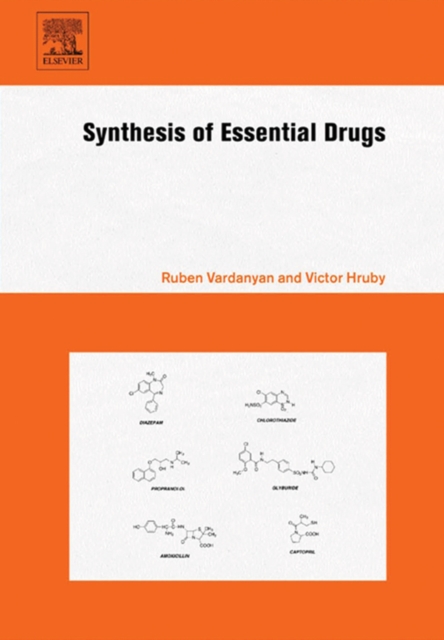
Synthesis of Essential Drugs
Synthesis of Essential Drugs describes methods of synthesis, activity and implementation of diversity of all drug types and classes.With over 2300 references, mainly patent, for the methods of synthesis for over 700 drugs, along with the most widespread synonyms for these drugs, this book fills the gap that exists in the literature of drug.
eBook

Detecting O2 binding sites in protein cavities
Internal cavities are important elements in protein structure, dynamics, stability and function. Here we use NMR spectroscopy to investigate the binding of molecular oxygen (O
2
) to cavities in a well-studied model for ligand binding, the L99A mutant of T4 lysozyme. On increasing the O
2
concentration to 8.9 mM, changes in
1
H,
15
N and
13
C chemical shifts and signal broadening were observed specifically for backbone amide and side chain methyl groups located around the two hydrophobic cavities of the protein. O
2
-induced longitudinal relaxation enhancements for amide and methyl protons could be adequately accounted for by paramagnetic dipolar relaxation. These data provide the first experimental demonstration that O
2
binds specifically to the hydrophobic and not the hydrophilic cavities, in a protein. Molecular dynamics simulations visualized the rotational and translational motions of O
2
in the cavities, as well as the binding and egress of O
2
, suggesting that the channel consisting of helices D, E, G, H and J could be the potential gateway for ligand binding to the protein. Due to strong paramagnetic relaxation effects, O
2
gas-pressure NMR measurements can detect hydrophobic cavities when populated to as little as 1% and thereby provide a general and highly sensitive method for detecting oxygen binding in proteins.
Journal Article

Effect of Different Amino Acids and Heating Conditions on the Formation of 2-Amino-1-methyl-6-phenylimidazo4,5-bpyridine (PhIP) and Its Kinetics Formation Using Chemical Model System
The formation of 2-amino-1-methyl-6-phenylimidazo[4,5-b]pyridine (PhIP) was investigated using a kinetic study approach as described by first-order, Arrhenius, and Eyring equations. Chemical model systems with different amino acid precursors (proline, phenylalanine, and glycine) were examined at different times (4, 8, 12, and 16 min) and temperatures (150, 180, 210, 240, and 270 °C). PhIP was detected using high-performance liquid chromatography equipped with fluorescence detector (HPLC-FLD). The good fit in first-order suggested that PhIP formation was influenced by the types of amino acids and PhIP concentration significantly increased with time and temperature (up to 240 °C). PhIP was detected in proline and phenylalanine model systems but not in the glycine model system. The phenylalanine model system demonstrated low activation energy (Ea) of 95.36 kJ/mol that resulted in a high rate of PhIP formation (great amount of PhIP formed). Based on the ∆S‡ values both proline and phenylalanine demonstrated bimolecular rate-limiting steps for PhIP formation. Altogether these kinetic results could provide valuable information in predicting the PhIP formation pathway.
Journal Article