
Catalogue Search | MBRL


Are you sure you want to remove the book from the shelf?

{{itemTitle}}
8,672
result(s) for
"Models (Persons)"
Sort by:

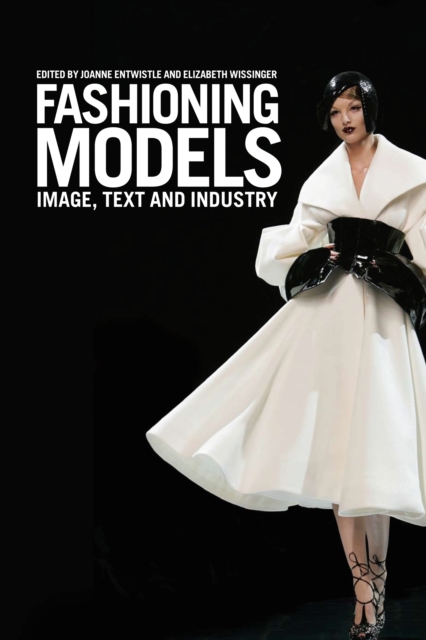
Fashioning Models
This volume presents a cutting-edge examination of modelling through race, class and gender, as well as its structure as an aesthetic marketplace within the global fashion economy. Accessible and highly engaging, Fashioning Models is essential reading for students and scholars of fashion and related disciplines.
eBook

Harper's bazaar models
The pages of Harper's Bazaar have been a stage for fashion's biggest supermodels for generations and remain so today.
Book

The impact of perceived restorative destination environments on tourists’ willingness-To-Pay for environmental protection
Tourist payment is one of the effective ways to solve the shortage of environmental protection and development funds in ecotourism areas. Prior research has predominantly examined the factors influencing tourists’ Willingness-To-Pay (WTP) for environmental protection from the tourists’ own perspective, yet there remains a gap in exploring how destinations can effectively motivate tourists’ willingness to contribute financially to environmental conservation efforts. Based on Reasonable Person Model (RPM), with the famous ecotourism site of Hulunbuir Grassland in China as the research site, this study tested the relationship between Perceived destination restorative qualities (PDRQs), Eudaimonic well-being(EWB), Ecotourism destination image(EDI), and WTP for environmental protection, based on questionnaire survey and structural equation model. According to the results, PDRQs did not significantly affect WTP, however, RDRQs made a positive impact on EWB and EDI, Furthermore, EWB and EDI fully mediated the correlation between RDRQs and WTP. These findings confirm that the RPM is applicable to account for the mechanism of RDRQs on WTP for environmental protection, expand its research scope, and help us to comprehend the relationship between human and environment and the inducing mechanism of WTP for environmental protection from the aspect of environmental psychology.
Journal Article


The Trial of Gustav Graef
Although largely forgotten now, the 1885 trial of German artist Gustav Graef was a seminal event for those who observed it. Graef, a celebrated sixty-four-year-old portraitist, was accused of perjury and sexual impropriety with underage models. On trial alongside him was one of his former models, the twenty-one-year-old Bertha Rother, who quickly became a central figure in the affair. As the case was being heard, images of Rother, including photographic reproductions of Graef's nude paintings of her, began to flood the art shops and bookstores of Berlin and spread across Europe. Spurred by this trade in images and by sensational coverage in the press, this former prostitute was transformed into an international sex symbol and a target of both public lust and scorn. Passionate discussions of the case echoed in the press for months, and the episode lasted in public memory for far longer. The Graef trial, however, was much more than a salacious story that served as public entertainment. The case inspired fierce political debates long after a verdict was delivered, including disputes about obscenity laws, the moral degeneracy of modern art and artists, the alleged pernicious effects of Jewish influence, legal restrictions on prostitution, the causes of urban criminality, the impact of sensationalized press coverage, and the requirements of bourgeois masculine honor. Above all, the case unleashed withering public criticism of a criminal justice system that many Germans agreed had become entirely dysfunctional. The story of the Graef trial offers a unique perspective on a German Empire that was at the height of its power, yet riven with deep political, social, and cultural divisions. This compelling study will appeal to historians and students of modern German and European history, as well as those interested in obscenity law and class and gender relations in nineteenth-century Europe.
eBook


Using the RPM Model to Explore the Impact of Organic Agritourism Destination Fascination on Loyalty—The Mediating Roles of Place Attachment and Pro-Environmental Behavior
Maintaining the sustainable development of fascinating resources in Taiwan’s Hualien and Taitung (Huatung) regions is the basis of organic agritourism. Loyalty not only represents tourists’ commitment to return and recommend but also serves as a goal for destination development. The purpose of this study is to propose and examine the effect of destination fascination on loyalty through a conceptualized Reasonable Person Model (RPM), mediated by place attachment and pro-environmental behaviors. SPSS21 and the linear structure relationship model (LISREL) were used as data analysis tools in this study. A total of 500 valid online questionnaires were collected through snowballing and convenience sampling. The data analysis results revealed that destination fascination has a positive and significant impact on loyalty through place attachment and pro-environmental behavior. Another finding is that place dependence, place identity, and pro-environmental behavior all have mediating effects, with place identity being the main mediating variable. The contributions of this study are mainly reflected in examining the application of RPM in fascination and loyalty, as well as providing practical suggestions for destination fascination and place identity.
Journal Article

Veruschka : the unseen photographs by Johnny Moncada
Capturing the romance and beauty of la dolce vita, this volume features intimate and rare moments of Veruschka, the iconic face of 1960s glamour, from the forgotten and unpublished photographic archive of Johnny Moncada. When fashion photographer Johnny Moncada unlocked a trunk he had left sealed for forty years, he and his daughter discovered ten thousand of his unpublished negatives. They revealed the world of 1960s Italian fashion in all its languid glamour, personified by the iconic Veruschka. In three thousand images, Moncada captured the German-born model in both beautifully staged and informal poses. A selection of these photographs is presented in this lavish volume. They were taken over the course of a year in Rome, including seaside shoots in Capri, Sardinia, and other locales of la dolce vita. While serving as an invaluable source of inspiration to aficionados of 1960s style, Moncada's work also presents a rare glimpse of a young woman, known to friends as Vera, transforming in front of the camera into the image of perfection that we know as Veruschka.
Book
The business of being a supermodel
Supermodel Naomi Campbell discusses expanding her influence beyond the runway, from her non-profit Fashion for Relief to her YouTube channel \"Being Naomi\" at WSJ Tech Live in Laguna Beach.
Streaming Video