
Catalogue Search | MBRL


Are you sure you want to remove the book from the shelf?

{{itemTitle}}
14,940
result(s) for
"Modern dance"
Sort by:


No Fixed Points: Dance in the Twentieth Century
This book chronicles one hundred years of dramatic developments in ballet, modern, and experimental dance for stage and screen in Europe and North America. The volume is magisterial in scope, encompassing the history of theatrical dance from 1900 through 2000. Beginning with turn-of-the-century dancer-choreographers like Loie Fuller, Isadora Duncan, Michel Fokine, and a bit later Vaslav Nijinsky, and proceeding through the profusion of dance styles performed today, the book provides an unparalleled view of dance in performance as it changed and grew in the twentieth century. Nancy Reynolds and Malcolm McCormick set dance in broader cultural and historical contexts, examine specific dance works, and explore the contributions of outstanding choreographers, performers, visual artists, impresarios, composers, critics, and other figures. They discuss the breakaway barefoot dance of the early 1900s and demonstrate its links with later forms and styles. With unusual detail, fascinating illustrations, and wide-ranging insights, this book is an indispensable guide to the transformations in the dance scene of the twentieth century.
eBook


Pilobolus : a story of dance and life
The dynamic history of theinnovative, beloved, and critically acclaimed dance theater company, withrevelatory behind-the-scenes details of its creators and significant works The ingeniously innovative and enduringly popularAmerican dance theatre company Pilobolus has helped redefine, remix, andrejuvenate the essence of dance with its eclectic sensibility and daringathleticism. Now, for the first time, the story of Pilobolus, from itscounterculture origins through its pop-culture triumphs and contemporary globalacclaim, is revealed in a book that will entrance longtime admirers andnewcomers alike. Written with unprecedented accessto the companywith insights from unpublished archival materials and interviewswith its founders, dancers, and current artistic directorsand featuring bothclassic and never-before-seen photos, Pilobolus offers previously untolddetails about the groups history and the creation of its most significantworks. Robert Pranzatelli describes the company's genesis in a Dartmouth danceclass in 1971 and how Pilobolus revolutionized dance with its blend ofsensuality, physical achievement, and visual wit. In these pages, the troupe performson Broadway, travels the world, and by the late 1980s secures a place in dancehistory, while its growth is marked by periods of internal conflict,challenges, and change. As Pilobolus continues to morph, invent, and thrive withthe arrival of new artists and collaborators, its story encompasses love, loss,grief, and rebirth, as well as insights into the secrets of the creativeprocesshow performers and choreographers think and work.More than ahistory, Pilobolus is a narrative of life and art, and the vitality thatinfuses and inspires both when they align and inhabit each other.
eBook

Multiplicity, embodiment and the contemporary dancer : moving identities
\"In recent years, the practice of contemporary dancers has altered significantly in the transition from canonical choreographic vocabularies to a proliferation of choreographic signatures within mainstream and independent dance. Dancers are often required to collaborate creatively on the formation of choreographic material, thus engaging conceptually with emerging cultural paradigms. This book explores the co-creative practice of contemporary dancers solely from the point of view of the dancer. It reveals multiple dancing perspectives, drawn from interviews, current writing and evocative accounts from inside the choreographic process, illuminating the myriad ways that dancers contribute to the production of contemporary dance culture.A key insight of this book is that the dancer's signature way of being is a 'moving identity', which incorporates the past dance experience, anatomical structures and conditioned human movement of the dancer as a self-in-process. The moving identity is the movement signature that the dancer forms throughout a career path\"-- Provided by publisher.
Book
Dancing across the page
An innovative exploration of understanding through dance, Dancing Across the Page draws on the frameworks of phenomenology, feminism and postmodernism to offer readers an understanding of performance studies that is grounded in personal narrative and lived experience. Through accounts of contemporary dance making, improvisation and dance education, Karen Barbour explores a diversity of themes, including power, activism, and cultural, gendered and personal identity. An intimate yet rigorous investigation of creativity in dance, Dancing Across the Page emphasizes embodied knowledge and imagination as a basis for creative action in the world.
eBook

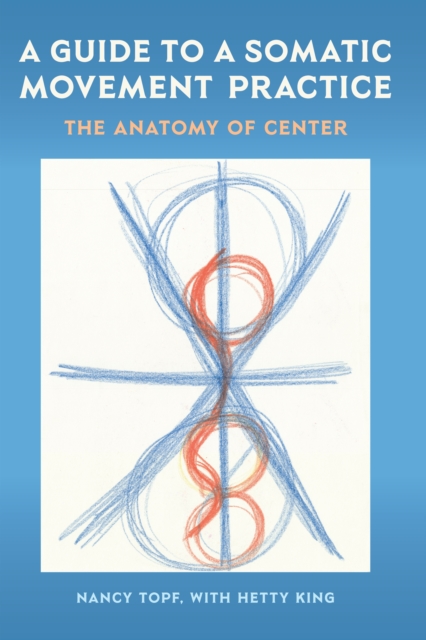
A Guide to a Somatic Movement Practice
An introduction to embodied movement through the work of
a dance education pioneer
In this introduction to the work of somatic dance education
pioneer Nancy Topf (1942-1998), readers are ushered on a journey to
explore the movement of the body through a close awareness of
anatomical form and function. Making available the full text of
Topf's The Anatomy of Center for the first time in print,
this guide helps professionals, teachers, and students of all
levels integrate embodied, somatic practices within contexts of
dance, physical education and therapy, health, and mental
well-being.
Hetty King, a movement educator certified in the Topf Technique®,
explains how the ideas in this work grew out of Topf's involvement
in developing Anatomical Release Technique-an important concept in
contemporary dance-and the influence of earlier innovators Barbara
Clark and Mabel Elsworth Todd, founder of the approach to movement
known as \"ideokinesis.\" Featuring lessons written as a dialogue
between teacher, student, and elements of the body, Topf's material
is accompanied by twenty-one activities that allow readers to use
the book as a self-guided manual. A Guide to a Somatic Movement
Practice is a widely applicable entry point into the tradition
of experiential anatomy and its mindful centering of the living,
breathing body.
eBook


Synergistic Application of Modern Dance Education and Creation in Cross-Cultural Perspective
In the context of globalization, modern dance education urgently needs to integrate cross-cultural perspectives and technological tools to enhance teaching and creative efficiency. In this study, a system framework based on the synergistic application of cross-cultural dance and creation is designed with motion capture technology and neural fusion shape technology as the core. By constructing a dance movement choreography assistance system, combining quaternion-based motion retrieval, multi-level B-spline motion path editing algorithms, and virtual character models generated by the neural fusion shape technology, the efficient synthesis of dance movements and cross-cultural resource integration are realized. The results showed that the students in the experimental group using the system were significantly better than the traditional teaching group in terms of dance skills (movement fluency, body posture, rhythmic accuracy) and physical qualities (comprehensive balance, sensitive coordination) (P<0.05), and the total performance was improved by 6.50% (79.07±2.35 in the experimental group and 74.17±2.63 in the control group). The establishment of the cross-cultural teaching resource library and the automatic curriculum generation algorithm effectively supported the curriculum design under the multicultural perspective. This study provides theoretical and practical basis for technological innovation and cross-cultural integration in modern dance education.
Journal Article