
Catalogue Search | MBRL


Are you sure you want to remove the book from the shelf?

{{itemTitle}}
38
result(s) for
"Modern dance Europe."
Sort by:

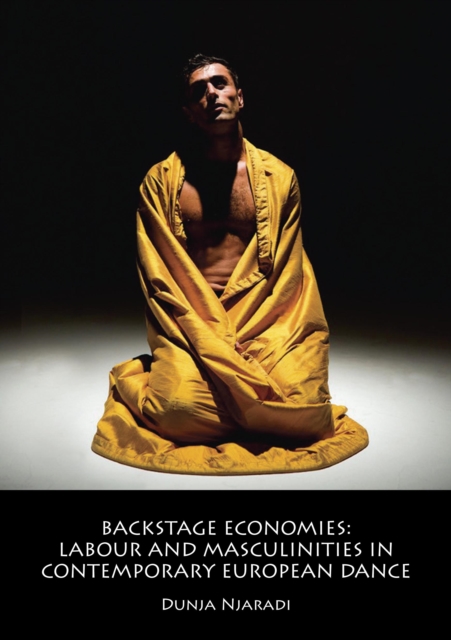
Backstage Economies
Backstage Economies: Labour and Masculinities in Contemporary European Dance investigates gender politics and labour practices in contemporary European dance. By focusing on masculinities and job careers in professional dance, this study looks at the cultural, historical, and material conditions that shape the dancers' experience of 'the everyday' as they travel to work; struggle to secure funding; nurse injuries; and negotiate their gender and work identities. The emphasis on the dancers' everyday experience is designed to critically explore and to challenge the established methodological boundaries of dance studies: the focus shifts away from the scholarly attentions that are more regularly paid to the phenomenology and perception of performance, towards the material conditions of dance production. In general, this book revisits the debates in dance education related to gender politics and the well-being of dancers; and it also traces and discusses some significant shortcomings of the current European dance policies and employment practices.
eBook


The Dancing Body in Renaissance Choreography
Renaissance dance treatises claim that the dance is a language but do not explain how or what dancing communicates. Since the body is the instrument of this hypothetical language, The Dancing Body in Renaissance Choreography problematizes the absence of the dancing body in treatises in order to reconstruct it through a series of intertextual readings triggered by Thoinot Arbeau’s definition of dance as a mute rhetoric in Orchésographie . This book shows that the oratorical model for Arbeau’s definition of the dance is epideictic and that although one cannot equate dance and oratorical action, the ends of oratorical action are those of dance: persuasion through charm and emotion.
eBook

Like a bomb going off : Leonid Yakobson and ballet as resistance in Soviet Russia
\"Everyone has heard of George Balanchine. Few outside Russia know of Leonid Yakobson, Balanchine's contemporary, who remained in Lenin's Russia and survived censorship during the darkest days of Stalin. Like Shostakovich, Yakobson suffered for his art and yet managed to create a singular body of revolutionary dances that spoke to the Soviet condition. His work was often considered so culturally explosive that it was described as \"like a bomb going off.\" Based on untapped archival collections of photographs, films, and writings about Yakobson's work in Moscow and St. Petersburg for the Bolshoi and Kirov ballets, as well as interviews with former dancers, family, and audience members, this illuminating and beautifully written biography brings to life a hidden history of artistic resistance in the USSR through this brave artist, who struggled against officially sanctioned anti-Semitism while offering a vista of hope\"-- Provided by publisher.
Book

Process Essay. ‘A Feather on the breath of God’: Medieval legacies in modern choreography
This article is a reflection on and analysis of my working process as a scholar-artist, based on my experience choreographing and performing ‘Cosmic Dance,’ an evening-length work of modern dance accompanied by a live choral performance of Hildegard von Bingen’s antiphons for St. Ursula and the eleven thousand virgins from her Symphonia armonie celestium revelationum, in 2017. I explain my approach to the piece, explicating the challenges of ‘recreating’ or ‘reconstructing’ medieval movement practices in modern performance, as well as the challenges particular to this project, then reflect on the ways in which engaging with legacies of the medieval in my choreographic methodology and performance choices helped me to navigate those challenges. Throughout the article I discuss specific instances of these engagements, integrating images and video from the performance itself as examples of interactions with traditions of medieval dance, text, art, performance practice, and concepts of authorship.
Journal Article


New German Dance Studies
New German Dance Studies offers fresh histories and theoretical inquiries that resonate across fields of the humanities. Sixteen essays range from eighteenth-century theater dance to popular contemporary dances in global circulation. In an exquisite trans-Atlantic dialogue that demonstrates the complexity and multilayered history of German dance, American and European scholars and artists elaborate on definitive performers and choreography, focusing on three major thematic areas: Weimar culture and its afterlife, the German Democratic Republic, and recent conceptual trends in theater dance._x000B__x000B_Contributors are Maaike Bleeker, Franz Anton Cramer, Kate Elswit, Susanne Franco, Susan Funkenstein, Jens Richard Giersdorf, Yvonne Hardt, Sabine Huschka, Claudia Jeschke, Marion Kant, Gabriele Klein, Karen Mozingo, Tresa Randall, Gerald Siegmund, and Christina Thurner.
eBook
Dreams of Germany
For many centuries, Germany has enjoyed a reputation as the ‘land of music’. But just how was this reputation established and transformed over time, and to what extent was it produced within or outside of Germany? Through case studies that range from Bruckner to the Beatles and from symphonies to dance-club music, this volume looks at how German musicians and their audiences responded to the most significant developments of the twentieth century, including mass media, technological advances, fascism, and war on an unprecedented scale.
eBook

Like a Bomb Going Off: Leonid Yakobson and Ballet as Resistance in Soviet Russia
Everyone has heard of George Balanchine, but few outside Russia know of Leonid Yakobson, Balanchine’s contemporary and arguably his equal, who remained in Lenin’s Russia and survived censorship during the darkest days of Stalin. Like Shostakovich, Yakobson suffered for his art and yet managed to create a singular body of revolutionary work that spoke to the Soviet condition. His ballets were considered so explosive that their impact was described as “like a bomb going off.” Challenged rather than intimidated by the restrictions imposed by Soviet censors on his ballets, Yakobson offered dancers and audiences an experience quite different from the prevailing Soviet aesthetic. He was unwilling to bow completely to the state’s limitations on his artistic opportunities, so despite his fraught relations with his political overseers, his ballets retained early-twentieth-century movement innovations such as turned-in and parallel-foot positions, oddly angled lifts, and eroticized content, all of which were anathema to prevailing Soviet ballet orthodoxy. For Yakobson, ballet was a form of political discourse, and he was particularly alive to the suppressed identity of Soviet Jews and officially sanctioned anti-Semitism. He used dance to celebrate reinvention and self-authorship—the freedom of the individual voice as subject and medium. His ballets challenged the role of the dancing body during some of the most repressive decades of totalitarian rule. Yakobson’s work unfolded in a totalitarian state, and there was little official effort to preserve his choreographic archive or export knowledge of him to the West—gaps that dance historian Janice Ross seeks to redress in this book. Based on untapped archival collections of photographs, films, and writings about Yakobson’s work in Moscow and St. Petersburg for the Bolshoi and Kirov ballets, as well as interviews with former dancers, family, and audience members, this illuminating and beautifully written study brings to life a hidden history of artistic resistance in the Soviet Union through the story of a brave artist who struggled his entire life against political repression yet continued to offer a vista of hope.
eBook