
Catalogue Search | MBRL


Are you sure you want to remove the book from the shelf?

{{itemTitle}}
2
result(s) for
"Modernism (Art) Lebanon Beirut."
Sort by:
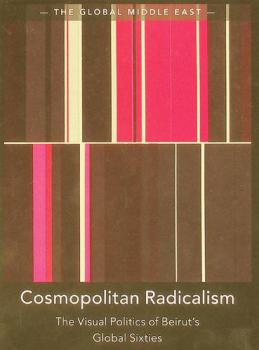
Cosmopolitan radicalism : the visual politics of Beirut's global sixties
\"Exploring the intersections of visual culture, design and politics in Beirut from the late 1950s to the mid-1970s, this compelling interdisciplinary study critically examines a global conjuncture in Lebanon's history, marked by anticolonial struggle and complicated by a Cold War order. Against a celebratory reminiscence of the \"golden years\", Beirut's long 1960s is conceived of as a liminal juncture, an anxious time and space when the city held out promises at once politically radical and radically cosmopolitan. Zeina Maasri examines the transnational circuits that animated Arab modernist pursuits, shedding light on key cultural transformations that saw Beirut develop as a Mediterranean site of tourism and leisure, a nexus between modern art and pan-Arab publishing and, through the rise of the Palestinian Resistance, a node in revolutionary anti-imperialism. Drawing on uncharted archives of printed media this book expands the scope of historical analysis of the postcolonial Arab East\"-- Provided by publisher.
Book

Modern art in Cold War Beirut : drawing alliances
\"Modern Art in Cold War Beirut: Drawing Alliances examines the entangled histories of modern art and international politics during the decades of the 1950s and 60s. Positing the Cold War as a globalized conflict, fraught with different political ideologies and intercultural exchanges, this study asks how these historical circumstances shaped local debates in Beirut over artistic pedagogy, the social role of the artist, the aesthetics of form, and, ultimately, the development of a national art. Drawing on a range of archival material and taking an interdisciplinary approach that combines Art History, Middle Eastern, and Cold War studies, Sarah Rogers argues that the genealogies of modern art can never be understood as isolated, national histories, but rather that they participate in an ever contingent global modernism. This book will be of particular interest to scholars in art history, contemporary art, and Middle East studies\"-- Provided by publisher.
BOOK