
Catalogue Search | MBRL


Are you sure you want to remove the book from the shelf?

{{itemTitle}}
18,676
result(s) for
"Modernist art"
Sort by:

After 1851
Echoing Joseph Paxton's question at the close of the Great Exhibition, 'What is to become of the Crystal Palace?', this interdisciplinary essay collection argues that there is considerable potential in studying this unique architectural and art-historical document after 1851, when it was rebuilt in the South London suburb of Sydenham. It brings together research on objects, materials and subjects as diverse as those represented under the glass roof of the Sydenham Palace itself; from the Venus de Milo to Sheffield steel, souvenir 'peep eggs' to war memorials, portrait busts to imperial pageants, tropical plants to cartoons made by artists on the spot, copies of paintings from ancient caves in India to 1950s film. Essays do not simply catalogue and collect this eclectic congregation, but provide new ways for assessing the significance of the Sydenham Crystal Palace for both nineteenth- and twentieth-century studies. The volume will be of particular interest to researchers and students of British cultural history, museum studies, and art history.
eBook
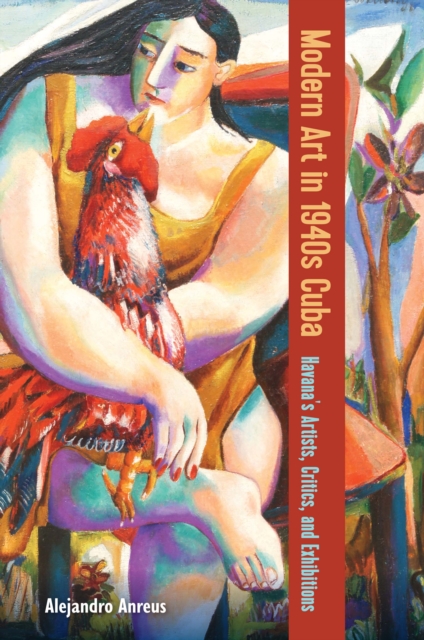
Modern Art in 1940s Cuba
The first book to explore the work of avant-garde artists in Cuba during the nation’s years as a democracy
Providing the first comprehensive history of modern Cuban art during the 1940s, this book contextualizes the artistic practices, values, and contributions of the first and second generations of avant-garde artists on the island within the framework of the nation’s only democratic period.
Between 1940 and the 1952 coup by Fulgencio Batista, Cuba experienced a democratic system of government as well as a vibrant cultural renaissance, particularly in the visual arts. Art historian and curator Alejandro Anreus uses interviews with key figures as well as previously untapped archival materials from this period to explore how Cuban artists collaborated to create distinct visual languages that would become part of the canon of modern art in the Americas. In this decade, Cuban art was showcased in major exhibitions both domestically and internationally, including the landmark 1944 exhibition
Modern Cuban Painters at the Museum of Modern Art in New York.
In addition to formal analysis of specific artworks, Anreus provides social art history to situate these artists and their work within their political and economic context. Anreus draws attention to an influential but overlooked decade in Cuba’s political and artistic history that reflects postwar hemispheric solidarity and cultural exchange between democracies, highlighting the lasting impact of this time and place on the global landscape of modern art.
eBook

Public Diplomacy on the Front Line
The Exhibition of Modern Brazilian Paintings, held at the Royal Academy of Arts of London and seven other major venues, had never been academically investigated. The research unearthed abundant firsthand documents to reconstruct the episode and claims that the initiative was intended and managed to achieve a substantial impact on views about Brazil, by means of conveying a well-planned message.
eBook
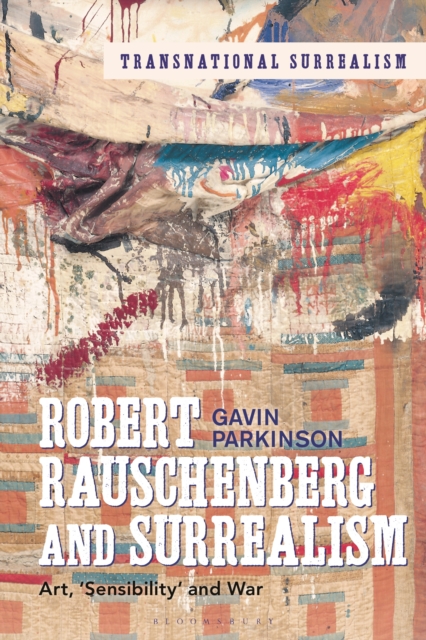
Robert Rauschenberg and surrealism: art, 'sensibility' and war in the 1960s
The art of Robert Rauschenberg (1925-2008) is usually viewed as quite distinct from Surrealism, a movement which the artist himself displayed some hostility towards. However, Rauschenberg had a very positive reception among Surrealists, particularly across the period 1959-69.In the face of Rauschenberg's avowals of his own 'literalism' and insistence on his art as 'facts,' this book gathers generous evidence of the poetic, metaphorical, allusive, associative and connotative dimensions of the artist's oeuvre as identified by Surrealists, and thus extrapolates new readings from Rauschenberg's key works on that basis. By viewing Rauschenberg's art against the expansion of the cultural influence of the United States in Europe in the period after the Second World War and the increasingly politicized activities of the Surrealists in the era of the Algerian War of Independence (1954-62), Robert Rauschenberg and Surrealism shows how poetic inference of the artist's work was turned towards political interpretation. By analysing Rauschenberg's art in the context of Surrealism, and drawing from it new interpretations and perspectives, this volume simultaneously situates the Surrealist movement in 1960s American art criticism and history.
eBook

The icon and the square : Russian modernism and the Russo-Byzantine revival
In The Icon and the Square, Maria Taroutina examines how the traditional interests of institutions such as the crown, the church, and the Imperial Academy of Arts temporarily aligned with the radical, leftist, and revolutionary avant-garde at the turn of the twentieth century through a shared interest in the Byzantine past, offering a counternarrative to prevailing notions of Russian modernism.Focusing on the works of four different artists—Mikhail Vrubel, Vasily Kandinsky, Kazimir Malevich, and Vladimir Tatlin—Taroutina shows how engagement with medieval pictorial traditions drove each artist to transform his own practice, pushing beyond the established boundaries of his respective artistic and intellectual milieu. She also contextualizes and complements her study of the work of these artists with an examination of the activities of a number of important cultural associations and institutions over the course of several decades. As a result, The Icon and the Square gives a more complete picture of Russian modernism: one that attends to the dialogue between generations of artists, curators, collectors, critics, and theorists.The Icon and the Square retrieves a neglected but vital history that was deliberately suppressed by the atheist Soviet regime and subsequently ignored in favor of the secular formalism of mainstream modernist criticism. Taroutina’s timely study, which coincides with the centennial reassessments of Russian and Soviet modernism, is sure to invigorate conversation among scholars of art history, modernism, and Russian culture.
eBook

Automatic for the Masses
InAutomatic for the Masses, Petre M. Petrov offers a novel, theoretically informed account of the transition from modernism to Socialist Realism, tracing their connections through Modernist notions of agency and authorship.
eBook

Modernism in Scandinavia
Scandinavia is a region associated with modernity: modern design, modern living and a modern welfare state. This new history of modernism in Scandinavia offers a picture of the complex reality that lies behind the label: a modernism made up of many different figures, impulses and visions. It places the individuals who have achieved international fame, such as Edvard Munch and Alvar Aalto in a wider context, and through a series of case studies, provides a rich analysis of the art, architecture and design history of the Nordic region, and of modernism as a concept and mode of practice. Scandinavian Modern addresses the decades between 1890 and 1970 and presents an intertwined history of modernism across the region. Charlotte Ashby gives a rationale for her focus on those countries which share an interrelated history and colonial past, but also stresses influences from outside the region, such as the English Arts and Crafts movement and the impact of emergent American modernism. Her richly illustrated account guides the reader through key historical periods and cultural movements, with case studies illuminating key art works, buildings, designed products and exhibitions.
eBook

On the Strange Place of Religion in Contemporary Art
Can contemporary art say anything about spirituality? John Updike calls modern art \"a religion assembled from the fragments of our daily life,\" but does that mean that contemporary art is spiritual? What might it mean to say that the art you make expresses your spiritual belief?
On the Strange Place of Religion in Contemporary Art explores the curious disconnection between spirituality and current art. This book will enable you to walk into a museum and talk about the spirituality that is or is not visible in the art you see.
\"For those searching for a way to broach the intriguing and complicated topic of religion in relation to cintemporary art, this book provides much to talk about...\" -- The Journal of Religion
James Elkins is Professor of Art History, Theory and Criticism at the School of the Art Institute of Chicago, and Chair of Art History at University College, Cork, Ireland. Among his books are Pictures and Tears, Visual Studies: a Skeptical Introduction, What Painting Is, Stories of Art , and How to Use Your Eyes, all published by Routledge.
eBook

Modernist Form and the Myth of Jewification
Why were modernist works of art, literature, and music that were neither by nor about Jews nevertheless interpreted as Jewish? In this book, Neil Levi explores how the antisemitic fantasy of a mobile, dangerous, contagious Jewish spirit unfolds in the antimodernist polemics of Richard Wagner, Max Nordau, Wyndham Lewis, and Louis-Ferdinand Celine, reaching its apotheosis in the notorious 1937 Nazi exhibition \"Degenerate Art.\" Levi then turns to James Joyce, Theodor W. Adorno, and Samuel Beckett, offering radical new interpretations of these modernist authors to show how each presents his own poetics as a self-conscious departure from the modern antisemitic imaginary. Levi claims that, just as antisemites once feared their own contamination by a mobile, polluting Jewish spirit, so too much of postwar thought remains governed by the fear that it might be contaminated by the spirit of antisemitism. Thus he argues for the need to confront and work through our own fantasies and projections not only about the figure of the Jew but also about that of the antisemite.
eBook

Brussels 1900 Vienna
Brussels 1900 Vienna examines the complex cultural networks between Austria and Belgium (1880-1930), and situates these interrelations within a wider European context. The collection covers various fields, including literature, translation, music, theatre, visual arts, café culture, and architecture.
eBook