
Catalogue Search | MBRL


Are you sure you want to remove the book from the shelf?

{{itemTitle}}
32
result(s) for
"Modular coordination (Architecture)"
Sort by:


Mobile and rapidly assembled structures IV
Structures that move in the course of normal use, or which have to be assembled or erected rapidly on a relatively unprepared site, offer a particular challenge to the designer. The interaction between the structure and the mechanism by which it moves is essential in these cases. The speed of assembly, what this means in terms of logistics, materials and cost, is a major factor in many such structures. Mobile and rapidly assembled structures play a major role in disaster mitigation and temporary accommodation. They are of primary importance in many military as well as civilian applications and are widely used for rescue and maintenance services. Their importance continues to grow in contemporary society where speed of response is of primary importance. There are common problems such as the efficient design of assembly joints, the resistance to damage of the membrane and metal cladding, crashworthiness and the limits of serviceability. Some areas of the subject are already well documented, but knowledge is fragmented and there is little design guidance available in the form of textbooks, data sheets or codes of practice. The interaction between morphology, kinematic behaviour and structural performance – typical for these structures – poses real challenges in terms of design and successful realisation. This multi-disciplinary proceedings volume contains papers presented at the fourth International Conference on Mobile, Adaptable and Rapidly Assembled Structures. Topics covered include: Temporary Structures and Dwellings; Engineering Transformation; Rapidly Assembled Kit-of-parts Systems; Innovative Approached; Tensegrity and Reciprocal Frames.
eBook
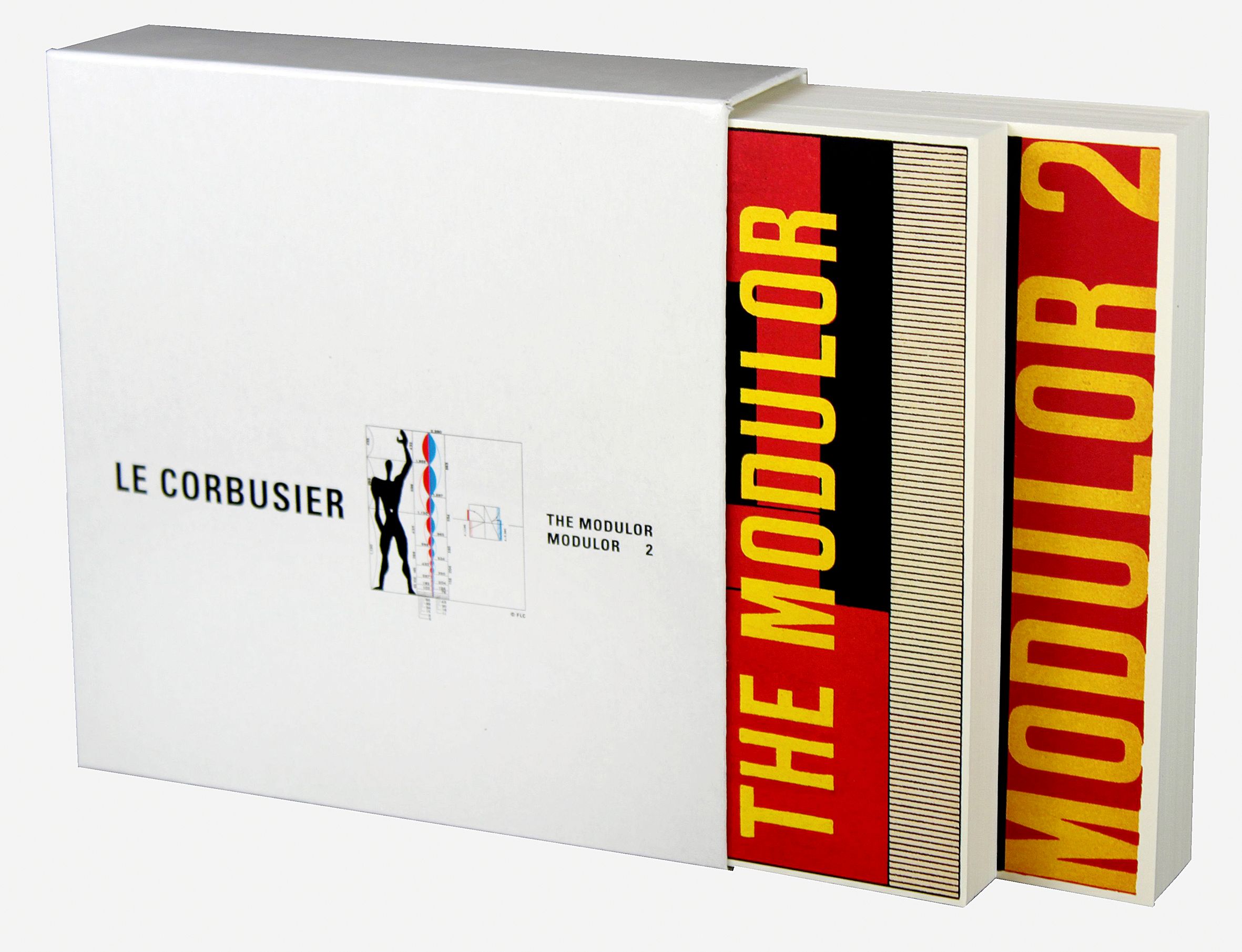
The Modulor and Modulor 2
In the years 1942 to 1948, Le Corbusier developed a system of measurements which became known as “Modulor”. Based on the Golden Section and Fibonacci numbers and also using the physical dimensions of the average human, “Modulor” is a sequence of measurements which Le Corbusier used to achieve harmony in his architectural compositions. Le Modulor was published in 1950 and after meeting with success, Le Corbusier went on to publish Modulor 2 in 1955. In many of Le Corbusier’s most notable buildings, including the Chapel at Ronchamp and the Unité d’habitation, evidence of his Modulor system can be seen. These two volumes form an important and integral part of Le Corbusier’s theoretical writings.
eBook


The Modulor and Modulor 2
In the years 1942 to 1948, Le Corbusier developed a system of measurements which became known as \"Modulor\".Based on the Golden Section and Fibonacci numbers and also using the physical dimensions of the average human, \"Modulor\" is a sequence of measurements which Le Corbusier used to achieve harmony in his architectural compositions.
eBook

Minoan architectural design : formation and signification
No detailed description available for \"Minoan Architectural Design\".
eBook

Effect of Rating Modification on a Fuzzy-Based Modular Architecture for Medical Device Design and Development
The goal of this research is to determine the effect of customer ratings on the optimal number of modules for medical device design. Medical devices have a 90% failure rate in their first prototype tests according to the international testing body, Intertek. To address this key issue of quality, we present an integrated, collaborative, modular architecture method for medical device design and development. A typical glucometer is used as proof of concept to demonstrate the methodology and analyze the impact of changing the customer ratings on the optimal number of modules and minimum deviation. The implication of this research is to generate scholarly work and to reduce the number of potential failure points in medical devices by determining the optimal number of modules.
Journal Article
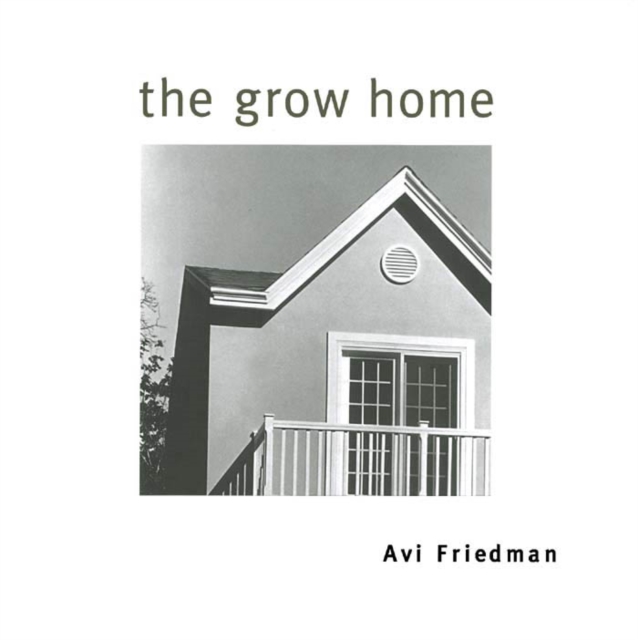
Grow Home
With economic restructuring, demographic shifts, and lifestyle changes, the traditional family - working father, stay-at-home mother, two to three children - is no longer the norm and the need for smaller homes at moderate cost has skyrocketed. The first prototype of the Grow Home was built on the campus of McGill University in 1990 and more than one thousand units were built across North America and Europe in the first year alone.
eBook