
Catalogue Search | MBRL


Are you sure you want to remove the book from the shelf?

{{itemTitle}}
107,976
result(s) for
"Mohammad"
Sort by:
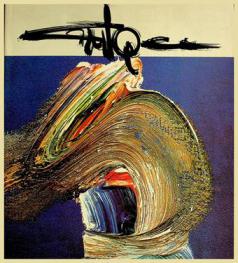
Gulgee
Catalogue of the author's paintings and contributed articles on his paintings ; previously published.
Book

Healthcare Access and Quality Index based on mortality from causes amenable to personal health care in 195 countries and territories, 1990–2015: a novel analysis from the Global Burden of Disease Study 2015
National levels of personal health-care access and quality can be approximated by measuring mortality rates from causes that should not be fatal in the presence of effective medical care (ie, amenable mortality). Previous analyses of mortality amenable to health care only focused on high-income countries and faced several methodological challenges. In the present analysis, we use the highly standardised cause of death and risk factor estimates generated through the Global Burden of Diseases, Injuries, and Risk Factors Study (GBD) to improve and expand the quantification of personal health-care access and quality for 195 countries and territories from 1990 to 2015.
We mapped the most widely used list of causes amenable to personal health care developed by Nolte and McKee to 32 GBD causes. We accounted for variations in cause of death certification and misclassifications through the extensive data standardisation processes and redistribution algorithms developed for GBD. To isolate the effects of personal health-care access and quality, we risk-standardised cause-specific mortality rates for each geography-year by removing the joint effects of local environmental and behavioural risks, and adding back the global levels of risk exposure as estimated for GBD 2015. We employed principal component analysis to create a single, interpretable summary measure–the Healthcare Quality and Access (HAQ) Index–on a scale of 0 to 100. The HAQ Index showed strong convergence validity as compared with other health-system indicators, including health expenditure per capita (r=0·88), an index of 11 universal health coverage interventions (r=0·83), and human resources for health per 1000 (r=0·77). We used free disposal hull analysis with bootstrapping to produce a frontier based on the relationship between the HAQ Index and the Socio-demographic Index (SDI), a measure of overall development consisting of income per capita, average years of education, and total fertility rates. This frontier allowed us to better quantify the maximum levels of personal health-care access and quality achieved across the development spectrum, and pinpoint geographies where gaps between observed and potential levels have narrowed or widened over time.
Between 1990 and 2015, nearly all countries and territories saw their HAQ Index values improve; nonetheless, the difference between the highest and lowest observed HAQ Index was larger in 2015 than in 1990, ranging from 28·6 to 94·6. Of 195 geographies, 167 had statistically significant increases in HAQ Index levels since 1990, with South Korea, Turkey, Peru, China, and the Maldives recording among the largest gains by 2015. Performance on the HAQ Index and individual causes showed distinct patterns by region and level of development, yet substantial heterogeneities emerged for several causes, including cancers in highest-SDI countries; chronic kidney disease, diabetes, diarrhoeal diseases, and lower respiratory infections among middle-SDI countries; and measles and tetanus among lowest-SDI countries. While the global HAQ Index average rose from 40·7 (95% uncertainty interval, 39·0–42·8) in 1990 to 53·7 (52·2–55·4) in 2015, far less progress occurred in narrowing the gap between observed HAQ Index values and maximum levels achieved; at the global level, the difference between the observed and frontier HAQ Index only decreased from 21·2 in 1990 to 20·1 in 2015. If every country and territory had achieved the highest observed HAQ Index by their corresponding level of SDI, the global average would have been 73·8 in 2015. Several countries, particularly in eastern and western sub-Saharan Africa, reached HAQ Index values similar to or beyond their development levels, whereas others, namely in southern sub-Saharan Africa, the Middle East, and south Asia, lagged behind what geographies of similar development attained between 1990 and 2015.
This novel extension of the GBD Study shows the untapped potential for personal health-care access and quality improvement across the development spectrum. Amid substantive advances in personal health care at the national level, heterogeneous patterns for individual causes in given countries or territories suggest that few places have consistently achieved optimal health-care access and quality across health-system functions and therapeutic areas. This is especially evident in middle-SDI countries, many of which have recently undergone or are currently experiencing epidemiological transitions. The HAQ Index, if paired with other measures of health-system characteristics such as intervention coverage, could provide a robust avenue for tracking progress on universal health coverage and identifying local priorities for strengthening personal health-care quality and access throughout the world.
Bill & Melinda Gates Foundation.
Journal Article
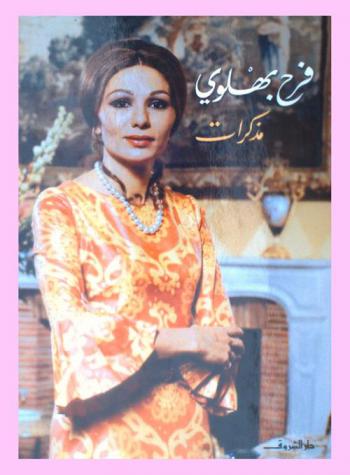
مذكرات /
عندما أتذكر ذلك الصباح من يناير 1979 يعاودني نفس إحساس الحزن الموجع بكل حدته. كانت طهران تعاني هجوما ضاريا منذ شهور، لكن صمتا متوترا يخيم الآن على المدينة كما لو أن عاصمة بلدنا تحبس أنفاسها فجأة اليوم السادس عشر من الشهر ونحن على وشك مغادرة بلدنا، تبدأ قصتها كبدايات القصص الخيالية، ففي الحادية والعشرين من عمرها تزوجت (فرح ديبا) شاه إيران (محمد رضا شاه بهلوي) وخلال أيام انقلبت حياتها الهادئة رأسا على عقب : غطت صحافة العالم حفل تتويجها إمبراطورة لإيران وبين ليلة وضحاها صارت شخصية مشهورة عالميا وشهدت سنوات زواجها الأولى زواجا قائما على الحب وتربية أربعة أطفال وتفانيا في القضايا الاجتماعية والثقافية، على الرغم من دلائل كانت ماثلة في الأفق على وجود انقسامات وطنية خطيرة وبعد عشرين عاما تحول الحلم إلى كابوس ؛ هزت البلاد مظاهرات وأعمال شغب وقررت (فرح) والشاه الرحيل لتجنب إراقة الدماء ولم ير الشاه المنفي وهو يعاني مرضا خطيرا وطنه بعد ذلك أبدا وسعيا معا إلى اللجوء للمغرب وجزر البهاما والمكسيك وبنما واختفيا عن الأعين في مستشفى بنيويورك حيث تلقى الشاه علاجا، حتى منحهما الرئيس المصري (أنور السادات) ملاذا في آخر المطاف، ثم اغتيل هو نفسه على أيدي الأصوليين بعد ثمانية عشر شهرا فحسب، قصة السنوات الأخيرة للشاه واحدة من أكثر الحلقات المؤثرة والمقلقة في أواخر القرن العشرين، حيث بدأت علاقة أمريكا المتوترة مع الشرق الأوسط تكشف عن أسسها الواهية وللمرة الأولى تحطم (فرح ديبا) ـالشاهبانوـ زوجة آخر أباطرة إيران حاجز صمتها وتحكي قصة حبها الموجعة لرجل وبلده وتطرح (حب باق) رؤيتها الحميمة لعصر من الاضطرابات، لكن الأهم من كل ذلك أنها تظل وثيقة إنسانية قوية لشخصية انحصرت حياتها بين ملحمة ومأساة المعركة الوطنية.
BOOK

The Last Shah
The surprising story of Iran's transformation from America's ally in the Middle East into one of its staunchest adversaries Offering a new view of one of America's most important, infamously strained, and widely misunderstood relationships of the postwar era, this book tells the history of America and Iran from the time the last shah, Mohammad Reza Pahlavi, was placed on the throne in 1941 to the 1979 revolution that brought the present Islamist government to power. This revolution was not, as many believe, the popular overthrow of a powerful and ruthless puppet of the United States; rather, it followed decades of corrosion of Iran's political establishment by an autocratic ruler who demanded fealty but lacked the personal strength to make hard decisions and, ultimately, lost the support of every sector of Iranian society. Esteemed Middle East scholar Ray Takeyh provides new interpretations of many key events-including the 1953 coup against Prime Minister Mohammad Mossadeq and the rise of Ayatollah Ruhollah Khomeini-significantly revising our understanding of America and Iran's complex and difficult history.
eBook
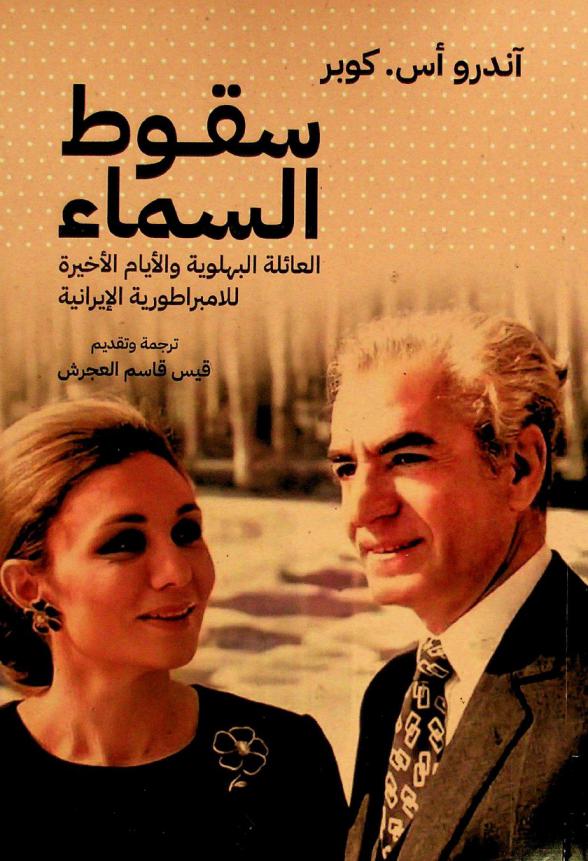
سقوط السماء : العائلة البهلوية والأيام الأخيرة للإمبراطورية الإيرانية
يعرض هذا الكتاب صفحات سقوط الشاه والنظام البهلوي في إيران، وهي ذاتها صفحات صعود المد الإسلامي والتأسيس لولاية الفقيه، إنتهاء بإعلان الجمهورية الإسلامية. ويعرض أيضا غفلة الدوائر الاستخبارية الأميركية، حين تأمرت ضد الشاه وتركته يترنح، ظنا منها أن الحركات الليبرالية واليسارية والعلمانية هي التي ستتصدر المشهد الإيراني. ولم يتصوروا أن الحركة الإسلامية ستجتاح المشهد، وأن النتيجة ستكون قوة مطلقة للخميني، ستمثل فيما بعد أعظم التحديات أمام واشنطن. الشاه مستصحبا معه الحداثة الأوروبية، في مجتمع إسلامي فقير ومحافظ أمام يساريين وعلمانيين يحلمون بالجمهورية وتنظيمات جهادية إسلامية تتحرك بتنظيم نافذ هذا الكتاب يقدم قصة تفصيلية لتلك الأحداث الجسام.
BOOK

Structural Connections of Symbols in Neo-Classical Poetry and Their Representation in the Odes of Mohammad Saeed Mirzaei
Symbolism and symbolic representation serve as mechanisms for ambiguity creation, deepening meaning, engaging the reader in meaning-making, and transitioning from monosemy to polysemy. The advent of modernity, exposure to Western poetic movements—particularly Symbolism—and the oppressive sociopolitical atmosphere following the Constitutional Revolution have significantly influenced both the quantitative and qualitative transformation of symbols in Persian poetry. The interrelation and synergy of symbols, as well as the discovery of their structural connections through the extraction of \"macro-symbols\" and \"organic symbols\", provide novel methodologies for understanding the role of symbolism in contemporary Persian poetry. This study uses a descriptive-analytical approach to examine the structural relationships of symbols and symbolic networks within the poetry of Mohammad Saeed Mirzaei, identifying them as the most significant stylistic component of his literary expression. Through theoretical discussions and the extraction of micro-symbols (as fundamental quantitative units), the research delves into macro-symbols and organic symbols as structural symbolic networks in Mirzaei’s ghazals. The findings indicate that Mirzaei’s poetic symbols achieve meaning through systematic interconnections, wherein the interplay between organic and macro-symbols predominates. That is, the poet strategically positions recurrent macro-symbols at the core of one or multiple ghazals, utilizing them as organic symbols. Keywords: Symbol, Symbolic Networks, Organic Symbol, Macro-symbol, Mohammad Saeed Mirzaei. Introduction This research examines the symbolic structures within the poetry of Mohammad Saeed Mirzaei, a prominent neo-ghazal poet of the 1990s. The objective is a systematic analysis of the symbols and uncovering their interrelated patterns throughout his poetry. The scope of the study includes an investigation into the types of symbols employed, the organic structure of symbols within the ghazal, and their network formation across Mirzaei’s poetic compositions. The primary research question concerns how symbols interact within Mirzaei’s poetry to create a cohesive and meaningful network, and how these structural connections contribute to the comprehension of the deeper semantic layers of his poetry. A thorough examination of the symbolic system within neo-ghazal poetry and the presentation of a precise framework for its analysis are among the core objectives of this study. While extensive prior research has addressed the role of symbolism in Persian poetry, fewer studies have explored the symbolic networks and their structural relationships in literary texts. Works by Baraheni (2001) and Fotouhi (2006, 2008) in this field serve as foundational references for the present analysis. The four research questions of the study include: What connections exist among symbols in Mirzaei’s poetry? Can an organic and structured symbolic system be identified within a single ghazal? Which symbols can be considered the dominant macro-symbols of his poetry? What symbolic networks emerge within his poetry? This study is based on the premise that the symbols employed in Mirzaei’s poetry exhibit structured and meaningful interrelationships, and that their analysis facilitates the identification of symbolic connections and semantic frameworks within his poetic compositions. Additionally, the study addresses the evolution of symbolism in neo-ghazal poetry, providing a comparative perspective on stylistic patterns in contemporary Persian poetry. Materials and Methods This research adopts a descriptive-analytical approach to examine the symbolic structure in Mohammad Saeed Mirzaei’s poetry. The study is based on a content analysis of the collection Ghazal-e Hezareh-ye Digar, comprising 71 ghazals, conducted through library-based research methods. The structural analysis of symbols employs an inductive methodology. Initially, micro-symbols are extracted as foundational elements, enabling the identification of macro-symbols and organic symbols. Macro-symbols, due to their high frequency and broad semantic extension in Mirzaei’s poetry, play a pivotal role in his stylistic identity. Conversely, organic symbols emerge within the framework of a single ghazal and, through interaction with other imagery, contribute to the deepening of semantic layers. The study is centered on two primary analytical axes: Analysis of Macro-Symbols: Identification of symbols that frequently appear in Mirzaei’s poetry and transcend conventional lexical usage. Examination of Organic Symbols: Analysis of symbolic networks that develop within a single ghazal, influencing the overall semantic framework of the composition. The methodology involves a systematic extraction of symbols, their classification, and the examination of structural relationships among them. Utilizing textual analysis models, this research explores symbolic interactions across different poetic levels, with particular emphasis on ghazals where organic symbolic interconnections are more pronounced. Research Findings The study aims to explore the symbolic system in Mohammad Saeed Mirzaei’s ghazals by analyzing linguistic data to extract semantic networks of symbols. The symbols used in his poetry primarily fall into two categories: human-related symbols and environmental symbols. Human-related symbols encompass tools, travel, locations, time references, characters, and cultural elements, which are highly prevalent in Mirzaei’s poetry. This reflects the poet’s focus on urban spaces and the psychological dimensions of contemporary life. Objects such as mirrors, chairs, tables, windows, and umbrellas play a central role in shaping themes of identity, memory, anticipation, and existential exploration. Additionally, travel and associated elements such as trains, roads, stations, and bridges symbolize movement, transformation, and the desire to escape environmental constraints. Conversely, environmental symbols include natural phenomena, animals, plants, and celestial bodies. Frequently recurring elements such as clouds, wind, rain, the sea, and stones symbolize themes of impermanence, longing, sorrow, and hope. Unlike traditional Persian poetry, fish in Mirzaei’s works is employed as a metaphor for the modern individual and their social conditions. Another significant finding is the role of organic symbols in Mirzaei’s poetry. These symbols function as central thematic pillars within a ghazal, shaping surrounding imagery. Examples such as windows, travel, clouds, and tables form intricate symbolic networks that enhance semantic depth and influence interpretative frameworks. Discussion of Results and Conclusions The findings of the study indicate that symbols in Mohammad Saeed Mirzaei’s poetry attain meaning through macro-symbolic and organic interconnections rather than as isolated and fragmented elements. Dominant symbols include mirrors, travel, windows, fish, and chairs, which, when interacting with other poetic elements, construct intricate symbolic networks. Windows and travel represent aspirations for liberation and transformation, whereas mirrors and chairs reflect introspection and mental constraints. Additionally, natural and cosmic symbols such as clouds, rain, stars, and night significantly contribute to the emotional and philosophical dimensions of his poetry. From a Jungian psychological perspective, Mirzaei’s symbolism embodies an unconscious interplay between confinement and freedom, stillness and movement, past and future. The interconnections among objects and situations underscore the stylistic coherence of his poetic vision.
Journal Article

The Stationery Shop of Tehran
1953, Tehran. Roya loves nothing better than to while away the hours in the local stationery shop run by Mr. Fakhri. The store, stocked with fountain pens, shiny ink bottles, and thick pads of writing paper, also carries translations of literature from all over the world. And when Mr. Fakhri introduces her to his other favorite customer -- handsome Bahman, with his burning passion for justice and a shared love for Rumi's poetry -- Roya loses her heart at once. But around them, life in Tehran is changing. On the eve of their marriage, Roya heads to the town square to meet with Bahman. Suddenly, shockingly, violence erupts: a coup d'etat that forever changes their country's future. Bahman never arrives. Roya must piece her life back together. Her parents, wanting her to be safe, enroll her in college in California, where she meets and marries another man. But, nearly sixty years later, an accident of fate finally brings her the answer she has always wanted to know - Why did you leave? Where did you go? How is it that you were able to forget me? Marjan Kamali's beautiful novel, set in a country poised for democracy but destroyed by political upheaval, explores issues that have never been more timely, of immigration and cultural assimilation, of the quirks of fate. And its ending will break readers' hearts.
Book


Enhancing prebiotic, antioxidant, and nutritional qualities of noodles: A collaborative strategy with foxtail millet and green banana flour
Foxtail millet ( FM) and green banana (GB) are rich in health-promoting nutrients and bioactive substances, like antioxidants, dietary fibers, and various essential macro and micronutrients. Utilizing GB and FM flour as prebiotics is attributed to their ability to support gut health and offer multiple health benefits. The present study aimed to evaluate the impact of incorporating 10% GB flour (GBF) and different proportions (10–40%) of FM flour (FMF) on the prebiotic potential, antioxidant, nutrient, color, cooking quality, water activity and sensory attributes of noodles. The prebiotic potential, antioxidant, and nutrient of the produced noodles were significantly improved by increasing the levels of FMF. Sensorial evaluation revealed that noodles containing 30% FMF and 10% GBF attained comparable scores to the control sample. Furthermore, the formulated noodles exhibited significantly ( p < 0.05) higher levels of protein, essential minerals (such as iron, magnesium, and manganese), dietary fiber (9.37 to 12.71 g/100 g), total phenolic compounds (17.81 to 36.35 mg GA eq./100 g), and total antioxidants (172.57 to 274.94 mg AA eq./100 g) compared to the control. The enriched noodles also demonstrated substantially ( p < 0.05) increased antioxidant capacity, as evidenced by enhanced DPPH and FRAP activities, when compared to the control noodles. Overall, the incorporation of 30% FMF and 10% GBF led to a noteworthy improvement in the nutritional and antioxidant qualities of the noodles, as well as the prebiotic potential of the noodles with regard to L . plantarum , L . rhamnosus , and L . acidophilus . The implementation of this enrichment strategy has the potential to confer a multitude of health advantages.
Journal Article