
Catalogue Search | MBRL


Are you sure you want to remove the book from the shelf?

{{itemTitle}}
5
result(s) for
"Molecular evolution Popular works."
Sort by:

Life as no one knows it : the physics of life's emergence
\"What is life? This is among the most difficult open problems in science, right up there with the nature of consciousness and the existence of matter. All the definitions we have fall short. None help us understand how life originates or the full range of possibilities for what life on other planets might look like. In Life As No One Knows It, physicist and astrobiologist Sara Imari Walker argues that solving the origin of life requires radical new thinking and an experimentally testable theory for what life is. This is an urgent issue for efforts to make life from scratch in laboratories here on Earth and missions searching for life on other planets. Walker proposes a new paradigm for understanding what physics encompasses and what we recognize as life. She invites us into a world of maverick scientists working without a map, seeking not just answers but better ways to formulate the biggest questions we have about the universe. The book culminates with the bold proposal of a new theory for identifying and classifying life, one that applies not just to biological life on Earth but to any instance of life in the universe. Rigorous, accessible, and vital, LIFE AS NO ONE KNOWS IT celebrates the mystery of life and the explanatory power of physics.\"--
BOOK

Not a chimp : the hunt to find the genes that make us human
Humans are primates, and our closest relatives are the other African apes - chimpanzees closest of all. With the mapping of the human genome, and that of the chimp, a direct comparison of the differences between the two, letter by letter along the billions of As, Gs, Cs, and Ts of the DNA code, has led to the widely vaunted claim that we differ from chimps by a mere 1.6% of our genetic code. A mere hair's breadth genetically! To a rather older tradition of anthropomorphizing chimps, trying to get them to speak, dressing them up for 'tea parties', was added the stamp of genetic confirmation. It also began an international race to find that handful of genes that make up the difference - the genes that make us uniquely human. But what does that 1.6% really mean? And should it really lead us to consider extending limited human rights to chimps, as some have suggested? Are we, after all, just chimps with a few genetic tweaks? Is our language and our technology just an extension of the grunts and ant-collecting sticks of chimps? In this book, Jeremy Taylor sketches the picture that is emerging from cutting edge research in genetics, animal behaviour, and other fields. The indications are that the so-called 1.6% is much larger and leads to profound differences between the two species. We shared a common ancestor with chimps some 6-7 million years ago, but we humans have been racing away ever since. One in ten of our genes, says Taylor, has undergone evolution in the past 40,000 years! Some of the changes that happened since we split from chimpanzees are to genes that control the way whole orchestras of other genes are switched on and off, and where. Taylor shows, using studies of certain genes now associated with speech and with brain development and activity, that the story looks to be much more complicated than we first thought. This rapidly changing and exciting field has recently discovered a host of genetic mechanisms that make us different from other apes. As Taylor points out, for too long we have let our sentimentality for chimps get in the way of our understanding. Chimps use tools, but so do crows. Certainly chimps are our closest genetic relatives. But relatively small differences in genetic code can lead to profound differences in cognition and behaviour. Our abilities give us the responsibility to protect and preserve the natural world, including endangered primates. But for the purposes of human society and human concepts such as rights, let's not pretend that chimps are humans uneducated and undressed. We've changed a lot in those 12 million years.
eBook

The Genetic Gods
They mastermind our lives, shaping our features, our health, and our behavior, even in the sacrosanct realms of love and sex, religion, aging, and death. Yet we are the ones who house, perpetuate, and give the promise of immortality to these biological agents, our genetic gods. The link between genes and gods is hardly arbitrary, as the distinguished evolutionary geneticist John Avise reveals in this compelling book. In clear, straightforward terms, Avise reviews recent discoveries in molecular biology, evolutionary genetics, and human genetic engineering, and discusses the relevance of these findings to issues of ultimate concern traditionally reserved for mythology, theology, and religious faith. The book explains how the genetic gods figure in our development--not just our metabolism and physiology, but even our emotional disposition, personality, ethical leanings, and, indeed, religiosity. Yet genes are physical rather than metaphysical entities. Having arisen via an amoral evolutionary process--natural selection--genes have no consciousness, no sentient code of conduct, no reflective concern about the consequences of their actions. It is Avise's contention that current genetic knowledge can inform our attempts to answer typically religious questions--about origins, fate, and meaning. The Genetic Gods challenges us to make the necessary connection between what we know, what we believe, and what we embody.
eBook
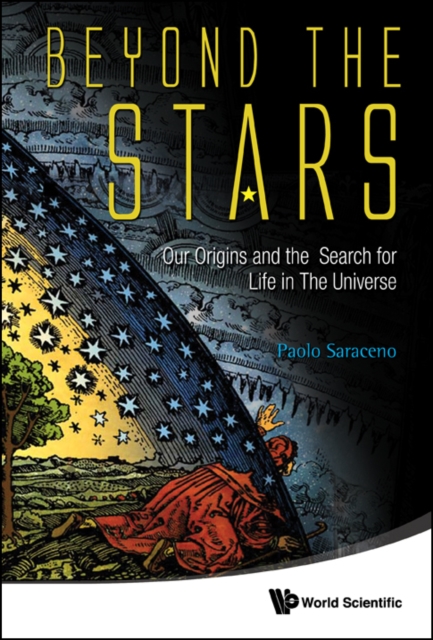
Beyond the stars
What is the origin of the universe? Are we alone in the Universe? Using clear and plain language, the author explores these two interesting scientific-philosophical themes with a broad range of studies, including astronomy, cosmology, chemistry, biology, geology and planet science.
eBook

The genetic gods : evolution and belief in human affairs
Distinguished evolutionary geneticist John Avise reviews recent discoveries in molecular biology, evolutionary genetics, and human genetic engineering, and explains how they relate to our development--not just our metabolism and physiology, but also our emotional disposition, personality, ethical leanings, and, indeed, religiosity.
eBook