
Catalogue Search | MBRL


Are you sure you want to remove the book from the shelf?

{{itemTitle}}
8,121
result(s) for
"Monetary policy -- Developing countries"
Sort by:

Monetary policies and independence of the central banks in E7 countries
\"\"This book examines the effectiveness of the monetary policies and the independence of the central banks in 7 emerging economies\"--Provided by publisher\"-- Provided by publisher.
Book
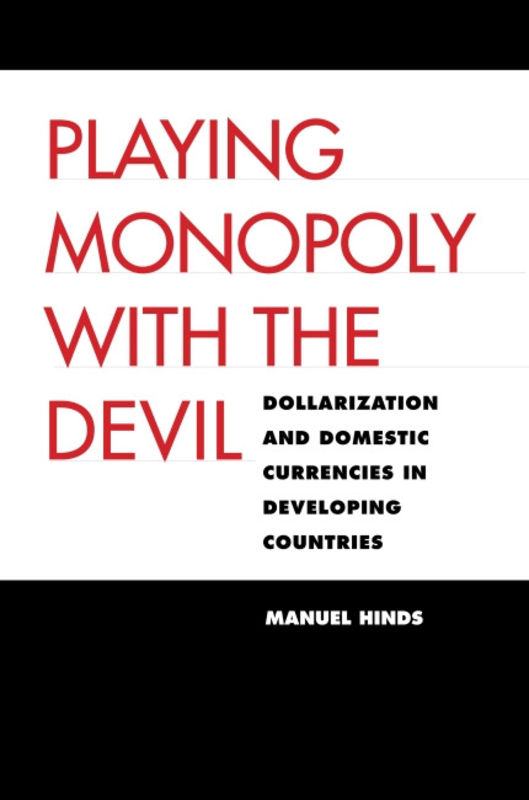
Playing Monopoly with the Devil
Why should a developing country surrender its power to create money by adopting an international currency as its own? This comprehensive book explores the currency problems that developing countries face and offers sound, practical advice for policy makers on how to deal with them. Manuel Hinds, who has extensive experience in real-world economic policy making, challenges the myths that surround domestic currencies and shows the clear rationality for dollarization or the use of a standard international currency.The book opens with an entertaining story of the Devil, who, through a series of common macroeconomic maneuvers, coaches the president of a mythical country into financial ruin. This ruler's path is not unlike that taken in several real developing countries, to their detriment. Hinds goes on to introduce new ways of thinking about financial systems and monetary behavior in Third World countries.
eBook


Dealing with the challenges of macro financial linkages in emerging markets (A world bank study)
The 2008 financial crisis has highlighted the challenges associated with global financial integration and emphasized the importance of macro financial linkages. In the financial sector, attention is being directed toward macro prudential regulations that are geared toward the stability of the financial system as a whole. The Third Basel Accord (Basel III) aims to dampen the pro-cyclicality of the financial sector and to reduce cross sectional systemic risks partly by introducing measures to address liquidity and issues of banks being too big to fail. In the macro arena, the facts that price stability was not sufficient to guarantee macroeconomic stability and that financial imbalances developed despite low inflation and small output gaps have highlighted the need for additional tools (macro prudential policies) to complement monetary policy in countercyclical management. Emerging markets face different conditions and have key structural features that can have a bearing on the relevance and efficacy of the measures. The chapters in this volume discuss the challenges of dealing with macro financial linkages and explore the policy toolkit available for dealing with systemic risks with particular reference to emerging markets. This report is organized as follows: chapter one is adapting macro prudential approaches to emerging and developing economies; chapter two is adapting micro prudential regulation for emerging markets; chapter three presents capital flow volatility and systemic risk in emerging markets: the policy toolkit; chapter four presents monetary policy and macro prudential regulation: whither emerging markets; chapter five deals with macro prudential policies to mitigate financial vulnerabilities in emerging markets; chapter six presents sailing through the global financial storm; and chapter seven presents operation of macro prudential policy measures.
eBook

The Impacts of Monetary Policy in the 21st Century: Perspectives from Emerging Economies
The Impacts of Monetary Policy in the 21st Century illustrates the effect of financial policies upon global economic indicators, with special reference made to issues effecting East Asian nations generally and with a particular focus on Indian economic development since 2000.
eBook
Monetarism, Economic Crisis and the Third World
First Published in 1983.This book is a contribution to the debate about Monetarism as an economic policy, and whether and how Monetarist policies can contribute to solving the current economic crisis.
eBook
Global Governance and Financial Crises
The editors of this book have pulled together a collection of chapters that review the spate of financial crises that have occurred in recent years starting with Mexico in 1994 and moving on to more recent crises in Turkey and Argentina. With impressive contributors such as Douglas Gale, Gabriel Palma and Andrew Gamble, the book is a timely and authoritative study. Global Governance and Financial Crises provides a new understanding of this important area with a combination of economic history and political economy as well as the most recent developments in analytical economic theory. Students, researchers and policy makers would do well to read it and learn some important lessons for the future.
Meghnad Desai is Director of the Centre for the Study of Global Governance and Professor of Economics at the London School of Economics. He is also author of Marx's Revenge which was published in 2002. Yahia Said is a Research Officer at the Centre for the Study of Global Governance at the London School of Economics. He has also worked as a corporate finance consultant.
1. Introduction Meghnad Desai and Yahia Said 2. Financial Crises and Global Governance Meghnad Desai 3. Asset Price Bubbles and Monetary Policy Franklin Allen and Douglas Gale 4. The International Monetary Fund: Past and Future Michel Aglietta 5. Regulating Global Finance: rival conceptions of world order Andrew Gamble 6. Crises, Recovery and Reforms in East Asia Jomo K.S. 7. Mexico, Korea and Brazil: three paths to financial crises
eBook

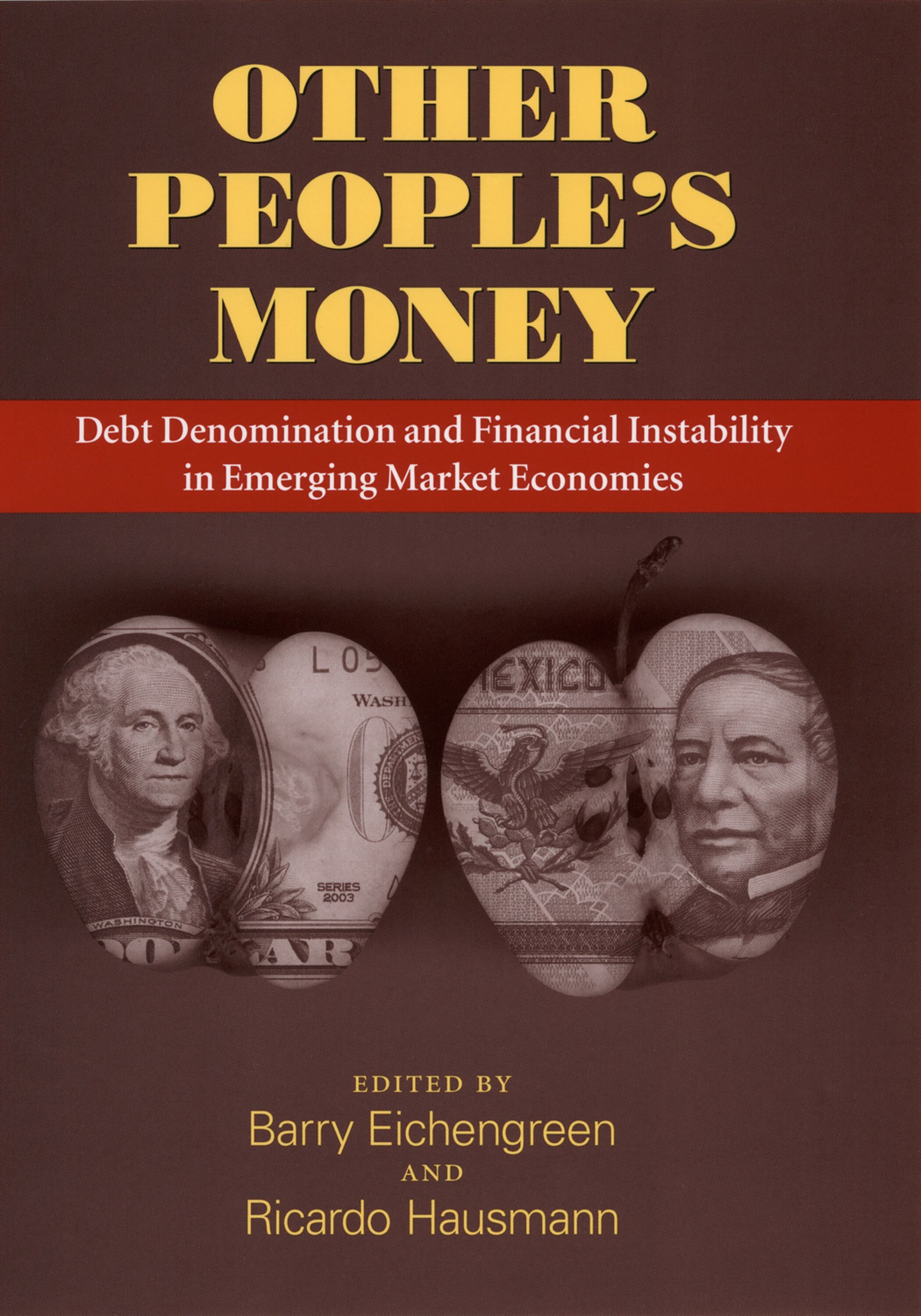
Other People's Money
Recent crises in emerging markets have been heavily driven by balance-sheet or net-worth effects. Episodes in countries as far-flung as Indonesia and Argentina have shown that exchange rate adjustments that would normally help to restore balance can be destabilizing, even catastrophic, for countries whose debts are denominated in foreign currencies. Many economists instinctually assume that developing countries allow their foreign debts to be denominated in dollars, yen, or euros because they simply don't know better. Presenting evidence that even emerging markets with strong policies and institutions experience this problem, Other People's Money recognizes that the situation must be attributed to more than ignorance. Instead, the contributors suggest that the problem is linked to the operation of international financial markets, which prevent countries from borrowing in their own currencies. A comprehensive analysis of the sources of this problem and its consequences, Other People's Money takes the study one step further, proposing a solution that would involve having the World Bank and regional development banks themselves borrow and lend in emerging market currencies.
eBook