
Catalogue Search | MBRL


Are you sure you want to remove the book from the shelf?

{{itemTitle}}
1,534
result(s) for
"Money in motion pictures."
Sort by:

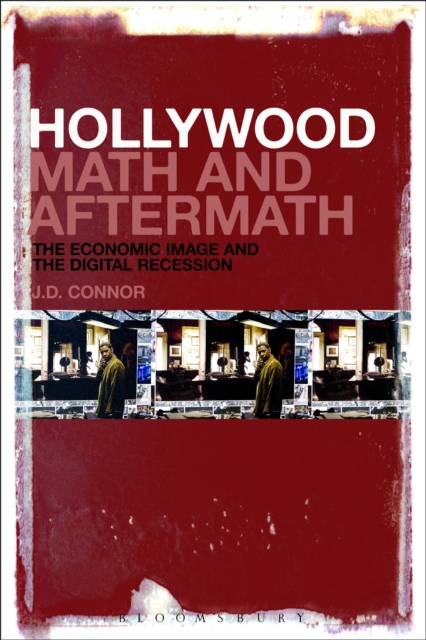
Hollywood Math and Aftermath
Money is Hollywood’s great theme—but money laundered into something else, something more. Money can be given a particular occasion and career, as box office receipts, casino winnings, tax credits, stock prices, lotteries, inheritances. Or money can become number, and numbers can be anything: pixels, batting averages, votes, likes. Through explorations of all these and more, J.D. Connor’s Hollywood Math and Aftermath provides a stimulating and original take on “the equation of pictures,” the relationship between Hollywood and economics since the 1970s. Touched off by an engagement with the work of Gilles Deleuze, Connor demonstrates the centrality of the economic image to Hollywood narrative. More than just a thematic study, this is a conceptual history of the industry that stretches from the dawn of the neoclassical era through the Great Recession and beyond. Along the way, Connor explores new concepts for cinema studies: precession and recession, pervasion and staking, ostension and deritualization. Enlivened by a wealth of case studies—from The Big Short and The Wolf of Wall Street to Equity and Blackhat, from Moneyball to 12 Years a Slave, Titanic to Lost, The Exorcist to WALLE, Déjà Vu to Upstream Color, Contagion to The Untouchables, Ferris Bueller to Pacific Rim, The Avengers to The Village—Hollywood Math and Aftermath is a bravura portrait of the industry coming to terms with its own numerical underpinnings
eBook

Finance Fictions
A powerful reading of a mode of popular fiction made especially salient in an age of increasing financialization.Argues that contemporary realism has been shaped by the increasing abstraction by which neoliberal finance has come to rewrite what counts as real.
Building on both established and emerging discussions of literature and finance,Finance Fictionstakes the measure of the tension between psychosis and realism in the contemporary finance novel. Revisiting such twentieth-century classics of the genre as Tom Wolfe'sBonfire of the Vanitiesand Bret Easton Ellis'sAmerican Psycho, this book considers that the twenty-first century is witnessing the birth of a new kind of finance novel that in the face of an ongoing economic crisis, ever more frequent market crashes, and the politics of austerity, pursues a more realist approach to the actual workings of the economy.
But what kind of realism would be attuned to today's economic reality of high-frequency trading, dominated by complex financial instruments like collateralized debt obligations and credit default swaps, and digital algorithms operating at speeds faster than what human beings or computers can record? If Tom Wolfe in 1989 could still urge novelists to work harder to \"tame the billion-footed beast of reality\", it seems today's economic reality confronts us with a difference that is qualitative rather than quantitative: a new financial ontology requiring new modes of thinking and writing.
Mobilizing the philosophical thought of Quentin Meillassoux in the close-reading of finance novels by Robert Harris, Michel Houellebecq, Ben Lerner and less well-known works of conceptual writing such as Mathew Timmons' Credit, Finance Fictions argues that realism is in for a speculative update if it wants to take on the contemporary economy-an \"if\" whose implications turn out to be deeply political. Part literary study and part philosophical inquiry,Finance Fictionsseeks to contribute to a new mindset for creative and critical work on finance in the twenty-first century.
Features readings of popular novels, such as Tom Wolfe's \"Bonfire of the Vanities\" and Bret Easton Ellis' \"American Psycho,\" as well as more recent works by Robert Harris, Michel Houellebecq, and others.
eBook

The supermarket of the visible
Szendy offers a new interpretation of Deleuze's writings on cinema and Benjamin's notion of innervation.
Already in 1929, Walter Benjamin described \"a one hundred per cent image-space.\" Such an image space saturates our world now more than ever, constituting the visibility in which we live. The Supermarket of the Visible analyzes this space and the icons that populate it as the culmination of a history of the circulation and general commodification of images and gazes. From the first elevators and escalators (tracking shots avant la lettre) to cinema (the great conductor of gazes), all the way down to contemporary eye-tracking techniques that monitor the slightest saccades of our eyes, Peter Szendy offers an entirely novel theory of the intersection of the image and economics.
The Supermarket of the Visible elaborates an economy proper to images, icons, in other words, an iconomy. Deleuze caught a glimpse of this when he wrote that \"money is the back side of all the images that cinema shows and edits on the front.\" Since \"cinema,\" for Deleuze, is synonymous with \"universe,\" Szendy argues that this sentence must be understood in its broadest dimension and that a reading of key works in the history of cinema allows us a unique vantage point upon the reverse of images, their monetary implications. Paying close attention to sequences in Hitchcock, Bresson, Antonioni, De Palma, and The Sopranos, Szendy shows how cinema is not a uniquely commercial art form among other, purer arts, but, more fundamentally, helps to elaborate what might be called, with Bataille, a general iconomy.
Moving deftly and lightly between political economy, aesthetic theory, and popular movies and television, The Supermarket of the Visible will be a necessary book for anyone concerned with media, philosophy, politics, or visual culture. The book tells the little-known history of escalators, elevators, and moving sidewalks, as the history of the mobilization of the gaze.The book is the subject of an exhibition at the Jeu de Paume museum in Paris, which may then travel abroadThe book proposes a new way of approaching images, analyzing the economy of their circulation and exchange (what the author calls their iconomy).
eBook

Motivations behind backers’ contributions in reward-based crowdfunding for movies and web series
PurposeCrowdfunding as an alternative financing method has recently gained ground and become a legitimate and feasible option for supporting creative and cultural projects. Whereas the reasons behind raising money on crowdfunding platforms are easy to understand, there is still a knowledge gap concerning backer’s motivations to fund creative projects. The aim of this study is to investigate backers’ main motivations to contribute to movies and web series crowdfunding projects.Design/methodology/approachUsing PLS-SEM, we analyzed the influence of intrinsic motivation, inner innovativeness, shared values and campaign involvement on perceived trust and perceived risk; the last two were further analyzed in relation to their influence on participation intention (N = 432). Data was collected from Europe and Asia using convenience and snowball sampling through a structured questionnaire.FindingsPerceived trust was found to be positively influenced by intrinsic motivation, shared values and campaign involvement, and perceived risk was surprisingly found to be positively influenced by campaign involvement. Also, perceived trust as generated by platform and crowdfundraiser jointly and perceived risk have a positive influence on participation intention.Research limitations/implicationsThis study is a useful tool in the hands of filmmakers and web series producers in the process of crowdfunding campaign design and for the crowdfund platform owner, who will seek to enhance perceived trust in order to attract larger audiences and increase profitability.Originality/valueThis is an original first study to examine the intentions of people from Europe and Asia toward movie and web series crowdfunding projects.
Journal Article

Martin Scorsese and the American Dream
More than perhaps any other major filmmaker, Martin Scorsese has grappled with the idea of the American Dream. His movies are full of working-class strivers hoping for a better life, from the titular waitress and aspiring singer of Alice Doesn't Live Here Anymore to the scrappy Irish immigrants of Gangs of New York. And in films as varied as Casino, The Aviator, and The Wolf of Wall Street, he vividly displays the glamour and power that can come with the fulfillment of that dream, but he also shows how it can turn into a nightmare of violence, corruption, and greed. This book is the first study of Scorsese's profound ambivalence toward the American Dream, the ways it drives some men and women to aspire to greatness, but leaves others seduced and abandoned. Showing that Scorsese understands the American dream in terms of a tension between provincialism and cosmopolitanism, Jim Cullen offers a new lens through which to view such seemingly atypical Scorsese films as The Age of Innocence, Hugo, and Kundun. Fast-paced, instructive, and resonant, Martin Scorsese and the American Dream illuminates an important dimension of our national life and how a great artist has brought it into focus.
eBook

Excursion among the Countries, Documentary, and Essay: Layered Narratives and Self-Representation in A Dog Called Money
The film elements, especially in the documentary or essay films, carry the director's point of view more prominently. A Dog Called Money (2019) is a film with essayistic and documentary features by photographer Seamus Murphy about the creation process of British musician PJ Harvey's latest album, The Hope Six Demolition Project. The film focuses on the artists' journey in Afghanistan, Kosovo, and Washington DC and the album's production process, which takes place in a live museum exhibition. Murphy uses visual narrative, while Harvey takes on the role of the textual and auditory narrator with voice-over, text, and music. Therefore, this study analyses the textual and audio-visual features of the documentary film that reflect the self-representation of both artists. The representation form created by the layered narrators that the film's narrative varies between the essay and the documentary genre is interpreted in the context of image, sound, and text.
Journal Article

Documenting China's Garment Industry: Wang Bing's Portrayal of Migrant Workers' Suspended Lives within the Contract Labour System
This essay examines two films by the Chinese documentary filmmaker Wang Bing about temporary migrant workers in small, privately owned garment workshops in Zhejiang Province, China: Bitter Money (Ku Qian; 2016) and 15 Hours (Shi Wu Xiao Shi; 2017). Wang's
films portray Chinese garment workers' lived experiences of \"suspension,\" as defined by Biao Xiang in this issue, in unique cinematic ways. Social sciences have paid close attention to the experiences of migrant workers, but art documentaries use audiovisual and aesthetic means to explore
their everyday reality, producing what D. MacDougall calls distinctive \"affective knowledge.\" Wang's films are usually categorized as part of the Sixth Generation of Chinese filmmakers, known for capturing social issues through observational methods. In this essay, I identify Wang's works
with the aesthetics of \"slow cinema\" and a global documentary trend in the visual arts as theorized by T. J. Demos in The Migrant Image. Based on close observation coupled with empathetic insight, Wang develops his own subjective method to portray people in a transformed and still changing
China, where suspension is a common state of being. Ultimately, Wang's films not only make the personal experiences of migrant workers visible and tangible, but also problematize their underlying, collective condition of suspension due to the contract labour system and associated hypermobility.
The suspension approach suggests a productive way of bringing documentary art and social sciences into dialogue.
Journal Article

From Story Line to Box Office: A New Approach for Green-Lighting Movie Scripts
Movie studios often have to choose among thousands of scripts to decide which ones to turn into movies. Despite the huge amount of money at stake, this processknown as green-lighting in the movie industryis largely a guesswork based on experts experience and intuitions. In this paper, we propose a new approach to help studios evaluate scripts that will then lead to more profitable green-lighting decisions. Our approach combines screenwriting domain knowledge, natural-language processing techniques, and statistical learning methods to forecast a movies return on investment (ROI) based only on textual information available in movie scripts. We test our model in a holdout decision task to show that our model is able to significantly improve a studios gross ROI.
Journal Article

Tomorrow Will Once Be: Currency Devaluation in Djibril Diop Mambety's Le Franc
Djibril Diop Mambety's 1994 film Le Franc explores experiences of disruption and powerlessness caused by monetary devaluation. This paper examines the cinematic grammars of Mambety's film as they relate to currency devaluation. The CFA franc was devalued by 50 percent on January 12, 1994. The devaluation, imposed on countries in the franc zone, represents an instrument of financial control that restrains their monetary sovereignty, perpetuating vestiges of imperialism. Analyzing Mambety's cinematic language, I offer a reading of his film through these economic structures. He works against the forms of temporal disruption introduced by processes of financialization in general and by the devaluation in particular. Ultimately, by embracing the future-past tense, Mambety reaches into a future that has still yet to come, wresting comedy and even hope out of intolerable economic and social realities and offering a radical vision of possibility in the midst of degradation.
Journal Article