
Catalogue Search | MBRL


Are you sure you want to remove the book from the shelf?

{{itemTitle}}
612
result(s) for
"Mongolia History."
Sort by:


The Thirteenth Dalai Lama on the run (1904-1906) : archival documents from Mongolia
The Thirteenth Dalai Lama on the Run (1904-1906) is a facsmile collection comprising over 900 original archival documents from Mongolia relating to the Thirteenth Dalai Lama's exile in Mongolia in the aftermath of the British invasion of Tibet in 1904.
eBook

The secret history of the Mongol queens : how the daughters of Genghis Khan rescued his empire
Presents a history of the ruling women of the thirteenth-century Mongol Empire, describing their struggles to preserve a sovereignty that would dominate the world for 150 years.
BOOK

Modern Mongolia
Land-locked between its giant neighbors, Russia and China, Mongolia was the first Asian country to adopt communism and the first to abandon it. When the Soviet Union collapsed in the early 1990s, Mongolia turned to international financial agencies-including the International Monetary Fund, the World Bank, and the Asian Development Bank-for help in compensating for the economic changes caused by disruptions in the communist world.Modern Mongoliais the best-informed and most thorough account to date of the political economy of Mongolia during the past decade. In it, Morris Rossabi explores the effects of the withdrawal of Soviet assistance, the role of international financial agencies in supporting a pure market economy, and the ways that new policies have led to greater political freedom but also to unemployment, poverty, increasingly inequitable distribution of income, and deterioration in the education, health, and well-being of Mongolian society. Rossabi demonstrates that the agencies providing grants and loans insisted on Mongolia's adherence to a set of policies that did not generally take into account the country's unique heritage and society. Though the sale of state assets, minimalist government, liberalization of trade and prices, a balanced budget, and austerity were supposed to yield marked economic growth, Mongolia-the world's fifth-largest per capita recipient of foreign aid-did not recover as expected. As he details this painful transition from a collective to a capitalist economy, Rossabi also analyzes the cultural effects of the sudden opening of Mongolia to democracy. He looks at the broader implications of Mongolia's international situation and considers its future, particularly in relation to China.
eBook

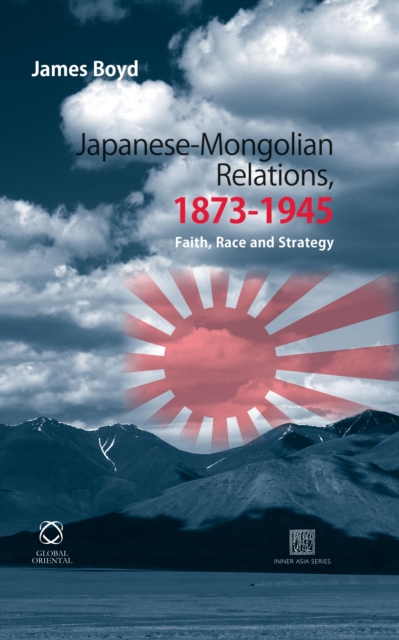
Japanese-Mongolian Relations, 1873-1945
This book offers the first in-depth examination of Japanese-Mongolian relations from the late nineteenth century through to the middle of the twentieth century and in the process repositions Mongolia in Sino-Japanese and Russo-Japanese relations. Beginning in 1873, with the intrepid journey to Mongolia by a group of Buddhist monks from one of Kyoto's largest orders, the relationship later included groups and individuals from across Japanese society, with representatives from the military, academia, business and the bureaucracy. Throughout the book, the interplay between these various groups is examined in depth, arguing that to restrict Japan's relationship with Mongolia to merely the strategic and as an adjunct to Manchuria, as has been done in other works, neglects important facets of the relationship, including the cultural, religious and economic. It does not, however, ignore the strategic importance of Mongolia to the Japanese military. The author considers the cultural diplomacy of the Zenrin kyôkai, a Japanese quasi-governmental humanitarian organization whose activities in inner Mongolia in the 1930s and 1940s have been almost completely ignored in earlier studies and whose operations suggest that Japanese-Mongolian relations are quite distinct from other Asian peoples. Accordingly, the book makes a major contribution to our understanding of Japanese activities in a part of Asia that figured prominently in pre-war and wartime Japanese strategic and cultural thinking.
eBook

How Mongolia Matters : War, Law, and Society
\"The essays in this volume dispel some of the myths concerning the Mongolians and other Inner Asian peoples. This remarkable volume edited by and dedicated to Morris Rossabi challenges the depictions of these mostly nomadic pastoral groups as barbaric plunderers and killers while not denying the destruction and loss of life they engendered. Several essays pioneer in consulting Mongolian and other Inner Asian rather than exclusively Chinese and Persian sources, offering new and different perspectives. Such research reveals the divisions among the Mongolians, which weakened them and led to the collapse of their empire. Two essays dispel myths about modern Mongolia and reveal the country's significance, even in an era of superpowers, two of which surround it. Contributors are: Christopher Atwood, Bettine Birge, Michael Brose, Pamela Crossley, Johan Elverskog, Jargalsaikhan Enkhsaikhan, Yuki Konagaya, James Millward, David Morgan, and David Robinson\"--Provided by publisher.
Book

Herdsman to statesman
This compelling autobiography encapsulates the profound changes that transformed the underdeveloped world in the twentieth century. Jamsrangiin Sambuu, born in 1895 to a herder family in a remote region of Mongolia, rose to become ambassador and eventually president of a haltingly industrialized and urbanized Communist country. In the process, he came to know Joseph Stalin, Mao Zedong, and other leading figures. Sambuu relates horrifying vignettes of the harsh and oppressive rule over Mongolia by the Chinese, the Manchus, and the Mongolian nobility and lamas until 1911. Yet his stories of exploitation and torture are balanced by a lively, picturesque, and informative portrait of traditional herding life, including diet, popular religion, marital ceremonies, and medicine. Sambuu relates how his visceral hatred of the avaricious Mongolian Buddhist monks and nobles prompted him to join the Communist movement in the early 1920s. Valued for his education and work ethic, he rose rapidly in the Party bureaucracy, becoming ambassador to the Soviet Union during World War II and to North Korea during the Korean War. Recounting his eventful diplomatic career, Sambuu paints vivid portraits of Stalin, Anastas Mikoyan, and other prominent Soviet leaders. Enriched by a thoughtful introduction by leading scholar Morris Rossabi that sets the historical stage, this life story of a still-beloved Mongolian illuminates a world few in the West have seen.
eBook

Women and the making of the Mongol Empire
\"How did women contribute to the rise of the Mongol Empire while Mongol men were conquering Eurasia? This book positions women in their rightful place in the otherwise well-known story of Chinggis Khan (commonly known as Genghis Khan) and his conquests and empire. Examining the best known women of Mongol society, such as Chinggis Khan's mother, Ho'elun, and senior wife, Borte, as well as those who were less famous but equally influential, including his daughters and his conquered wives, we see the systematic and essential participation of women in empire, politics and war. Anne F. Broadbridge also proposes a new vision of Chinggis Khan's well-known atomized army by situating his daughters and their husbands at the heart of his army reforms, looks at women's key roles in Mongol politics and succession, and charts the ways the descendants of Chinggis Khan's daughters dominated the Khanates that emerged after the breakup of the Empire in the 1260s\"-- Provided by publisher.
BOOK

How Mongolia Matters: War, Law, and Society
The essays in this volume dispel some of the myths concerning the Mongolians and other Inner Asian peoples. This remarkable volume edited by and dedicated to Morris Rossabi challenges the depictions of these mostly nomadic pastoral groups as barbaric plunderers and killers while not denying the destruction and loss of life they engendered. Several essays pioneer in consulting Mongolian and other Inner Asian rather than exclusively Chinese and Persian sources, offering new and different perspectives. Such research reveals the divisions among the Mongolians, which weakened them and led to the collapse of their Empire.Two essays dispel myths about modern Mongolia and reveal the country's significance, even in an era of superpowers, two of which surround it. Contributors are: Christopher Atwood, Bettine Birge, Michael Brose, Pamela Crossley, Johan Elverskog, Jargalsaikhan Enkhsaikhan, Yuki Konagaya, James Millward, David Morgan, and David Robinson.
eBook