
Catalogue Search | MBRL


Are you sure you want to remove the book from the shelf?

{{itemTitle}}
26,195
result(s) for
"Monica Lewinsky"
Sort by:

مونيكا وكلينتون : فضيحة العصر.. : النص الكامل لتقرير المدعي الأمريكي
في هذا الكتاب النص الكامل والحرفي لتقرير المحقق المستقل كنيث ستار حول فضحية العصر والذي يتناول التفاصيل الدقيقة العلاقة الرئيس كلينتون ومونیکا لوينيسكي، وقد أجمع رجال الصحافة وخبراء القانون الأمريكيين ورجال الكونجرس على وصف التقرير بأنه أخطر تقرير قضائي في هذا القرن. ولا تنبع خطورة التقرير من الوقائع المذهلة للعلاقات الجنسية بين كلينتون ومونيكا أو الجهد المبذول في إعداده أو طبيعة الشخصيات التي يتناولها، وإنما تنبع من أهم حقيقة فيه وهي أنه يوجه 11 اتهاما للرئيس الأمريكي شملت الحنث باليمين وإعاقة العدالة وإساءة استغلال سلطاته ومحاولة التأثير على الشهود، هذا التقرير جاء في حوالي (208) صفحة واشترك فيه 40 محققا قاموا باستجواب 400 شاهد وتكلف 40 مليون دولار. وقد تم نشره على شبكة الإنترنت، وزار موقع التقرير على الشبكة حوالي 100 مليون إنسان في العالم.
Book
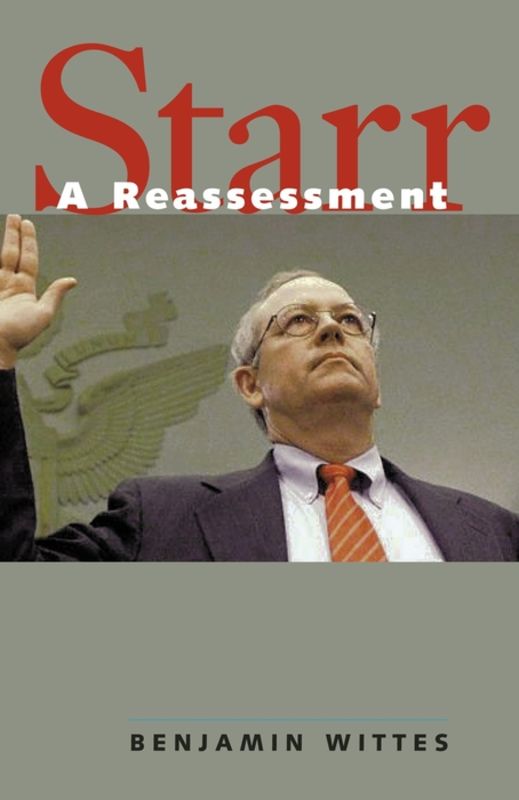
Starr
How is Kenneth Starr's extraordinary term as independent counsel to be understood? Was he a partisan warrior out to get the Clintons, or a savior of the Republic? An unstoppable menace, an unethical lawyer, or a sex-obsessed Puritan striving to enforce a right-wing social morality? This book is the first serious, impartial effort to evaluate and critique Starr's tenure as independent counsel. Relying on lengthy, revealing interviews with Starr and many other players in Clinton-era Washington,Washington Postjournalist Benjamin Wittes arrives at a new understanding of Starr and the part he played in one of American history's most enthralling public sagas.Wittes offers a subtle and deeply considered portrait of a decent man who fundamentally misconstrued his function under the independent counsel law. Starr took his task to be ferreting out and reporting the truth about official misconduct, a well-intentioned but nevertheless misguided distortion of the law, Wittes argues. At key moments throughout Starr's probe-from the decision to reinvestigate the death of Vincent Foster, Jr., to the repeated prosecutions of Susan McDougal and Webster Hubbell to the failure to secure Monica Lewinsky's testimony quickly--the prosecutor avoided the most sensible prosecutorial course, fearing that it would compromise the larger search for truth. This approach not only delayed investigations enormously, but it gave Starr the appearance of partisan zealotry and an almost maniacal determination to prosecute the president. With insight and originality, Wittes provides in this account of Starr's term a fascinating reinterpretation of the man, his performance, and the controversial events that surrounded the impeachment of President Clinton.
eBook


Monica Lewinsky's Contribution to Political Science
The bounce in President Clinton's job ratings that occurred in the initial 10 days of the Lewinsky imbroglio may offer as much insight into the dynamics of public opinion as any single event in recent memory. What it shows is not just the power of a booming economy to buttress presidential popularity. It shows, more generally, the importance of political substance, as against media hype, in American politics. Even when, as occurred in this case, public opinion is initially responsive to media reports of scandal, the public's concern with actual political achievement reasserts itself. This lesson, which was not nearly so clear before the Lewinsky matter as it is now, not only deepens our understanding of American politics. It also tends, as I argue in the second half of this article, to undermine the importance of one large branch of public opinion research, buttress the importance of another, and point toward some new research questions. Whatever else may have transpired by the time this article gets into print, the Lewinsky poll bounce is something worth pondering. In a half-dozen commercial polls taken in the period just before the story broke, Clinton's job approval rating averaged about 60%. Ten days later, following intensive coverage of the story and Clinton's State of the Union address, presidential support was about 10 percentage points higher.
Journal Article

Aftermath: the Clinton impeachment and the presidency in the age of political spectacle
With the specter of prosecution after his term is over and the possibility of disbarment in Arkansas hanging over President Clinton, the Clinton-Lewinsky scandal and the events that have followed it show no sign of abating. The question has become what to do, and how to think, about those eight months. Did the President lie or was it plausible that he had truthfully testified to no sexual relationship? Was the job search for Monica just help for a friend or a sinister means of obtaining silence? Even if all the charges were true, did impeachment follow or was censure enough? And what are the lasting repercussions on the office of the Presidency? Aftermath: The Clinton Impeachment and the Presidency in the Age of Political Spectacle takes a multi-disciplinary approach to analyze the Clinton impeachment from political perspectives across the spectrum. The authors attempt to tease out the meanings of the scandal from the vantage point of law, religion, public opinion, and politics, both public and personal. Further, the impeachment itself is situated broadly within the contemporary American liberal state and mined for the contradictory possibilities for reconciliation it reveals in our culture. Contributors: David T. Canon, John Cooper, Drucilla Cornell, Jean Bethke Elshtain, Robert W. Gordon, Lawrence Joseph, Leonard V. Kaplan, David Kennedy, Kenneth R. Mayer, Beverly I. Moran, Father Richard John Neuhaus, David Novak, Linda Denise Oakley, Elizabeth Rapaport, Lawrence Rosen, Eric Rothstein, Aviam Soifer, Lawrence M. Solan, Cass R. Sunstein, Stephen Toulmin, Leon Trakman, Frank Tuerkheimer, Mark V. Tushnet, Andrew D. Weiner, Robin L. West.
eBook

Performing “Digital Citizenship” in the Era of the Blind Spot
In 1998, when President Bill Clinton was on his way toward impeachment hearings following the Whitewater investigation and subsequent Starr Report, many of us shrugged off his affair with White House intern Monica Lewinsky as \"none of our business\" and \"unrelated to his work as president.\" According to Engin Isin and Evelyn Ruppert in Being Digital Citizens., \"to understand what it means to be digital citizens requires theorizing between digital life (and its digital subjects) and political life (and its political subjects). Given the vitality of the physical body within live performance, Isin and Ruppert's appreciation of the interplay between digital life (think cyberspace) and political life (think embodied space) may be useful in describing digital performances of citizenship.3 Equally valuable is Erving Goffman's Presentation of the Self in Every Day Life, in which he likens daily interactions to theatrical performance. [...]in response to the Democratic presidential candidate debate on July 30, 2019, President Trump tweeted the following: \"Very low ratings for the Democratic Debate last night-they're desperate for Trump!\"9 By making himself the focus of the narrative, Trump attempted to shift audience attention away from the event-the Democratic debate-to himself.
Journal Article
Meet the Press, January 17, 1999
On this edition of Meet the Press: Congressman Bill McCollum discusses potential witnesses in President Clinton's impeachment trial; Senator George Mitchell discusses the possibility of President Clinton testifying; Senators Paul Wellstone, John Kerry, Chris Dodd, Jim Inhofe, Orrin Hatch, and Kay Bailey Hutchison discuss their impressions of the trial.
Streaming Video
Meet the Press, January 10, 1999
On this edition of Meet the Press: an interview with Congressman Lindsey Graham about the allegations against President Clinton; Senators John Chafee, Mike Dewine, Rick Santorum, Barbara Boxer, Dianne Feinstein, and Chuck Schumer discuss the impeachment trial of President Clinton.
Streaming Video
Meet the Press, November 29, 1998
On this edition of Meet the Press Congress members Ed Bryant, Sheila Jackson Lee, Peter King, Paul McHale and Lindsey Graham discuss the Clinton impeachment hearings; journalist Lisa Myers gives her opinion on the scandal along with authors Christopher Hitchens and Steven Brill.
Streaming Video
Meet the Press, October 18, 1998
On this edition of Meet the Press Chairman of the Republican National Committee Jim Nicholson and counselor to Bill Clinton Paul Begala discuss the upcoming election; Louis Farrakhan discusses the state of Black America three years after the Million Man March; David Maraniss talks about his biography of Bill Clinton.
Streaming Video