
Catalogue Search | MBRL


Are you sure you want to remove the book from the shelf?

{{itemTitle}}
109
result(s) for
"Monsters in mass media"
Sort by:

The big book of monsters : the creepiest creatures from classic literature
Profiles twenty-five monsters from mythology, folklore, and literature, from Medusa the gorgon and Polyphemus the cyclops to Dracula, Frankenstein's monster, and the headless horseman of Sleepy Hollow.
Book

Monstrous Beings and Media Cultures
Monstrous Beings of Media Cultures examines the monsters and sinister creatures that spawn from folk horror, Gothic fiction, and from various sectors of media cultures. The collection illuminates how folk monsters form across different art and media traditions, and interrogates the 21C revitalization of “folk” as both a cultural formation and aesthetic mode. The essays explore how combinations of vernacular and institutional creative processes shape the folkloric and/or folkoresque attributes of monstrous beings, their popularity, and the contexts in which they are received.
While it focuses on 21C permutations of folk monstrosity, the collection is transhistorical in approach, featuring chapters that focus on contemporary folk monsters, historical antecedents, and the pre-C21st art and media traditions that shaped enduring monstrous beings. The collection also illuminates how folk monsters and folk “horror” travel across cultures, media, and time periods, and how iconic monsters are tethered to yet repeatedly become unanchored from material and regional contexts.
eBook


Monstrous manifestations: Realities and the Imaginings of the Monster
This volume was first published by Inter-Disciplinary Press in 2013. Monstrous manifestations: Realities and Imaginings of the Monster presents an enlightening collection of inter-disciplinary research on the multifarious incarnations of the monster. Exploring the fears, hopes and concerns of contemporary and bygone times alike through the literary, cinematic, artistic, cultural and political metaphor of the monstrous, this volume will be of interest to both the expert and the amateur monster aficionado. Encompassing a variety of theoretical frameworks, Monstrous manifestations illuminates the monsters lurking in studies of gender, media and literature, as well as of religions and popular culture. Consorting with witches, vampires, shape-shifters, clones and hybrids, and acquainting with killers, deformed creatures and beings undefined, the authors daringly stalk the monsters coming out of their traditional lairs and colonising the new and constantly expanding social, cultural, psychological and political spaces, inviting the reader to journey with them as they venture into the monster's terrain.
eBook
Classic Readings on Monster Theory
This volume and its companion gather a wide range of readings and sources to enable us to see and understand what monsters show us about what it means to be human. The first volume introduces important modern theorists of the monstrous, with a brief introduction to each reading, setting the theorist and theory in context, and providing background and guiding questions. The selection of readings in Classic Readings on Monster Theory is intended to provide interpretive tools and strategies to use to grapple with the primary sources in the second volume - Primary Sources on Monsters - which brings together some of the most influential and indicative monster narratives from the West. Taken together, these volumes allow us to witness the consistent, multi-millennium strategies the West has articulated, weaponized, and deployed to exclude, disempower, and dehumanize a range of groups and individuals within and without its porous boundaries.
eBook
Classic readings on monster theory: demonstrare
Companion volumes Classic Readings on Monster Theory and Primary Sources on Monsters gather a wide range of readings and sources to enable us to see and understand what monsters can show us about what it means to be human. The first volume introduces important modern theorists of the monstrous and aims to provide interpretive tools and strategies for students to use to grapple with the primary sources in the second volume, which brings together some of the most influential and indicative monster narratives from the West.
eBook
Primary Sources on Monsters
This volume and its companion gather a wide range of readings and sources to enable us to see and understand what monsters show us about what it means to be human. The first volume introduces important modern theorists of the monstrous, with a brief introduction to each reading, setting the theorist and theory in context, and providing background and guiding questions. The selection of readings in Classic Readings on Monster Theory is intended to provide interpretive tools and strategies to use to grapple with the primary sources in the second volume - Primary Sources on Monsters - which brings together some of the most influential and indicative monster narratives from the West. Taken together, these volumes allow us to witness the consistent, multi-millennium strategies the West has articulated, weaponized, and deployed to exclude, disempower, and dehumanize a range of groups and individuals within and without its porous boundaries.
eBook
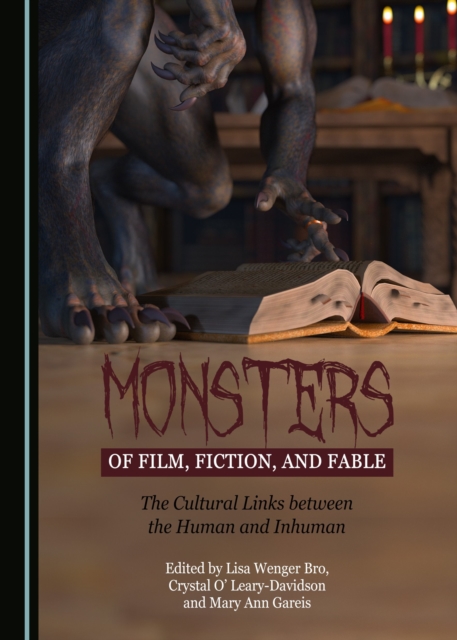
Monsters of Film, Fiction, and Fable
Monsters are a part of every society, and ours is no exception. They are deeply embedded in our history, our mythos, and our culture. However, treating them as simply a facet of children's stories or escapist entertainment belittles their importance. When examined closely, we see that monsters have always represented the things we fear: that which is different, which we can't understand, which is dangerous, which is Other. But in many ways, monsters also represent our growing awareness of ourselves and our changing place in a continually shrinking world. Contemporary portrayals of the monstrous often have less to do with what we fear in others than with what we fear about ourselves, what we fear we might be capable of. The nineteen essays in this volume explore the place and function of the monstrous in a variety of media - stories and novels like Baum's Oz books or Gibson's Neuromancer; television series and feature films like The Walking Dead or Edward Scissorhands; and myths and legends like Beowulf and The Loch Ness Monster - in order to provide a closer understanding of not just who we are and who we have been, but also who we believe we can be - for better or worse.
eBook
