
Catalogue Search | MBRL


Are you sure you want to remove the book from the shelf?

{{itemTitle}}
1,140
result(s) for
"Montagu"
Sort by:
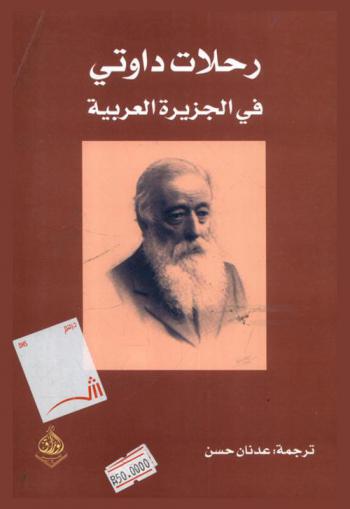
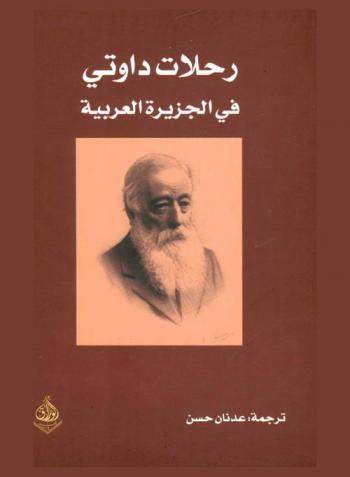
رحلات تشارلز دواتي في الجزيرة العربية
بدأ داوتي رحلاته بإسبانيا وإيطاليا ثم ذهب إلى اليونان فمصر حيث وصل القاهرة عام 1875 م، ثم عبر صحراء سيناء حتى وصل مدينة البتراء حيث سمع عن مدائن صالح المدينة الأثرية في شمالي الحجاز التي لم تنجح كل من بوركهارت وبيرتون في الوصول إليها، وعزم داوتي على مشاهدتها وانضم إلى قافلة للحج تحت اسم مستعار (خليل)؛ وصل إلى مدائن صالح في نوفمبر 1876 م، واستطاع أن يتجول في المنطقة مستنسخا الكتابات والرسوم المنقوشة في واجهات المقابر، وبدلا من العودة مع الحجاج إلى دمشق آثر داوتي حياة البداوة وعاش مع جماعة بدوية وتجول معهم.
BOOK

Lady Mary Wortley Montagu's Anne Finch
Archival traces of the manuscript culture in which Lady Mary Wortley Montagu and Anne Finch, Countess of Winchilsea, composed their work can yield information available nowhere else about their literary and personal connections. Evidence of Finch's and Montagu's personal and literary links--their socioliterary intercourse (a term I borrow from Arthur Marotti)--lies in the manuscripts preserved in Montagu's papers at Sandon Hall, Staffordshire. This evidence establishes not only that Montagu and Finch probably knew each other but also that they certainly participated in a manuscript network that gave rise to specific cases of literary influence. This analysis of material-textual evidence, intertextual phenomena, and the biographical links so characteristic of manuscript culture aims to augment our understanding of Montagu and Finch in the interstices of biographical and literary-textual questions.
Journal Article
ترحال في صحراء الجزيرة العربية
يتكون هذا الكتاب والذي قام بتأليفه (تشارلز م. دوتي) من مجلدين. المجلد الأول يتحدث عن مدينة ابن الرشيد، والحياة في حائل، وخيبر، والخبابرة، وأرض الأحباش، والرحلة الصحراوية إلى حائل، والشمر وصحاري حرب في تجد، ورحلة إلى القصيم. والمجلد الثاني يتحدث عن عنيزة والحياة بها، وحروبها، ومغادرة القصيم مع قافلة الزبد المتجهة إلى مكة، والطائف، ووادي فاطمة وغير ذلك من المدن.
Book

\Fill up His Blanks\
This essay provides the first detailed examination of Elizabeth Montagu's adoption of her nephew Matthew Robinson, and of her subsequent attempts to cultivate him as the ideal heir. It considers, in turn, Matthew's adoption, his education, his training in estate paternalism, and his political career in the House of Commons. It provides a case study of the ways in which eighteenth-century women could exert a familial, moral, discursive, and material authority that had significant repercussions for the formation and construction of masculinity. It also examines the discomfort that the exertion of such authority might generate within the social and professional circles of such women and their male subordinates—especially when their relationship was an instance of \"fictive kinship.\"
Journal Article

A Witness from the 18th Century: The Culture and Art Environment of Ottoman Cities in the Letters of Lady Montagu
This article aims to analyze the architectural and artistic environment in the Ottoman cities based on the letters of Lady Mary Montagu, who came to the Ottoman capital for her husband’s diplomatic mission in the early eighteenth century. For this purpose, information on the state’s political relations and social structure in the years when Lady Montagu was in the Ottoman lands were presented (1717-1718). Lady Mary Montagu’s letters were written differently than the pilgrims who had come to the Ottoman lands in previous years. It is seen that different kinds of subjects such as Ottoman society, women, clothing and apparel, harem, religious rituals, daily life, smallpox vaccine and architectural texture of cities were included in the letters. Thus, letters have been the subject of various studies. Lady Montagu devoted some of her letters to the architectural structures and interior decorations she observed in Istanbul and Edirne. The depictions of flowers and fruit for interior decorations of lodging and houses are some of the characteristic decorations of civil architectural works of the time. In addition, Lady Montagu’s depictions from the beginning of the eighteenth century also provide information about some of the architectural works that have not survived to the present day. Martyr Ali Pasha Mansion is one of the works seen by Lady Montagu herself but not present today.
Journal Article

Religion and Justice – from Leviticus to Lily
This article was a memorial lecture to the author's father, Rabbi Harry Jacobi, and begins with a tribute to his commitment to justice. It traces the concept of justice and its application from Leviticus to the Talmud to Lily Montagu. It suggests three models of approaching justice. In Leviticus, the principle of justice is clear and its application radical, especially in the concept of the Jubilee year. In the Talmud, the complexity of justice is addressed. Examples are given of debates about disputed possession, compensation and taxation. Finally, a biography of Lily Montagu and examples of her work are presented to show how she put the theory of justice into practice. It is suggested that a threefold approach to building justice is needed: a strong sense of justice, an acknowledgement of the complexities and a commitment to actively working for justice.
Journal Article

Language and Gender in the Early Modern Mediterranean
The early modern Mediterranean was a space of expansive linguistic mixing, and multilingual discourse was a common response to the exigencies of communication within this context. There is a growing body of scholarship on male multilingualism; however, women have been largely overlooked. This article argues that far from marginalized outsiders, as they were often depicted, women were active participants in the Mediterranean linguistic ecology. They developed communication strategies and techniques to navigate language difference in trade, travel, work, diplomatic, and domestic settings. The numerous and varied spaces that they occupied were not barriers but doorways to their participation in the multilingual Mediterranean.
Journal Article