
Catalogue Search | MBRL


Are you sure you want to remove the book from the shelf?

{{itemTitle}}
1,308
result(s) for
"Montserrat"
Sort by:

Popular music, stars and stardom
\"A popular fascination with fame and stardom has existed in Western culture since the late eighteenth century; a fascination that, in the twenty-first century, reaches into almost every facet of public life. The pervasive nature of stardom in modern society demands study from the perspectives of a range of distinct but thematically connected disciplines. The exploration of intersections between broader considerations of stardom and the discourses of popular music studies is the genesis for this volume. The chapters collected here demonstrate the variety of work currently being undertaken in stardom studies by scholars in Australia. The contributions range from biographical considerations of the stars of popular music, contributions to critical discourses of stardom in the industry more broadly, and the various ways in which the use of astronomical metaphors, in both cultural commentary and academic discourse, demonstrate notions of stardom firmly embedded in popular music thought. Not only do these chapters represent a range of perspectives on popular music, stars and stardom, they provide eloquent and innovative contributions to the developing discourse on stardom in popular music.\"
Book
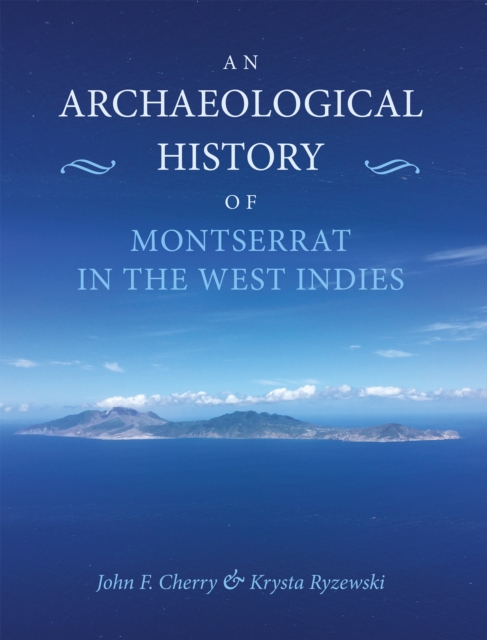
An Archaeological History of Montserrat in the West Indies
Montserrat is a small island in the Leeward islands of the eastern Caribbean and at present a British Overseas Territory. It has suffered greatly in recent times, first from the devastations of Hurricane Hugo in 1989 and since 1995 from the still-ongoing eruption of the Soufrière Hills volcano that has caused two-thirds of the island’s population to emigrate and left half the island a dangerous exclusion zone. Archaeological research here began only in the late 1970s, but work over the past four decades has now made it possible to present an archaeological history of Montserrat, from the earliest known traces of human activity on the island about 5,000 years ago to the present. This book draws on all the available archaeological evidence (including that from the co-authors’ own island-wide survey and excavation project since 2010), as well as newly available archival documents, to trace this little island’s long history and heritage. This is not the story of an isolated and remote island: Montserrat is shown rather to be a place intricately connected to the flows of people and goods that have travelled between islands and across the Atlantic at various points in time, both Amerindian and historical. Despite its small size and seeming irrelevance, Montserrat has in fact always been networked into regional and global systems of connectivity. An underlying theme of this volume is resilience. It presents insights from the archaeological and documentary evidence on how the island’s inhabitants have coped with often adverse conditions throughout the course of its history – hurricanes, volcanic eruptions, slavery, disease, invasions, and impoverishment – all while remaining proudly connected to heritage that celebrates the accomplishments of island residents.
eBook


If the Irish Ran the World
Montserrat, although part of England's empire, was settled largely by the Irish and provides an opportunity to view the interaction of Irish emigrants with English imperialism in a situation where the Irish were not a small minority among white settlers. Within this context Akenson explores whether Irish imperialism on Montserrat differed from English imperialism in other colonies. Akenson reveals that the Irish proved to be as effective and as unfeeling colonists as the English and the Scottish, despite the long history of oppression in Ireland. He debunks the myth of the \"nice\" slave holder and the view that indentured labour prevailed in the West Indies in the seventeenth century. He also shows that the long-held habit of ignoring ethnic strife within the white ruling classes in the West Indies is misconceived. If the Irish Ran the World provides interesting insights into whether ethnicity was central to the making of the colonial world and the usefulness of studies of sixteenth- and seventeenth-century English imperialism in the Americas. It will be the basis of the Joanne Goodman Lectures at the University of Western Ontario in 1997.
eBook

In order not to forget: the voice of Montserrat Palmer and the contemporary architectural discourse in Chile/Contra el olvido: la voz de Montserrat Palmer y el discurso de la arquitectura contemporanea en Chile/Contra o esquecimento: a voz de Montserrat Palmer e o discurso da arquitetura contemporanea no Chile
Female architect, professor, researcher, editor, Montserrat Palmer Trias was a voice with authority in the Chilean architectural and cultural scene between the end of the 20th and the beginning of the 21st century. As chief editor of ARQ, she had an active role in the definition of the disciplinary debates while installing a group of Chilean architects, whose notoriety was built by the pages of the magazine, on the international scene. Although she fed the myth of a woman who bases her work on intuition, it is impossible to let her rigorous activity as a researcher go unnoticed. Paradoxically, a decade after leaving the direction of the magazine, her figure and her contribution to the Chilean architecture of the post-dictatorship is risking a fall into oblivion. This article is an attempt to prevent this from happening.
Journal Article


Using Airborne LiDAR Survey to explore Historic-era archaeological landscapes of Montserrat in the Eastern Caribbean
This article describes what appears to be the first archaeological application of airborne LiDAR survey to historic-era landscapes in the Caribbean archipelago, on the island of Montserrat. LiDAR is proving invaluable in extending the reach of traditional pedestrian survey into less favorable areas, such as those covered by dense neotropical forest and by ashfall from the past two decades of active eruptions by the Soufrière Hills volcano, and to sites in localities that are inaccessible on account of volcanic dangers. Emphasis is placed on two aspects of the research: first, the importance of ongoing, real-time interaction between the LiDAR analyst and the archaeological team in the field; and second, the advantages of exploiting the full potential of the three-dimensional LiDAR point cloud data for purposes of the visualization of archaeological sites and features.
Journal Article

Remembering, Forgetting, and Absencing Disasters in the Post-disaster Recovery Process
Sustainable post-disaster recovery implies learning from past experience in order to prevent recreating forms of vulnerability. Memory construction supports both the healing process and redevelopment plans. Hence, memory of disaster results from the balance between remembering, forgetting, and absencing elements of the disaster, and can be both a tool and an obstacle to sustainable recovery. We explore here how collective memory is built in a post-disaster context to respond to the needs of this critical period, and how it shapes recovery. This ethnographic study, conducted between 2015 and 2017, explores the recovery processes in Montserrat, a small Caribbean island affected by an extended volcanic crisis from 1995 to 2010. Although this study does not give tangible solutions for disaster risk reduction in a post-disaster context, it highlights potential obstacles for learning from a disaster and how they may be surmounted. We argue that it is crucial to acknowledge evolving collective memory in order to implement effective measures for preserving and sharing a shared understanding of disaster across generations and social groups in a way that supports disaster risk awareness. We also maintain that acknowledging the dilemma faced by authorities and disaster management agencies during a period of conflicting needs may encourage the reconsideration of risk framing, and hence reveal how to improve implementation of disaster risk reduction measures.
Journal Article

The nature and formation of cristobalite at the Soufrière Hills volcano, Montserrat: implications for the petrology and stability of silicic lava domes
Cristobalite is commonly found in the dome lava of silicic volcanoes but is not a primary magmatic phase; its presence indicates that the composition and micro-structure of dome lavas evolve during, and after, emplacement. Nine temporally and mineralogically diverse dome samples from the Soufrière Hills volcano (SHV), Montserrat, are analysed to provide the first detailed assessment of the nature and mode of cristobalite formation in a volcanic dome. The dome rocks contain up to 11 wt.% cristobalite, as defined by X-ray diffraction. Prismatic and platy forms of cristobalite, identified by scanning electron microscopy (SEM), are commonly found in pores and fractures, suggesting that they have precipitated from a vapour phase. Feathery crystallites and micro-crystals of cristobalite and quartz associated with volcanic glass, identified using SEM-Raman, are interpreted to have formed by varying amounts of devitrification. We discuss mechanisms of silica transport and cristobalite formation, and their implications for petrological interpretations and dome stability. We conclude: (1) that silica may be transported in the vapour phase locally, or from one part of the magmatic system to another; (2) that the potential for transport of silica into the dome should not be neglected in petrological and geochemical studies because the addition of non-magmatic phases may affect whole rock composition; and (3) that the extent of cristobalite mineralisation in the dome at SHV is sufficient to reduce porosity—hence, permeability—and may impact on the mechanical strength of the dome rock, thereby potentially affecting dome stability.
Journal Article

Montserrat Duran Muntadas
Born in Catalonia and living in Canada for the last decade, glass artist Montserrat Duran Muntadas became interested in the distance between her and her loved ones and in the consequences of not being able to attend their last moments of life due to the public-health measures imposed by the pandemic. Her project La femme aux mille coeurs is deeply rooted in the process of mourning the death of her maternal grandmother, as it was impossible for her to gather with her family to experience this final departure. Deprived of the symbolic rituals surrounding death, she probes, in a broader sense, their importance in the path toward acceptance. Isolation, old age, and death became the driving force for an inclusive project. Inspired by a piece of lace made by her grandmother, Duran Muntadas chose glass and linen as materials for honoring her. Grandmothers who crochet donated pieces of lace to cover a multitude of hearts made of blown glass. La femme aux mille coeurs allowed Duran Muntadas to work through her bereavement despite the distance; she also hoped that her project would break, for a time, the isolation experienced by the participants during the pandemic.
Journal Article