
Catalogue Search | MBRL


Are you sure you want to remove the book from the shelf?

{{itemTitle}}
210
result(s) for
"Moon, Origin"
Sort by:

Where did the moon come from?
\"We see the moon waxing and waning every month, and we know it controls the tides. However, we rarely wonder how it got there in the first place and why it continues to accompany Earth around the sun. Readers will learn some fascinating theories about the moon's origin and decide for themselves if they agree with the current accepted explanation\"--Provided by publisher.
Book
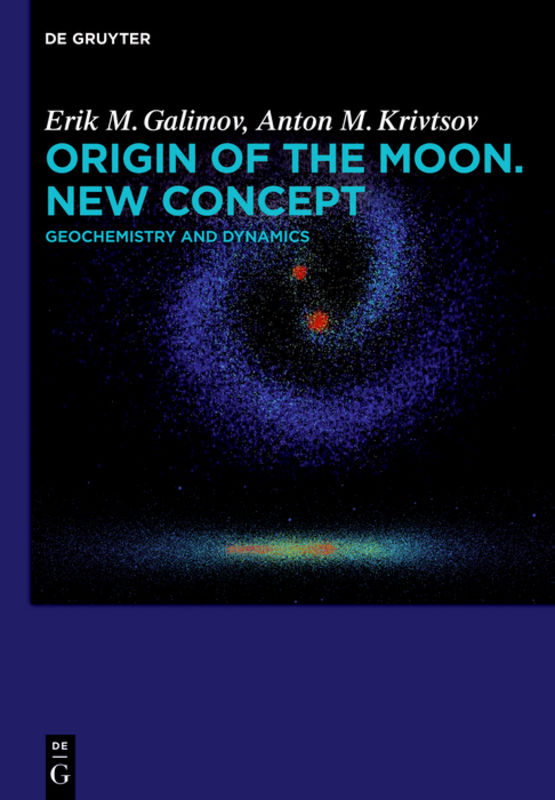
Origin of the Moon. New Concept
The origin of the Moon remains an unsolved problem of the planetary science. Researchers engaged in celestial dynamics, geophysics, and geochemistry are still discussing various models of creation of our closest cosmic neighbour. The most popular scenario, the impact hypothesis involving a collision early in the Earth's history, has been substantially challenged by the new data. The birth and development of a planet-moon system always plays a role in the formation of an entire planetary system around our Sun or around another star. This way, the story of our Moon acquires broader ramifications for one of the hottest topics of the modern scholarship. All this has motivated the authors of this book to consider a new concept and to compare the currently discussed theories, analyzing their advantages and shortcomings in explaining the experimental data.
eBook

Lunar exploration: opening a window into the history and evolution of the inner Solar System
The lunar geological record contains a rich archive of the history of the inner Solar System, including information relevant to understanding the origin and evolution of the Earth-Moon system, the geological evolution of rocky planets, and our local cosmic environment. This paper provides a brief review of lunar exploration to-date and describes how future exploration initiatives will further advance our understanding of the origin and evolution of the Moon, the Earth-Moon system and of the Solar System more generally. It is concluded that further advances will require the placing of new scientific instruments on, and the return of additional samples from, the lunar surface. Some of these scientific objectives can be achieved robotically, for example by in situ geochemical and geophysical measurements and through carefully targeted sample return missions. However, in the longer term, we argue that lunar science would greatly benefit from renewed human operations on the surface of the Moon, such as would be facilitated by implementing the recently proposed Global Exploration Roadmap.
Journal Article
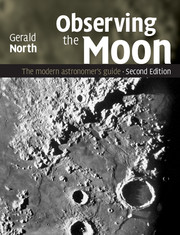
Observing the Moon
Written by an experienced and well-known lunar observer, this is a hands-on primer for the aspiring observer of the Moon. Whether you are a novice or are already experienced in practical astronomy, you will find plenty in this book to help you raise your game to the next level and beyond. In this thoroughly updated second edition, the author provides extensive practical advice and sophisticated background knowledge of the Moon and of lunar observation. It incorporates the latest developments in lunar imaging techniques, including digital photography, CCD imaging and webcam observing, and essential advice on collimating all common types of telescope. Learn what scientists have discovered about our Moon, and what mysteries remain still to be solved. Find out how you can take part in the efforts to solve these mysteries, as well as enjoying the Moon's spectacular magnificence for yourself!
eBook

The Importance of Phobos Sample Return for Understanding the Mars-Moon System
Phobos and Deimos occupy unique positions both scientifically and programmatically on the road to the exploration of the solar system. Japan Aerospace Exploration Agency (JAXA) plans a Phobos sample return mission (MMX: Martian Moons eXploration). The MMX spacecraft is scheduled to be launched in 2024, orbit both Phobos and Deimos (multiple flybys), and retrieve and return >10 g of Phobos regolith back to Earth in 2029. The Phobos regolith represents a mixture of endogenous Phobos building blocks and exogenous materials that contain solar system projectiles (e.g., interplanetary dust particles and coarser materials) and ejecta from Mars and Deimos. Under the condition that the representativeness of the sampling site(s) is guaranteed by remote sensing observations in the geologic context of Phobos, laboratory analysis (e.g., mineralogy, bulk composition, O-Cr-Ti isotopic systematics, and radiometric dating) of the returned sample will provide crucial information about the moon’s origin: capture of an asteroid or in-situ formation by a giant impact. If Phobos proves to be a captured object, isotopic compositions of volatile elements (e.g., D/H,
13
C/
12
C,
15
N/
14
N) in inorganic and organic materials will shed light on both organic-mineral-water/ice interactions in a primitive rocky body originally formed in the outer solar system and the delivery process of water and organics into the inner rocky planets.
Journal Article

Chemical Composition, Mineralogy, and Physical Properties of the Moon’s Mantle: A Review
The problem of the internal structure of the Moon plays a special role in understanding its geochemistry and geophysics. The principal sources of information about the chemical composition and physical state of the deep interior are seismic experiments of the Apollo expeditions, gravity data from the GRAIL mission, and geochemical and isotopic studies of lunar samples. Despite the high degree of similarity of terrestrial and lunar matter in the isotopic composition of several elements, the problem of the similarity and/or difference in the major-component composition of the silicate shells of the Earth and its satellite remains unresolved. This review paper summarizes and critically analyzes information on the composition and structure of the Moon, examines the main contradictions between geochemical and geophysical classes models for the mantle structure, both within each class and between the classes, related to the estimation of the abundance of Fe, Mg, Si, Al, and Ca oxides, and analyzes bulk silicate Moon (BSM) models. The paper describes the principles of the approach to modeling the internal structure of a planetary body, based on the joint inversion of an integrated set of selenophysical, seismic, and geochemical parameters combined with calculations of phase equilibria and physical properties. Two new classes of the chemical composition of the Moon enriched in silica (∼50% SiO
2
) and ferrous iron (11–13% FeO, Mg# 79–81) relative to the bulk composition of the silicate component of the Earth (BSE) are discussed: (i) models E with terrestrial concentrations of CaO and Al
2
O
3
(Earth-like models) and (ii) models M with higher contents of refractory oxides (Moon-like models), which determine the features of the mineralogical and seismic structure of the lunar interior. A probabilistic distribution of geochemical (oxide concentrations) and geophysical (
P
-,
S
-wave velocities and density) parameters in the four-layer lunar mantle within the range of permissible selenotherms was obtained. Systematic differences are revealed between contents of major oxides in the silicate shells of the Earth and the Moon. Calculations were carried out for the mineral composition,
P
-,
S
-wave velocities, and density of the E/M models, and two classes of conceptual geochemical models: LPUM (Lunar Primitive Upper Mantle) and TWM (Taylor Whole Moon) with Earth’s silica content (∼45 wt % SiO
2
) and different FeO and Al
2
O
3
contents. Arguments are presented in support of the SiO
2
- and FeO-enriched (olivine pyroxenite) lunar mantle, which has no genetic similarity with Earth’s pyrolitic mantle, as a geochemical consequence of the inversion of geophysical parameters and determined by cosmochemical conditions and the mechanism that formed the Moon. The dominant mineral of the lunar upper mantle is high-magnesium orthopyroxene with a low calcium content (rather than olivine), as confirmed by Apollo seismic data and supported by spacecraft analysis of spectral data from a number of impact basin rocks. In contrast, the
P
- and
S
-wave velocities of the TWM and LPUM geochemical models, in which olivine is the dominant mineral of the lunar mantle, do not match Apollo seismic data. The geochemical constraints in the scenarios for the formation of the Moon are considered. The simultaneous enrichment of the Moon in both SiO
2
and FeO relative to the pyrolitic mantle of the Earth is incompatible with the formation of the Moon as a result of a giant impact from terrestrial matter or an impact body (bodies) of chondritic composition and is in conflict with modern scenarios of the formation of the Moon and with similarities in the isotopic compositions of lunar and terrestrial samples. The problem of how to fit these different geochemical factors into the Procrustean bed of cosmogonic models for the Earth–Moon system formation is discussed.
Journal Article

Gravitational Capture as a Possible Scenario Origin of the Moon
The paper is devoted to the problem of the origin of the Moon. The discussed modern scenarios for the formation of the Earth–Moon system are: simultaneous formation of the Earth and the Moon in the circumsolar gas-dust disk; impact partial destruction of the Earth by a massive asteroid; gravitational capture of the Moon by the Earth; and destruction of the double Moon at the beginning when approaching the Earth with possible subsequent absorption components of smaller mass by the Earth. We offer two-stage scenario of gravitational capture of the Moon by the Earth in the early stages of Solar System. In the first stage, using a hybrid numerical model in the formulation of the three-body problem (Sun, Earth and Moon) and
N
-bodies, the search and selection of temporary orbits of the Moon around the Earth is carried out. Using the backward integration method in the
N
-body problem formulation, the influence of tidal forces on pumping of orbital moment of the Moon (
) relative to the Earth at its own moment
is estimated. The simulation shows that actions tidal forces alone are not enough to capture the Moon by the Earth in a short time scale of ~100 years (
). At the second stage, the factor is considered viscous-dissipative environment leading to additional “slowing down” of the Moon, due, for example, to collisions with asteroids and the transition of tidal energy into heat, which helps the Moon get rid of excess kinetic energy and gain constant orbit around the Earth.
Journal Article
Is a Consensus Possible between Geochemical and Geophysical Models of the Internal Structure of the Lunar Mantle?
Significant inconsistencies persist between geophysical and geochemical groups of lunar composition models, as well as within each group. The primary issues are related to the assessment of the content of main petrogenic elements (Fe, Mg, Si), including refractory elements (Al, Ca). In this study, we examined the impact of the chemical composition and mineralogy of different compositional models on the seismic and density structure of the lunar interior in combination with phase equilibrium calculations. Two groups of new geophysical models containing 51–52 wt % SiO
2
are considered—conventionally Earth-like models with terrestrial Al
2
O
3
content and Moon-like models with increased Al
2
O
3
content, obtained on the basis of seismic and selenodesic constraints using a Markov chain Monte Carlo method, as well as the most popular geochemical models TWM (Taylor, 1982) and LPUM (Longhi, 2006) with ∼45–46 wt % SiO
2
. For these geophysical and geochemical models, we explicitly calculated sound velocities and densities of mantle-phase assemblages for a range of proposed selenotherms and compared the results with high-quality Apollo seismic data (Garcia et al., 2019). Regardless of the abundance of refractory elements, we find very satisfactory agreement between the physical properties of our new geophysical models and the Apollo seismic data, confirming the enrichment of the lunar mantle in FeO (∼12 wt %) and SiO
2
(∼50 wt %) at depths from 50 to 500 km. This enrichment of SiO
2
corresponds to the predominance of pyroxenes, especially low-Ca orthopyroxene, over olivine. In contrast, sound velocities in silica-unsaturated, olivine-dominated compositions enriched (TWM) or depleted (LPUM) in FeO and Al
2
O
3
are inconsistent with the Apollo lunar seismic data. The inferred compositions contain significantly more FeO and SiO
2
than the bulk silicate Earth, which poses problems associated with the formation of the Moon from a pyrolite mantle during a giant impact scenario.
Journal Article

Giant Impact: The Leading Scenario of the Origin of the Moon
Moon, an astronomical body hanging in the sky, has been recorded and studied by mankind for thousands of years, even before the invention of the word “moon”. There are numerous varying theories about its origin. The aim of this article is to compare and further analyze the common theories of the origin of Moon. First, we provide basic information about the moon, the moon’s soil, and the basic elements of the moon and offer an introduction to solar and lunar eclipses and why they exist, as well as human efforts to explore the moon, including the Apollo program and the Chang’E program. Finally, we analyze and compare the four most common theories about the origin of the Moon: the split theory, homologation theory, capture theory and impact theory. Among all, the more accepted theory is the big collision theory though there is still no scientific basis for it. This article introduces the origins of the Moon by analyzing the pros and cons and describing possible future directions.
Journal Article
Accretion of the Earth
The origin of the Earth and its Moon has been the focus of an enormous body of research. In this paper I review some of the current models of terrestrial planet accretion, and discuss assumptions common to most works that may require re-examination. Density-wave interactions between growing planets and the gas nebula may help to explain the current near-circular orbits of the Earth and Venus, and may result in large-scale radial migration of proto-planetary embryos. Migration would weaken the link between the present locations of the planets and the original provenance of the material that formed them. Fragmentation can potentially lead to faster accretion and could also damp final planet orbital eccentricities. The Moon-forming impact is believed to be the final major event in the Earth's accretion. Successful simulations of lunar-forming impacts involve a differentiated impactor containing between 0.1 and 0.2 Earth masses, an impact angle near 45° and an impact speed within 10 per cent of the Earth's escape velocity. All successful impacts-with or without pre-impact rotation-imply that the Moon formed primarily from material originating from the impactor rather than from the proto-Earth. This must ultimately be reconciled with compositional similarities between the Earth and the Moon.
Journal Article