
Catalogue Search | MBRL


Are you sure you want to remove the book from the shelf?

{{itemTitle}}
311,999
result(s) for
"Moore"
Sort by:

Correction: Seek and you may (not) find: A multi-institutional analysis of where research data are shared
[This corrects the article DOI: 10.1371/journal.pone.0302426.].
Journal Article


Alan Moore
Eclectic British author Alan Moore (b. 1953) is one of the most acclaimed and controversial comics writers to emerge since the late 1970s. He has produced a large number of well-regarded comic books and graphic novels while also making occasional forays into music, poetry, performance, and prose.
InAlan Moore: Comics as Performance, Fiction as Scalpel, Annalisa Di Liddo argues that Moore employs the comics form to dissect the literary canon, the tradition of comics, contemporary society, and our understanding of history. The book considers Moore's narrative strategies and pinpoints the main thematic threads in his works: the subversion of genre and pulp fiction, the interrogation of superhero tropes, the manipulation of space and time, the uses of magic and mythology, the instability of gender and ethnic identity, and the accumulation of imagery to create satire that comments on politics and art history.
Examining Moore's use of comics to scrutinize contemporary culture, Di Liddo analyzes his best-known works--Swamp Thing, V for Vendetta, Watchmen, From Hell, Promethea, andLost Girls. The study also highlights Moore's lesser-known output, such asHalo Jones, Skizz, andBig Numbers, and his prose novelVoice of the Fire. Alan Moore: Comics as Performance, Fiction as Scalpelreveals Moore to be one of the most significant and distinctly postmodern comics creators of the last quarter-century.
eBook

The work : searching for a life that matters
The Work is the story of how one young man traced a path through the world to find his life's purpose. Wes Moore graduated from a difficult childhood in the Bronx and Baltimore to an adult life that would find him at some of the most critical moments in our recent history: as a combat officer in Afghanistan; a White House fellow in a time of wars abroad and disasters at home; and a Wall Street banker during the financial crisis. In this insightful book, Moore shares the lessons he learned from people he met along the way--from the brave Afghan translator who taught him to find his fight, to the resilient young students in Katrina-ravaged Mississippi who showed him the true meaning of grit, to his late grandfather, who taught him to find grace in service.--Back cover.
Book

Metaethics after Moore
In How Should Ethics Relate to (the rest of) Philosophy?, Stephen Darwall challenges both the claims of independence and priority. He argues that although metaethics and normative ethics are properly focused on different issues, they need to be brought into a dynamic relation with one another in order to produce a systematic and defensible philosophical ethics. Their mutual dependence, claims Darwall, is owing to the fact that issues of normativity are at the centre of the concerns of both metaethics and normative ethics. In making his case, Darwall examines Moore's doctrine that an irreducible notion of intrinsic value is fundamental in ethics, and argues that although Moore was correct in thinking that ethical notions are irreducible, he was incorrect in thinking that this is because they have a notion of intrinsic value at their core. Rather, according to Darwall, the notion of a normative reason is ethically fundamental, and a proper philosophical ethics that fully accommodates the normativity involved in ethical thought and discourse will require that metaethical issues and normative issues bearing on normativity be ‘pursued interdependently as complementary aspects of a comprehensive philosophical ethics’. He illustrates this claim by explaining how certain debates within normative ethics over consequentialism and over virtue depend upon metaethical issues about the nature of normativity.
eBook

Henry Moore : the helmet heads
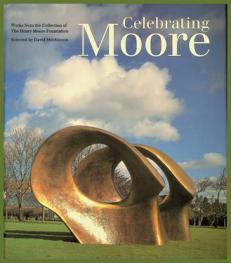
The Wallace Collection hosts a major exhibition in collaboration with The Henry Moore Foundation for spring 2019 exploring the sculptor Henry Moore's fascination with armour at the Wallace Collection, an interest which fundamentally influenced his work over many years. In 1921 Moore set up his studio in Hampstead, not far from the Wallace Collection and often referred to the 'many hours' he spent here, studying armour. Here he recognised what he called 'universal organic forms.' He sensed that pieces of armour were 'objects of power', sculptural forms whose vitality flowed from their function- to protect another vulnerable structure inside of them. This richly illustrated catalogue, written by co-curators Tobas Capwell and Hannah Higham, follows the thematic structure of the exhibition and illuminates an unusual, relatively unknown, aspect of Henry Moore's work. Exhibition: The Wallace Collection, London, UK (06.03-23.06.2019).
BOOK

Electronics based on two-dimensional materials: Status and outlook
Since Moore’s law in the traditional semiconductor industry is facing shocks, More Moore and More than Moore are proposed as two paths to maintain the development of the semiconductor industry by adopting new architectures or new materials, in which the former is committed to the continued scaling of transistors for performance enhancement, and the latter pursues the realization of functional diversification of electronic systems. Two-dimensional (2D) materials are supposed to play an important role in these two paths. In More Moore, the ultimate thin thickness and the dangling-bond-free surface of 2D channels offer excellent gate electrostatics while avoiding the degradation of carrier mobility at the same time, so that the transistors can be further scaled down for higher performance. In More than Moore, devices based on 2D materials can well meet the requirements of electronic systems for functional diversity, like that they can operate at high frequency, exhibit excellent sensitivity to the changes in the surroundings at room temperature, have good mechanical flexibility, and so on. In this review, we present the application of 2D materials in More Moore and More than Moore domains of electronics, outlining their potential as a technological option for logic electronics, memory electronics, radio-frequency electronics, sensing electronics, and flexible electronics.
Journal Article


G.E. Moore's ethical theory : resistance and reconciliation
This 2001 book is a comprehensive study of the ethics of G. E. Moore, the most important English-speaking ethicist of the twentieth century. Moore's ethical project, set out in his seminal text Principia Ethica, is to preserve common moral insight from scepticism and, in effect, persuade his readers to accept the objective character of goodness. Brian Hutchinson explores Moore's arguments in detail and in the process relates the ethical thought to Moore's anti-sceptical epistemology. Moore was, without perhaps fully realizing it, sceptical about the very enterprise of philosophy itself, and in this regard, as Brian Hutchinson reveals, was much closer in his thinking to Wittgenstein than has been previously realized. This book shows Moore's ethical work to be much richer and more sophisticated than his critics have acknowledged.
eBook