
Catalogue Search | MBRL


Are you sure you want to remove the book from the shelf?

{{itemTitle}}
787
result(s) for
"Moore, G E"
Sort by:
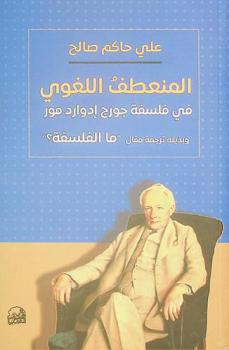
المنعطف اللغوي : فلسفة الحس المشترك عند جورج إدوارد مور : دراسة مقارنة
يعد نص جورج إدوارد مور الفلسفي أكثر النصوص الفلسفية وضوحا ومباشرة. وهذان، الوضوح والمباشرة، غايتان سعت إلى تحقيقهما فلسفته، والفلسفة التحليلية المعاصرة عموما. فكانت كتابته نفسها تجسيدا لغايات فلسفته. لقد بدا له تاريخ الفلسفة مكتفا بالغموض، ومترعا بمغالطات تصدم، أول ما تصدم، مدارك الناس الاعتياديين واعتقاداتهم. فافترضت فلسفته عقم كل تفكير يناقض البداهة العامة. لذلك جاءت فلسفته، في محيطها الإنجليزي، خروجا بالفلسفة من عنق الزجاجة، الذي حشرتها فيه الفلسفات الهيغلية الحديثة بثوبها الإنجليزي في النصف الثاني من القرن التاسع عشر. كانت فلسفته تريد أن تكون خطوة إلى الأمام، ومراجعة لنوع من الفكر ساد تاريخ الفلسفة، لا سيما الفلسفة الحديثة، جافى المنطق السليم، أو الحس المشترك. لا يقدم نص مور الفلسفي معلومات ومعارف لا نعرفها، فهي تضعنا أمام حقائق، بلغت عنده مستوى البداهة، التي لا يمكن الشك فيها، وعليه فإننا لن نتعلم الكثير من هذا النص إذا كان التعليم يعني تلقيننا معلومات جاهزة، أو اختلاق تهويمات لا أساس واقعي لها، بقدر ما نتعلم كيف نفكر، ومن ثم كيف نسأل. ولهذه المهمة بالذات كرس مور الجزء الأكبر من جهده الفكري، لتكون فلسفته بالدرجة الأولى فلسفة سؤال تبحث عن الوضوح والدقة؛ لأن هذين كفيلان بتمهيد الطريق نحو الجواب الواضح والدقيق.
Book

G.E. Moore's ethical theory : resistance and reconciliation
This 2001 book is a comprehensive study of the ethics of G. E. Moore, the most important English-speaking ethicist of the twentieth century. Moore's ethical project, set out in his seminal text Principia Ethica, is to preserve common moral insight from scepticism and, in effect, persuade his readers to accept the objective character of goodness. Brian Hutchinson explores Moore's arguments in detail and in the process relates the ethical thought to Moore's anti-sceptical epistemology. Moore was, without perhaps fully realizing it, sceptical about the very enterprise of philosophy itself, and in this regard, as Brian Hutchinson reveals, was much closer in his thinking to Wittgenstein than has been previously realized. This book shows Moore's ethical work to be much richer and more sophisticated than his critics have acknowledged.
eBook


Metaethics after Moore
In How Should Ethics Relate to (the rest of) Philosophy?, Stephen Darwall challenges both the claims of independence and priority. He argues that although metaethics and normative ethics are properly focused on different issues, they need to be brought into a dynamic relation with one another in order to produce a systematic and defensible philosophical ethics. Their mutual dependence, claims Darwall, is owing to the fact that issues of normativity are at the centre of the concerns of both metaethics and normative ethics. In making his case, Darwall examines Moore's doctrine that an irreducible notion of intrinsic value is fundamental in ethics, and argues that although Moore was correct in thinking that ethical notions are irreducible, he was incorrect in thinking that this is because they have a notion of intrinsic value at their core. Rather, according to Darwall, the notion of a normative reason is ethically fundamental, and a proper philosophical ethics that fully accommodates the normativity involved in ethical thought and discourse will require that metaethical issues and normative issues bearing on normativity be ‘pursued interdependently as complementary aspects of a comprehensive philosophical ethics’. He illustrates this claim by explaining how certain debates within normative ethics over consequentialism and over virtue depend upon metaethical issues about the nature of normativity.
eBook

Moore's Paradox
Representationalism grasps the meaning and grammar of linguistic expressions in terms of reference; that is, as determined by the respective objects, concepts or states of affairs they are supposed to represent, and by the internal structure of the content they articulate.
As a consequence, the semantic and grammatical properties of linguistic expressions allegedly reflect the constitution of the objects they refer to. Questions concerning the meaning of particular linguistic expressions are supposed to be answerable by investigating the metaphysics of the corresponding phenomena. Accordingly, questions of the meaning of psychological concepts, are turned into questions of the nature of psychological states. Concerned with Moore's Paradox, representationalist approaches lead into an investigation of the state of affairs supposedly described by Moore-paradoxical assertions, and thus eventually into investigations concerning the metaphysics of belief.
This book argues that this strategy necessarily yields both a wrong solution to Moore's Paradox and an inadequate conception of the meaning of the expression I believe. Turning to the metaphysics of belief is of no use when it comes to understanding either the meaning of the expression 'I believe' or the logic of avowals of belief. Instead, it proposes to focus on the role they play in language, the ways in which they are used in practice.
eBook

Moore's paradox : new essays on belief, rationality, and the first person
G. E. Moore famously observed that to assert, ‘I went to the pictures last Tuesday but I don’t believe that I did’ would be ‘absurd’. Moore calls it a ‘paradox’ that this absurdity persists despite the fact that what I say about myself might be true. Over half a century later, such sayings continue to perplex philosophers and other students of language, logic, and cognition. Ludwig Wittgenstein was fascinated by Moore’s example, and the absurdity of Moore’s saying was intensively discussed in the mid-20th century. Yet the source of the absurdity has remained elusive, and its recalcitrance has led researchers in recent decades to address it with greater care. In this definitive treatment of the problem of Moorean absurdity Green and Williams survey the history and relevance of the paradox and leading approaches to resolving it, and present new essays by leading thinkers in the area. Contributors Jonathan Adler, Bradley Armour-Garb, Jay D. Atlas, Thomas Baldwin, Claudio de Almeida, André Gallois, Robert Gordon, Mitchell Green, Alan Hájek, Roy Sorensen, John Williams
eBook

Moore and Wittgenstein on certainty
Ludwig Wittgenstein’s On Certainty was finished just before his death in 1951 and is a running commentary on three of G.E. Moore’s greatest epistemological papers. In the early 1930s, Moore had written a lengthy commentary on Wittgenstein, anticipating some of the issues Wittgenstein would discuss in On Certainty. The philosophical relationship between these two great philosophers and their overlapping, but nevertheless differing, views is the subject of this book. Both defended the existence of certainty and thus opposed any form of scepticism. However, their defences and conceptions of certainty differed widely, as did their understanding of the nature of scepticism and how best to combat it. Stroll’s book contains a careful and critical analysis of their differing approaches to a set of fundamental epistemological problems.
eBook

Themes from G.E. Moore : new essays in epistemology and ethics
These sixteen original essays, whose authors include some of the world's leading philosophers, examine themes from the work of the Cambridge philosopher G. E. Moore (1873-1958), and demonstrate his considerable continuing influence on philosophical debate. Part I bears on epistemological topics, such as scepticism about the external world, the significance of common sense, and theories of perception. Part II is devoted to themes in ethics, such as Moore's open question argument, his non-naturalism, utilitarianism, and his notion of organic unities.
eBook

Themes from G. E. Moore
These sixteen original essays, whose authors include some of the world's leading philosophers, examine themes from the work of the Cambridge philosopher G. E. Moore (1873-1958), and demonstrate his considerable continuing influence on philosophical debate. Part I bears on epistemological topics, such as scepticism about the external world, the sign.
eBook

G. E. Moore's Ethical Theory
This 2001 book is a comprehensive study of the ethics of G. E. Moore, the most important English-speaking ethicist of the twentieth century. Moore's ethical project, set out in his seminal text Principia Ethica, is to preserve common moral insight from scepticism and, in effect, persuade his readers to accept the objective character of goodness. Brian Hutchinson explores Moore's arguments in detail and in the process relates the ethical thought to Moore's anti-sceptical epistemology. Moore was, without perhaps fully realizing it, sceptical about the very enterprise of philosophy itself, and in this regard, as Brian Hutchinson reveals, was much closer in his thinking to Wittgenstein than has been previously realized. This book shows Moore's ethical work to be much richer and more sophisticated than his critics have acknowledged.
eBook