
Catalogue Search | MBRL


Are you sure you want to remove the book from the shelf?

{{itemTitle}}
983
result(s) for
"Moral education United States."
Sort by:


A New Moral Vision
InA New Moral Vision, Andrea L. Turpin explores how the entrance of women into U.S. colleges and universities shaped changing ideas about the moral and religious purposes of higher education in unexpected ways, and in turn profoundly shaped American culture. In the decades before the Civil War, evangelical Protestantism provided the main impetus for opening the highest levels of American education to women. Between the Civil War and World War I, however, shifting theological beliefs, a growing cultural pluralism, and a new emphasis on university research led educators to reevaluate how colleges should inculcate an ethical outlook in students-just as the proportion of female collegians swelled.
In this environment, Turpin argues, educational leaders articulated a new moral vision for their institutions by positioning them within the new landscape of competing men's, women's, and coeducational colleges and universities. In place of fostering evangelical conversion, religiously liberal educators sought to foster in students a surprisingly more gendered ideal of character and service than had earlier evangelical educators. Because of this moral reorientation, the widespread entrance of women into higher education did not shift the social order in as egalitarian a direction as we might expect. Instead, college graduates-who formed a disproportionate number of the leaders and reformers of the Progressive Era-contributed to the creation of separate male and female cultures within Progressive Era public life and beyond.
Drawing on extensive archival research at ten trend-setting men's, women's, and coeducational colleges and universities,A New Moral Visionilluminates the historical intersection of gender ideals, religious beliefs, educational theories, and social change in ways that offer insight into the nature-and cultural consequences-of the moral messages communicated by institutions of higher education today.
eBook

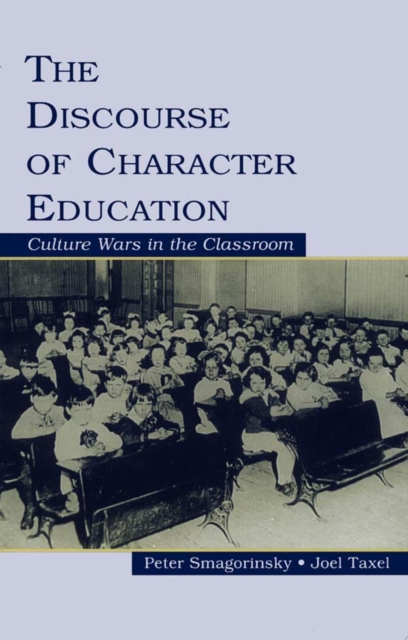
The discourse of character education
In this book Peter Smagorinsky and Joel Taxel analyze the ways in which the perennial issue of character education has been articulated in the United States, both historically and in the current character education movement that began in earnest in the 1990s. The goal is to uncover the ideological nature of different conceptions of character education. The authors show how the current discourses are a continuation of discourse streams through which character education and the national purpose have been debated for hundreds of years, most recently in what are known as the Culture Wars--the intense, often passionate debates about morality, culture, and values carried out by politicians, religious groups, social policy foundations, and a wide range of political commentators and citizens, in which the various stakeholders have sought influence over a wide range of social and economic issues, including education. The centerpiece is a discourse analysis of proposals funded by the United States Department of Education's Office of Educational Research and Improvement (OERI). Discourse profiles from sets of states that exhibit two distinct conceptions of character are examined and the documents from particular states are placed in dialogue with the OERI Request for Proposals. One profile reflects the dominant perspective promoted in the U.S., based on an authoritarian view in which young people are indoctrinated into the value system of presumably virtuous adults through didactic instruction. The other reflects the well-established yet currently marginal discourse emphasizing attention to the whole environment in which character is developed and enacted and in which reflection on morality, rather than didactic instruction in morality, is the primary instructional approach. By focusing on these two distinct regions and their conceptions of character, the authors situate the character education movement at the turn of the twenty-first century in the context of
eBook


Empowering Our Military Conscience
Responding to increasing global anxiety over the ethics education of military personnel, this volume illustrates the depth, rigour and critical acuity of Professional Military Ethics Education (PMEE) with contributions by distinguished ethical theorists. It refreshes our thinking about the axioms of just war orthodoxy, the intellectual and political history of just war theorizing, and the justice of recent military doctrines and ventures. The volume also explores a neglected moral dimension of warfare, jus ante bellum (the ethics of pre-war practices) - particularly jus in disciplina bellica (the ethics of educating for warfare). Using metaphor to exemplify the professionalization of the military, the book exposes ambivalences within military professionals' concepts of their professional responsibilities, analyzes issues of self-respect posed by service in an unjust cause, and surveys the deep conflicts inherent in PMEE. While primarily focused on US military academies, the volume will resonate with those responsible for education in military academies across the globe.
eBook

Democratic discord in schools : cases and commentaries in educational ethics
Teaching in a democracy is challenging and filled with dilemmas that have no easy answers. For example, how do educators meet their responsibilities of teaching civic norms and dispositions while remaining nonpartisan? Democratic Discord in Schools features eight normative cases of complex dilemmas drawn from real events designed to help educators practice the type of collaborative problem solving and civil discourse needed to meet these challenges of democratic education. Each of the cases also features a set of six commentaries written by a diverse array of scholars, educators, policy makers, students, and activists with a range of political views to spark reflection and conversation. Drawing on research and methods developed in the Justice in Schools project at the Harvard Graduate School of Education (HGSE), Democratic Discord in Schools provides the tools that allow educators and others to practice the deliberative skills they need in order to find reasonable solutions to common ethical dilemmas in politically fraught times.-- Provided by publisher
Book

What Universities Can Be
InWhat Universities Can Be, the high-profile educator Robert J. Sternberg writes thoughtfully about the direction of higher education in this country and its potential to achieve future excellence. Sternberg presents, for the first time, his concept of the ACCEL model, in which institutions of higher education are places where students learn to become Active Concerned Citizens and Ethical Leaders. One of the greatest problems in our society is a lack of leaders who understand the importance of behaving in ethical ways for the common good of all. At a time when new models of education are sorely needed, universities have the opportunity to claim the education of future leaders as their mission.
In the course of laying out the ACCEL concept and how such a model might be achieved, Sternberg offers many insights into the realities of higher education as it is practiced today and suggests ways that we could move in a better direction, one that would produce graduates who make the world a better place in which to live. Sternberg's compelling narrative and convincing argument address all aspects of universities, such as admissions, financial aid, instruction and assessment, retention and graduation, student life, diversity, finances, athletics, governance, and marketing. This book is essential reading for educators and laypeople who are interested in learning how our universities work and how they could work better.
InWhat Universities Can Be, the high-profile educator Robert J. Sternberg writes thoughtfully about the direction of higher education in this country and its potential to achieve future excellence. Sternberg presents, for the first time, his concept of the ACCEL model, in which institutions of higher education are places where students learn to become Active Concerned Citizens and Ethical Leaders. One of the greatest problems in our society is a lack of leaders who understand the importance of behaving in ethical ways for the common good of all. At a time when new models of education are sorely needed, universities have the opportunity to claim the education of future leaders as their mission.In the course of laying out the ACCEL concept and how such a model might be achieved, Sternberg offers many insights into the realities of higher education as it is practiced today and suggests ways that we could move in a better direction, one that would produce graduates who make the world a better place in which to live. Sternberg's compelling narrative and convincing argument address all aspects of universities, such as admissions, financial aid, instruction and assessment, retention and graduation, student life, diversity, finances, athletics, governance, and marketing. This book is essential reading for educators and laypeople who are interested in learning how our universities work and how they could work better.
eBook

Pursuing the honorable : reawakening honor in the modern military
\"This book helps modern institutions, particularly today's military service academies, to solve concrete problems on how to inculcate the pursuit of the honorable in 21st Century leaders and soldiers and to provide a methodology for instilling honor in character formation.\" --Provided by publisher.
Book
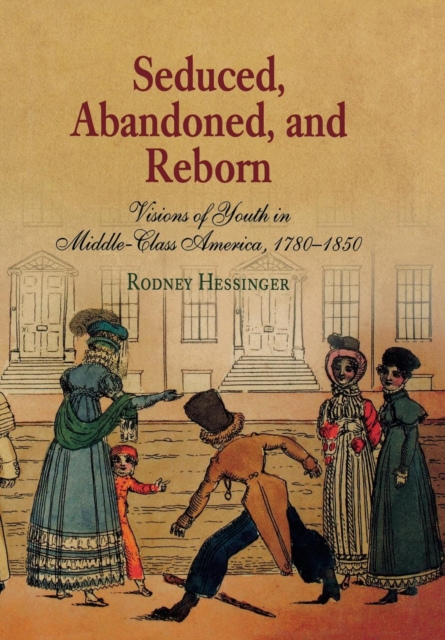
Seduced, abandoned, and reborn : visions of youth in middle-class America, 1780-1850
In attempting to steer young adults safely away from the dangers of market-driven society, reformers in early America created values that came to define the emerging urban middle class.
eBook