
Catalogue Search | MBRL


Are you sure you want to remove the book from the shelf?

{{itemTitle}}
306
result(s) for
"More, Thomas, Saint, 1478-1535"
Sort by:
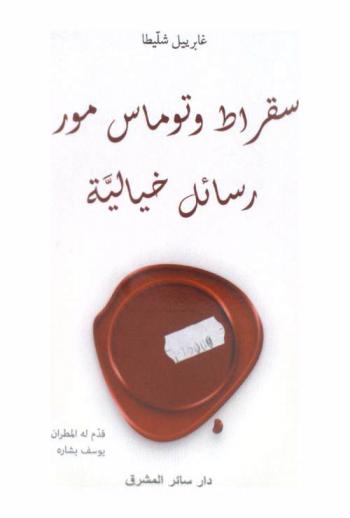
سقراط وتوماس مور : رسائل خيالية
يقدم لنا غبرييل شليطا، السياسي البرازيلي من أصل لبناني، كتابه عن سقراط وتوماس مور بقالب أدبي فلسفي جديد. الكتاب هو مجموعة رسائل افتراضية خيالية كتبها سقراط آخر وتوماس مور آخر، في زمان ليس زمانهما وأمكنة غير أماكنهما. الكتاب من أدب اليوتوبيا أو المدينة الفاضلة. كلماته أبعد من الخيال وأقرب إلى الواقع. فالسياسة هي فن الممكن كما حددتها الفلسفة اليونانية. ولكنها مع سقراط وتوماس مور هي أبعد من الممكن، هي فن ارتقاء الفرد والمجتمع إلى السعادة من خلال الحق والعدل. سقراط في بلاد الإغريق وتوماس مور في بلاد الإنكليز دفعا حياتهما ثمن تمسكهما بالحق والعدل وسيلة لبلوغ السعادة. هما شهيدا الحق. انتصر الحسد والحقد على جسديهما، ولكن فكرهما كان حيلة ونورا وقد أنصفهما التاريخ بالخلود بين الكبار من هذه الإنسانية.
Book

Utopia, Carnival, and Commonwealth in Renaissance England
With the emergence of utopia as a cultural genre in the sixteenth century, a dual understanding of alternative societies, as either political or literary, took shape. InUtopia, Carnival, and Commonwealth in Renaissance England, Christopher Kendrick argues that the chief cultural-discursive conditions of this development are to be found in the practice of carnivalesque satire and in the attempt to construct a valid commonwealth ideology. Meanwhile, the enabling social-political condition of the new utopian writing is the existence of a social class of smallholders whose unevenly developed character prevents it from attaining political power equivalent to its social weight.
In a detailed reading of Thomas More'sUtopia, Kendrick argues that the uncanny dislocations, the incongruities and blank spots often remarked upon in Book II's description of Utopian society, amount to a way of discovering uneven development, and that the appeal of Utopian communism stems from its answering the desire of the smallholding class (in which are to be numbered European humanists) for unity and power. Subsequent chapters on Rabelais, Nashe, Marlowe, Bacon, Shakespeare, and others show how the utopian form engages with its two chief discursive preconditions, carnival and commonwealth ideologies, while reflecting the history of uneven development and the smallholding class.Utopia, Carnival, and Commonwealth in Renaissance Englandmakes a novel case for the social and cultural significance of Renaissance utopian writing, and of the modern utopia in general.
eBook

Law, justice, and the individual : Thomas More Lecture, 's-Hertogenbosch, 30 March 2011
\"In this lecture ... Ernst Hirsch Ballin ... finds common ground between Thomas More's early sixteenth century Christian humanism and present-day issues of law and justice\"--Page [2].
Book

The Elizabethan Theatre and \The Book of Sir Thomas More
No detailed description available for \"The Elizabethan Theatre and \"The Book of Sir Thomas More''\".
eBook
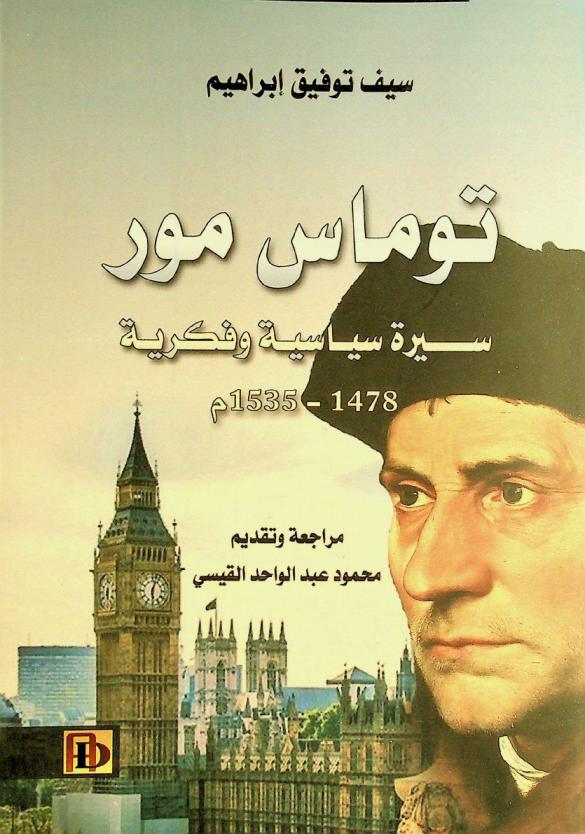
توماس مور : سيرة سياسية وفكرية 1478-1535 م /
ينتمي توماس مور (1478-1535) إلى هذه المرحلة الانتقالية وإلى هذا الفكر الجديد، فهو أحد رموز النهضة الأوربية عموما، والإنكليزية على نحو خاص عاصر مور المرحلة الثانية من النهضة الأوربية، التي ابتدأت منذ أواخر القرن الخامس عشر وحتى النصف الثاني من القرن السادس عشر التي أطلق عليها المؤرخ كمال مظهر أحمد \"مرحلة النضج والتكامل\" درس مور علوما متعددة القانون اللاهوت، والإنسانيات مما جعله ملما بعلوم عصره، ومقتربا من المثالية في تفكيره عاصر مور أواخر عهد هنري السابع ومدة طويلة من عهد هنري الثامن، وعانى في علاقته مع هذين الملكين.
Book


Between utopia and dystopia
The figure of the intellectual looms large in modern history, and yet his or her social place has always been full of ambiguity and ironies. Between Utopia and Dystopia is a study of the movement that created the identity of the universal intellectual: Erasmian humanism. Focusing on the writings of Erasmus and Thomas More, Hanan Yoran argues that, in contrast to other groups of humanists, Erasmus and the circle gathered around him generated the social space—the Erasmian Republic of Letters—that allowed them a considerable measure of independence. The identity of the autonomous intellectual enabled the Erasmian humanists to criticize established customs and institutions and to elaborate a reform program for Christendom. At the same time, however, the very notion of the universal intellectual presented a problem for the discourse of Erasmian humanism itself. It distanced the Erasmian humanists from concrete public activity and, as such, clashed with their commitment to the ideal of an active life. Furthermore, citizenship in the Republic of Letters threatened to lock the Erasmian humanists into a disembodied intellectual sphere, thus undermining their convictions concerning intellectual activity and the production of knowledge. Between Utopia and Dystopia will be of interest to scholars and students interested in Renaissance humanism, early modern intellectual and cultural history, and political thought. It also has much to contribute to debates over the identity, social place, and historical role of intellectuals.
eBook


The One Thomas More
\"Thomas More\" the humanist. \"Sir Thomas More\" the statesman. \"Saint Thomas More\" the martyr. Who was Thomas More? Which characterization of him is most true? Despite these multiple images and the problems of More's true identity, Travis Curtright uncovers a continuity of interests and, through interdisciplinary contexts, presents one Thomas More. The One Thomas More carefully studies the central humanist and polemical texts written by More to illustrate a coherent development of thought. Focusing on three major works from More's humanist phase, The Life of Pico, The History of Richard III, and Utopia, Curtright demonstrates More's idea of humanitas and his corresponding program of moderate political reform. Curtright then shows how More's later polemical theology and defense of the ecclesiastical courts were a continuation of his commitments rather than a break from them. Finally, More's prison letters are examined. His self-presentation in these letters is compared with other recent and iconic versions, such as those in Robert Bolt's Man for All Seasons and Hilary Mantel's Wolf Hall. Instead of a divided mind emerging, Curtright ably shows More's integrity and consistency of thought.
eBook