
Catalogue Search | MBRL


Are you sure you want to remove the book from the shelf?

{{itemTitle}}
93
result(s) for
"Morocco Social life and customs."
Sort by:


We share walls
We Share Walls: Language, Land, and Gender in Berber Morocco explores how political economic shifts over the last century have reshaped the language practices and ideologies of women (and men) in the plains and mountains of rural Morocco.
Offers a unique and richly textured ethnography of language maintenance and shift as well as language and place-making among an overlooked Muslim group Examines how Moroccan Berbers use language to integrate into the Arab-speaking world and retain their own distinct identity Illuminates the intriguing semiotic and gender issues embedded in the culture Part of the Blackwell Studies in Discourse and Culture Series
eBook
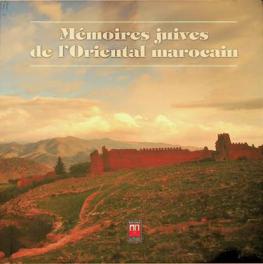
Mémoires juives de l'Oriental marocain
Ce livre est une évocation illustrée, réaliste et enthousiaste du patrimoine culturel judéo-marocain de lʹOriental, \"précisément cette particularité hébraïque qui constitue aujourdʹhui, ainsi que lʹa consacré la nouvelle Constitution du Royaume, lʹun des affluents séculaires de lʹidentité nationale.\" Premier du genre réalisé au Maroc, ce beau-livre marque ainsi une nouvelle rencontre, le dessein dʹune relecture des traces toujours vivantes dʹun passé commun, dont nous voulons honorer les moments heureux. Cʹest donc un témoignage qui interroge de façon inédite le vécu de lʹune des communautés les plus anciennes du Royaume, et sa relation à lʹautre. -- Publisher description.
Book

Trails of Posters
This essay is a contribution to this issue's forum on French Jewish studies.
Journal Article

Morocco
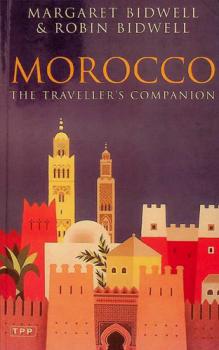
This book will introduce readers to Morocco. Readers will learn a little about the country's history, geography, major cities and landmarks, and culture. The title is complete with beautiful images and simple text. Aligned to Common Core Standards and correlated to state standards. Abdo Kids Jumbo is an imprint of Abdo Kids, a division of ABDO.
BOOK

Selkea! Memories of Eating Non-Kosher Food among the Spanish–Moroccan Jewish Diaspora in Israel
Drawing on life-story interviews and ethnography conducted in Israel from 2009 to 2023, this article examines how members of the Spanish-speaking Moroccan–Jewish diaspora in Israel recalled their habits of eating non-kosher food in Morocco. We explore how these memories emerged in response to commonplace discourses that depict Moroccan Jews as a distinctly religious-traditional ethnic group, untouched by European secular influences, and dichotomous to modern secular cultures in Israel. Contrary to this image, members of the community whom we interviewed highlighted a Jewish Moroccan life that was deeply connected to Spanish colonialism and the broader Hispanic and Sephardi worlds. We focus specifically on the concept of selkear, a Haketia (Judeo-Spanish) term meaning to let something go, make an exception, or turn a blind eye. Our analysis of our participants’ memories provides a nuanced understanding of Jewish religiosity in the context of colonialism and of how Mizrahi–Sephardi immigrants in Israel reclaimed their Judaism. Highlighting the practice of eating non-kosher food is thus a strategy used to challenge dominant notions of rigid religious commitment within the Sephardi diaspora and their interpretation in Israel.
Journal Article


Storytelling in Chefchaouen Northern Morocco
Storytelling in Chefchaouen Northern Morocco includes two sets of tales told by two different storytellers with an annotated study of the oral performance, transliterations and translations. The purpose is to preserve a part of the region's oral tradition of storytelling in the vernacular language in which it has been transmitted, presenting the original texts with parallel English translation. In addition, the cultural, literary, and linguistic background necessary for understanding this body of oral performance is given. A combination of disciplines (anthropology, philology, sociolinguistics, dialectology, comparative literature, ethnography, typology) is applied to the linguistic and literary features of the present corpus.
eBook