
Catalogue Search | MBRL


Are you sure you want to remove the book from the shelf?

{{itemTitle}}
5
result(s) for
"Moscow, Battle of, Moscow, Russia, 1941-1942"
Sort by:


Operation Typhoon
In October 1941 Hitler launched Operation Typhoon the German drive to capture Moscow and knock the Soviet Union out of the war. As the last chance to escape the dire implications of a winter campaign, Hitler directed seventy-five German divisions, almost two million men and three of Germany's four panzer groups into the offensive, resulting in huge victories at Viaz'ma and Briansk - among the biggest battles of the Second World War. David Stahel's groundbreaking new account of Operation Typhoon captures the perspectives of both the German high command and individual soldiers, revealing that despite success on the battlefield the wider German war effort was in far greater trouble than is often acknowledged. Germany's hopes of final victory depended on the success of the October offensive but the autumn conditions and the stubborn resistance of the Red Army ensured that the capture of Moscow was anything but certain.
eBook

Retreat from Moscow : a new history of Germany's winter campaign, 1941-1942
\"A gripping and authoritative revisionist account of the Soviet Winter Offensive of 1941-1942.\"-- Provided by publisher.
Book
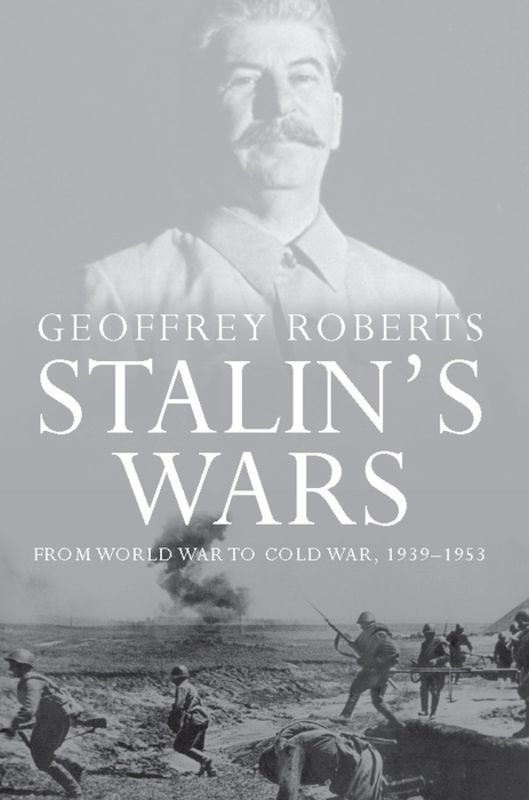
Stalin's Wars
This breakthrough book provides a detailed reconstruction of Stalin's leadership from the outbreak of the Second World War in 1939 to his death in 1953. Making use of a wealth of new material from Russian archives, Geoffrey Roberts challenges a long list of standard perceptions of Stalin: his qualities as a leader; his relationships with his own generals and with other great world leaders; his foreign policy; and his role in instigating the Cold War. While frankly exploring the full extent of Stalin's brutalities and their impact on the Soviet people, Roberts also uncovers evidence leading to the stunning conclusion that Stalin was both the greatest military leader of the twentieth century and a remarkable politician who sought to avoid the Cold War and establish a long-term detente with the capitalist world.By means of an integrated military, political, and diplomatic narrative, the author draws a sustained and compelling personal portrait of the Soviet leader. The resulting picture is fascinating and contradictory, and it will inevitably change the way we understand Stalin and his place in history. Roberts depicts a despot who helped save the world for democracy, a personal charmer who disciplined mercilessly, a utopian ideologue who could be a practical realist, and a warlord who undertook the role of architect of post-war peace.
eBook

Operation Typhoon : Hitler's march on Moscow, October 1941
\"The launch of Operation Typhoon heralded the opening of one of the biggest German offensives of World War II. Indeed it is surpassed in scale only by the German operations to invade France and the Low Countries in May 1940 (Case Yellow) and the Soviet Union itself in June 1941 (Operation Barbarossa). Although the fighting on the Eastern Front is arguably best known for Hitler's 1942 offensive to reach and conquer the oil fields of southern Russia (Case Blue), culminating in the battle for Stalingrad, Army Group South's 1942 summer offensive involved only half the number of German troops employed for Operation Typhoon\"-- Provided by publisher.
Book