
Catalogue Search | MBRL


Are you sure you want to remove the book from the shelf?

{{itemTitle}}
200,027
result(s) for
"Mosques"
Sort by:
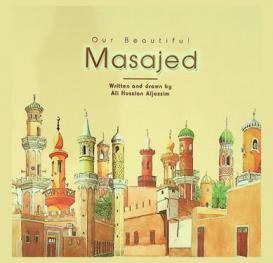


Mosques : splendors of Islam
One of the most important and authoritative books to celebrate mosque architecture and Islamic design, featuring many newly commissioned photographs. Mosques reflect some of the greatest architectural achievements - their spiritual purpose gives them a profound and often mystical beauty. This visually striking volume illustrates the development of basic mosque strucutral and decorative elements with over sixty examples. Venerated mosques such as the Great Mosque of Câordoba, the Imam Mosque of Isfahan, and Instanbul's Sèuleymaniye Mosque, as well as Doha's innovative Abu al-Qabib Mosque, are featured in magnificent detail. Mosques: Splendors of Islam showcases mosques from Europe, the Indian subcontinent, North America, North Africa and the sub-Sahara, the Middle East, and Russia and the Caucasus. It spans from their earliest origins in Mecca and Medina to contemporary masterpieces, highlighting major stylistic transformations as illustrated in the mosques of some of Islam's great dynasties - the Umayyads, the Abbasids, the Mamluks, the Ottomans, the Safavids, and the Mughals. The inclusion of dynamic new structures provides an insight into the vitality of current mosque design. Original and archival photographs offer exterior and interior views as well as images of adjacent gardens and fountains that grace these sanctuaries. Essays by prominent architecture and design authorities also address such topics as the iconographic and decorative elements of the mosque. Descriptions of their calligraphy and tilework, as well as furnishings and illumination, enhance this volume. -- from dust jacket.
Book

Design and implementation of the korean muallaf center application as a guide to praying and iqro procedures for korean muallaf
The number of Moslem populations increased rapidly by 70%. It includes the converts in South Korea. The development of Moslems in South Korea is marked by the development of mosques in Seoul, Busan, and Jeju. The number of converts in Korea is very high meanwhile the main constraint factor for Korean converts is the absence of prayer guide in Hangeul feature. Constraint experienced by the converts, the most important is prayer. This research developed the Android Application, named The Korean MuallafCenter, which is an application that helps the converts to include ablution, prayers, and easy-to-understand religious worship. The purpose of this research is to help the converts to understand the guidelines of Islam with Hangeul, so that they can practice it. The methodology of this research is by literature study, application design, implementation, and evaluation of the application usage. The results of this study are the Korean MuallafCenter Applications that have been used by Muallaf Korea, especially Ustadz, Imam, and Muallaf Public Figure, Olabora Song. They gave suggestions that the application requires the addition of a better Hangeul vocabulary usage and an approach to the Korean Society in accordance with its culture.
Journal Article


Trade and the Mosque: An Investigation of Commercial Activities and Mosques in Antalya with Spatial, Legal and Functional Recommendations
Expenditures, such as repair, heating and lighting costs, and payment of mosque staff’s salaries, are the main cost items that need to be satisfied for mosques to continue their services. Throughout history, these expenses have been met sometimes with the state budget, sometimes through waqfs and associations, and sometimes with the cash aid provided by the people directly in Turkey. Adding a commercial function to the mosque, which was built for the sake of continuous income, has been seen in the history of Turkey since the Ottoman period. However, the commercial units dedicated to the mosque during this period were not always close to the mosque; sometimes they could also be located in very remote location. Today, a type of structure is built which can be called a trade and religious building in the lower floor of the mosque, or as a part of the same floor due to space shortage, cost reduction etc. This type of building, which was interpreted with different perspectives, caused problems in terms of perceptibility, ratio and proportion, visuality, accessibility, noise pollution, and the moral values of the mosque, and even became the subject of lawsuits for the closure of commercial functions. In this context, the commercial functions that the mosques added to the structure in order to find financial resources were examined throughout the city center of Antalya. Accordingly, the architectural projects and zoning status of the 15 identified mosques were examined, and a spatial and configuration analysis was made. The functionality of the mosques was discussed with the mosque community, its officials, and the people in the area close to the mosque via focus group discussions, and examples of the issue brought to the judiciary were examined.
Journal Article