
Catalogue Search | MBRL


Are you sure you want to remove the book from the shelf?

{{itemTitle}}
1,327
result(s) for
"Motherhood Psychology."
Sort by:

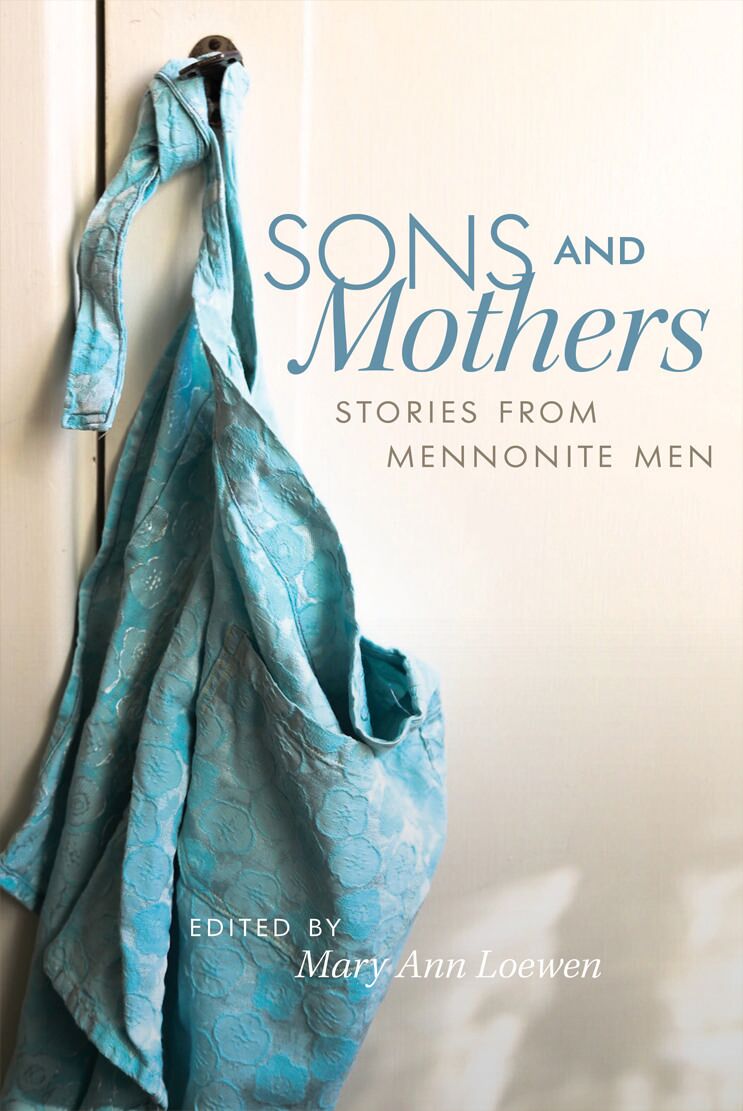
Sons and Mothers
In Sons and Mothers, Mennonite men reflect on the women who raised them, showing their mothers' hopes, dreams, and fears, and who they are today. Speaking to the Mennonite community, but drawing on universal themes, this book is a must-read for anyone wishing to delve deeper into this fundamental relationship.
eBook

Motherload : making it all better in insecure times
\"Motherload's core arguments are that security-seeking is the driving force of intensive mothering and that high expectation of security in the mother-child relationship--i.e. the motherload--is what makes mothering so difficult today. It further argues that the motherload, carried with every good intention to produce security through this one uniquely powerful relationship, can unintentionally undermine families' security. Strategies of producing security vary fundamentally along two dimensions. First, some strategies use mother-child connection as the primary security-producing tool whereas others use independence. Second, some strategies are intended to provide security to the child while others are aimed primarily at the mother's security. So, for example, one mother may use independence to create security for her child, and another may use connection to create security for herself. Motherload explores this variety of security strategies and argues against a one-size-fits-all understanding of intensive mothering. For each of these different strategies, I include a chapter to explore the various factors that predispose women toward mothering in that particular way, the family dynamics that security strategy tends to foster, and the early 'outcomes' associated with that strategy, including how the mother-child relationship itself tends to fare when a woman uses that strategy as versus another\"--Provided by publisher.
Book

Surrogate Motherhood and the Politics of Reproduction
Susan Markens takes on one of the hottest issues on the fertility front—surrogate motherhood—in a book that illuminates the culture wars that have erupted over new reproductive technologies in the United States. In an innovative analysis of legislative responses to surrogacy in the bellwether states of New York and California, Markens explores how discourses about gender, family, race, genetics, rights, and choice have shaped policies aimed at this issue. She examines the views of key players, including legislators, women's organizations, religious groups, the media, and others. In a study that finds surprising ideological agreement among those with opposing views of surrogate motherhood, Markens challenges common assumptions about our responses to reproductive technologies and at the same time offers a fascinating picture of how reproductive politics shape social policy.
eBook

Reproductive health and maternal sacrifice : women, choice and responsibility
\"This book demonstrates that the symbol of maternal sacrifice is the notion that 'proper' women put the welfare of children, whether born, in utero or not conceived, over and above any choices and desires of their own. The idea of maternal sacrifice acts as powerful signifier in judging women's behaviour that goes beyond necessary care for any children. The book traces its presence in various aspects of reproductive health, from contraception to breastfeeding. Pam Lowe shows how although nominally choices are presented to women around reproductive health, maternal sacrifice is used to discipline women into conforming to specific norms, reasserting traditional forms of womenhood. This has significant implications for women's autonomy. Women can resist or reject this disciplinary position when making reproductive decisions, but in doing so they may be positioned as transgressing and/or need to justify their decisions\"-- Back cover.
BOOK

Feminism and motherhood in Western Europe, 1890-1970 : the maternal dilemma
According to Allen, motherhood and citizenship are terms that are closely linked and have been redefined over the past century due to changes in women's status, feminist movements, and political developments. Mother-child relationships were greatly affected by political decisions during the early 1900s, and the maternal role has been transformed over the years. To understand the dilemmas faced by women concerning motherhood and work, for example, Allen argues that the problem must be examined in terms of its demographic and political development through history. Allen highlights the feminist movements in Western Europe - primarily Britain, France, Germany and the Netherlands, and explores the implications of the maternal role for women's aspirations to the rights of citizenship. Among the topics Allen explores the history of the maternal role, psychoanalysis and theories on the mother-child relationship, changes in family law from 1890-1914, the economic status of mothers, and reproductive responsibility.
eBook


Invisible Household Labor and Ramifications for Adjustment: Mothers as Captains of Households
We address the issue of invisible labor in the home by examining how the distribution of the mental and emotional labor inherent in managing the household between spouses may be linked with women’s well-being, including their satisfaction with life, partner satisfaction, feelings of emptiness, and experiencing role overload. In a sample of 393 U.S. married/partnered mothers, mostly of upper-middle class backgrounds with dependent children at home, results showed that a majority of women reported that they alone assumed responsibility for household routines involving organizing schedules for the family and maintaining order in the home. Some aspects of responsibilities related to child adjustment were primarily handled by mothers, including being vigilant of children’s emotions, whereas other aspects were shared with partners, including instilling values in the children. Responsibility was largely shared for household finances. Regression analyses showed that after controlling for dimensions of emotional and physical intimacy, feeling disproportionately responsible for household management, especially child adjustment, was associated with strains on mothers’ personal well-being as well as lower satisfaction with the relationship. The implications of our work highlight the need to consider the burden of household management on mothers’ well-being and speak to mothers’ own needs for support and care as the primary managers of the household. In future research on division of labor, it will be useful to measure these critical but often neglected dimensions of who coordinates the household, given potential ramifications of this dimension for the quality of marriages and women’s personal well-being.
Journal Article

Breathing space for new mothers : rest, stretch, and smile one yoga minute at a time
\"A humorous and gentle approach to becoming a new mom, with space to breathe, do yoga, and be \"good enough,\" even if it's only through a one-minute yoga pose at a time. In ten humorous, practical, and compassion-filled chapters, yoga instructor Alison Rogers and co-author Erin White forge a new path through contemporary motherhood with their collection of gentle and generous suggestions for beginning and deepening a home yoga practice for new mothers; their treasury of authentic and honest stories of motherhood; and their original tools and metrics to synthesize their key messages. Organized around the first year of a baby's life and focusing on the keystones of a yoga class--but taking only one minute from a busy mom's schedule for a given exercise--readers go from a warm-up through the art of balancing and building core strength to the deep and rejuvenating rest of savasana, chapter by chapter. Through the sometimes awkwardly funny stories and \"we've been there too\" insights, the authors offer mothers a singular message: Your wellbeing matters as much as your baby's. Each chapter ends with a one-minute yoga pose, which can be done in a sequence (listed at the end of the book), to create a relaxing and balancing support for the incredibly demanding first year with a baby and to help mothers know that they are \"good enough.\"\"-- Provided by publisher.
Book

The use and value of digital media for information about pregnancy and early motherhood: a focus group study
Background
Many women in countries in the global North access digital media information sources during pregnancy and the early years of motherhood. These include websites, blogs, online discussion forums, apps and social media platforms. Little previous research has sought to investigate in detail how women use the diverse range of digital media now available to them and what types of information they value. A qualitative study using focus groups was conducted to address these issues.
Methods
Four focus groups were held in Sydney, Australia, including a total of 36 women who were either pregnant or had given birth in the previous three years. The participants were asked to talk about the types of digital media they used for pregnancy and parenting purposes, why they used them and in what ways they found them useful or helpful (or not). Group discussions were transcribed and thematically analysed, identifying the dominant information characteristics identified by women as valuable and useful.
Results
Nine characteristics emerged from the focus group discussions as most important to women: information that was: 1) immediate; 2) regular; 3) detailed; 4) entertaining; 5) customised; 6) practical; 7) professional; 8) reassuring; and 9) unbiased. These characteristics were valued for different purposes and needs. Digital media provided women with details when they most needed them or at times when they had opportunities to access them. The study showed that women value apps or digital platforms that are multi-functional. The findings revealed the importance of using digital information for establishing and maintaining social connections and intimate relationships with other mothers. However, participants also highly valued expert advice and expressed the desire for greater and more ready access to information and support offered by healthcare professionals.
Conclusions
Pregnant women and those with young children place a high value on the information and support they receive from and sharing using online sources and apps. They are accustomed to ready and immediate access to information using digital technologies and want better access to that offered by professionals. Recognising and finding ways to meet these needs should be included in planning healthcare provision and support for this group. Further research with women from socioeconomically disadvantaged backgrounds and non-urban locations is required to identify whether they have different information needs and values from the women who were included in the study reported here.
Journal Article