
Catalogue Search | MBRL


Are you sure you want to remove the book from the shelf?

{{itemTitle}}
847
result(s) for
"Motherhood in art."
Sort by:

The baby on the fire escape : creativity, motherhood, and the mind-baby problem
\"An insightful and provocative exploration of the relationship between motherhood and art through the lives of women artists and writers. What does it mean to create, not in \"a room of one's own,\" but in a domestic space? Do children and genius rule each other out? In The Baby on the Fire Escape, award-winning biographer Julie Phillips traverses the shifting terrain where motherhood and creativity converge. With fierce empathy and vivid prose, Phillips evokes the intimate struggles of brilliant artists and writers, including Doris Lessing, who had to choose between her motherhood and herself; Ursula K. Le Guin, who found productive stability in family life; Audre Lorde, whose queer, polyamorous union allowed her to raise children on her own terms; and Alice Neel, who once, to finish a painting, was said to have left her baby on the fire escape of her New York apartment. A meditation on maternal identity and artistic greatness, The Baby on the Fire Escape illuminates some of the most pressing conflicts in contemporary women's lives\"-- Provided by publisher.
Book

Director/mother/outlaw
This article examines the practices of Australian women theatre directors as an act of resistance that de-centres conventional and historical thinking. It investigates the innovations that emerge from the powerful intersection of the creative work of directing and the creative work of mothering. As identified by Throsby and Petetskaya (2017) in Making Art Work: An Economic Study of Professional Artists in Australia, a large percentage of theatre directors in Australia function within what is a freelance or 'gig' economy. At its core, the theatre industry is a low-income-earning sector that is old-fashioned in its hierarchical and male-dominated structures. This context takes a toll on the number of women who aspire to careers as directors. However, like many sectors, the balance of family life and work affects opportunities for women directors as well. While there is growing scholarship and policy on gender equality in the theatre ecology, little research has been done on directors who are concurrently doing the work of creating theatre and mothering. This article reports on research arising from my doctoral studies. It examines the significant impacts of childbearing and rearing on the way women direct and the creative work that they produce, through two case studies,2 and it further discusses key findings for creating environments that enable women directors to flourish and that facilitate new mothers' return to rehearsal rooms across the different facets of the theatre industry.
Journal Article

Representing Argentinian Mothers
Motherhood holds a special place in Argentinian culture. Representing Argentinian Mothers examines the historical intersections of medicine and culture that have underpinned the representations of motherhood during the first half of the twentieth century.
eBook

Feminist Art and the Maternal
Feminist motherhood is a surprisingly unexplored subject. In fact, feminism and motherhood have been often thought of as incompatible. Profound, provocative, and innovative, Feminist Art and the Maternal is the first work to critically examine the dilemmas and promises of representing feminist motherhood in contemporary art and visual culture. Andrea Liss incorporates theory with personal reflections on the maternal, and advances a fresh perspective on both feminism and art.
eBook

Music of Motherhood: History, Healing, Activism
Mothering and music are complex and universal events, the structure and function of each show remarkable variability across social domains and different cultures. Al- though motherhood studies and studies in music are each recognized as important areas of research, the blending of the two topics is a recent innovation. The chapters in this collection bring together artists and scholars in conversations about the multiple profound relationships that exist between music and mothering. The discussions are varied and exciting. Several of the chapters revolve around the challenges of mothering partnered with a musical career; others look at the affordances that music offers to mothers and children; and some of the chapters examine the ways in which music inspires social and political change, as well as acknowledging the rise of the mom rock phenomenon.
eBook
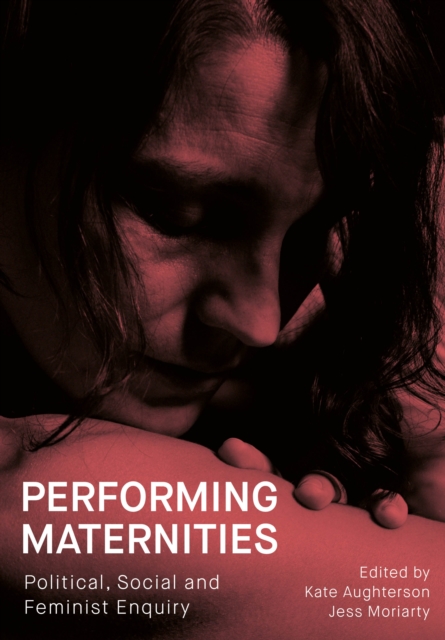
Performing Maternities
Performing Maternities is a collection of essays, creative work, images and scripts which emerged out of an online international symposium held at Brighton University in November 2020. Collectively, the contributors challenge, celebrate and share the normative, the queer, the transgressive, the joy and the pain of performing maternity. The book asks key questions about the construction of maternal identities and mythologies in the contemporary world, the ways these impact on individuals in different social, economic and sexual identities, and the ways in which - as mothers, writers, artists, parents and grandparents -we can challenge and address those identities.
eBook

Mary Leunig- the activist art of blood and guts
This article examines maternal representation in the Drawings of artist Mary Leunig, positioning her work as a form of activism. Images offer collective and unspoken knowledge, and have a vast capacity to infiltrate perceptions. Recognising the power of the visual to convey narratives that challenge the established culturally dominant ideologies, I argue that Leunig visually reveals the damaging gaps between mothering, and motherhood as institution. For over three decades, her published drawings have confronted normative and accepted representations of mothering and motherhood. Her drawings represent her personal experience as a mother and also the influence of motherhood as an institution upon her experience of mothering. Leunig's drawings and their stories identify the lack of a matrifocal society, one within which, as Miriam Johnson put it in Strong Mothers, Weak Wives, mothering could be \"a role that is culturally elaborated and valued.\" I identify themes that relate to Leunig's maternal experiences, and also the arguments of scholars critical of the domestic status quo who question mothering's traditional representations, in which women are asexual, natural caregivers.
Leunig's drawings vividly show her preoccupation with the high price paid by mothers for domestic accountability, bearing responsibility for the work of care and, significantly, the emotional price also of the maternal relationship. Her drawings visualise mothers as both martyrs and the surviving heroes of a war-amidst chaotic domesticity and a family life in a deep separation from the world outside. Leunig has a difficult story and visualises difficult stories, exposing herself and baring all-her art epitomises the term \"blood and guts,\" signifying vigour, violence or fierceness. Her visceral style may alienate some audiences but, I suggest, perceived transgression is both necessary to and emblematic of feminist history, and it also demonstrates her activism. Leunig's five books challenge an embedded view of mothering, exhibiting publicly the essential outrage that, in the feminist movement, has been instrumental to social revolution and transformational change.
Journal Article
Music of Motherhood: History, Healing, Activism
Mothering and music are complex and universal events, the structure and function of each show remarkable variability across social domains and different cultures. Al- though motherhood studies and studies in music are each recognized as important areas of research, the blending of the two topics is a recent innovation. The chapters in this collection bring together artists and scholars in conversations about the multiple profound relationships that exist between music and mothering. The discussions are varied and exciting. Several of the chapters revolve around the challenges of mothering partnered with a musical career; others look at the affordances that music offers to mothers and children; and some of the chapters examine the ways in which music inspires social and political change, as well as acknowledging the rise of the mom rock phenomenon.
eBook
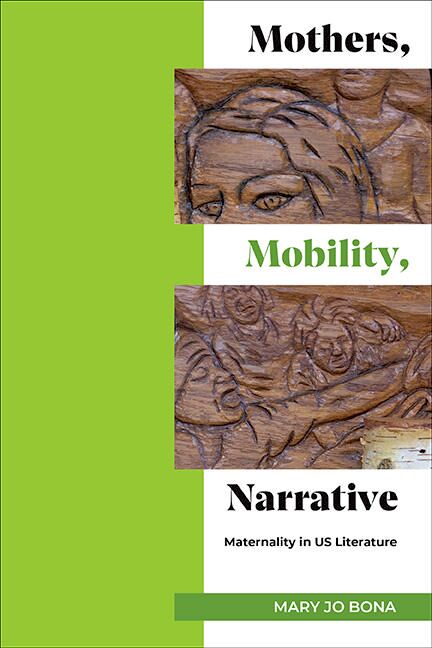
Mothers, Mobility, Narrative
Shows how US literary representations of mothering
across racial, ethnic, and LGBTQ communities challenge
ideological prescriptions about motherhood and maternal
love.
Mothers, Mobility, Narrative pairs women-identified
writers whose work illuminates a range of maternal practices in
the face of egregious structural inequalities and obstacles. By
using the critical lens of maternal feminism, alongside recent
theories of time, space, and memory, Mary Jo Bona reengages the
field of motherhood studies to explore linkages between
motherhood and movement. Across genres, Harriet Jacobs, Willa
Cather, Toni Morrison, Audre Lorde, Kym Ragusa, Carole Maso,
Cristina García, and Rebecca Makkai develop maternal
figures who, in battling against institutional oppressions in
eras of slavocracy, colonialism, dictatorship, and pandemic,
expose the fundamentally intersectional nature of social
categorization and disrupt traditional discourses of the
maternal.
Mothers, Mobility, Narrative rethinks maternality
across a century and a half of literary expression in the
United States, compelling readers to embrace more capacious
understandings of maternal subjectivity, care, and kinship.
eBook

Feminism and motherhood in Western Europe, 1890-1970 : the maternal dilemma
According to Allen, motherhood and citizenship are terms that are closely linked and have been redefined over the past century due to changes in women's status, feminist movements, and political developments. Mother-child relationships were greatly affected by political decisions during the early 1900s, and the maternal role has been transformed over the years. To understand the dilemmas faced by women concerning motherhood and work, for example, Allen argues that the problem must be examined in terms of its demographic and political development through history. Allen highlights the feminist movements in Western Europe - primarily Britain, France, Germany and the Netherlands, and explores the implications of the maternal role for women's aspirations to the rights of citizenship. Among the topics Allen explores the history of the maternal role, psychoanalysis and theories on the mother-child relationship, changes in family law from 1890-1914, the economic status of mothers, and reproductive responsibility.
eBook