
Catalogue Search | MBRL


Are you sure you want to remove the book from the shelf?

{{itemTitle}}
214
result(s) for
"Mothers and sons Drama"
Sort by:


The missing face
'The Missing Face' is Beholding...In this meticulously paced play, Ida...a true optimist about love, family and her culture, takes a great leap in rearing her son, Amaechi...until she decides to leave the masculine formation of her young man-child to his father, who is domiciled in Africa...'The Missing Face' offers a rich illustration of music...ritual and tradition that is noble in looking back and seizing the moment.- ?Laura Andrews, Amsterdam News, New York?? ??The Missing Face has many interesting characters and proactive ideas...The conflict between Ida and Odozi is refreshing and funny; it's fascinating to see and hear an African-American lecture an African about...[his] own culture, and then to hear his bemused response...Odozi's colorful language, full of jokes and elaborate metaphors, is intriguing...There are many fine moments in the play concerning African culture and the relationship that modern African-Americans and Africans have with it.?- Nrooke Pierce, Theater Mania, New York Show In all her work, Onwueme has shown daring in her exploration of ideas, even when they lead to subjects and themes which may seem taboo. She has a way of using images to express very crucial ideas. For example, in Legacies [or The Missing Face] where lkenga is split into two halves-she explores important pan-African themes and sums up the historical tragedy of the first major division of Africa into continental and diasporan entities. Wholeness will come when the two halves come together.- ?Ngugi wa Thiong'o, foreword to Onwueme's Tell It To Women
eBook

Boy Out of the Country
Written in Australian poetic vernacular, Boy Out of the Country tells a story of land, family and belonging. A family property, worthless for generations, is suddenly zoned as part of a regional housing estate to accommodate an ever-increasing urban sprawl. At this moment of shifting economies and loyalties, Hunter returns from a seven-year absence. Finding his boyhood house boarded up and his mother in a retirement home, Hunter goes in search of answers. And he starts with his brother Gordon.
eBook
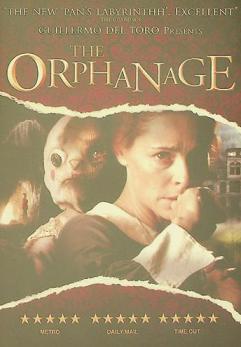
The orphanage
Laura decides to purchase her beloved childhood orphanage with dreams of restoring and reopening the long abandoned facility as a place for disabled children. The new environment awakens the imagination of Laura's son. His ongoing fantasy games played with an invisible friend quickly turn into something more disturbing. Upon seeing her family increasingly threatened by the strange occurrences in the house, Laura looks to a group of parapsychologists for help in unraveling the mystery that has taken over the place.
DVD
Mrs Lowry & son
A portrait of the artist L. S. Lowry and the relationship with his mother, who tries to dissuade him from pursuing his passion.
Streaming Video

Reproductive Politics and Parental Economies in Titus Andronicus
Tamora, Queen of the Goths in Shakespeare’s
(1594), belongs to a relatively substantial canon of pregnant characters in English early modern drama. Her pregnant embodiment has generated less critical interest than the pregnancies and maternities of later tragic heroines. In this paper I wish to reread Tamora’s non-normative pregnancy and her maternal authority against a tenuously established consensus on reproduction and maternity in the period. Thus, my primary aim is to trace Tamora’s monstrous gestational body as a locus of the discursive triangularity of gender, race, and reproduction. Tamora is a devoted and passionate mother to her adult sons but her mothering is complicated by her pregnancy and a problematic child product, a result of her relationship with Aaron. I wish to look at Tamora’s pregnancy in conjunction with her maternal practices, albeit keeping the gestational experience as distinct and separate from her motherhood. Tamora’s pregnant embodiment is further complicated by the birthing ritual glimpsed in the play. I argue that by materializing the dreaded fruit of miscegenation in and through the reproductive body, the play demonstrates the threatening porosity of the emerging gender-race system. By circumventing maternal authority, the play also unveils the vulnerability of the supposedly sacrosanct, female-exclusive ritual to external male violations. Rather than confirming the ritual’s universality, the play problematizes maternal and paternal authority at the backdrop of deep-seated fears of racial bodily difference.
Journal Article