
Catalogue Search | MBRL


Are you sure you want to remove the book from the shelf?

{{itemTitle}}
19
result(s) for
"Motion picture industry China History 20th century."
Sort by:

Early film culture in Hong Kong, Taiwan, and Republican China : kaleidoscopic histories
\"Shanghai is central in the development of China's modernity before 1949, including not just cinema, but other cultural formations. To quote Wen-hsin Yeh in her pioneering article: \"Shanghai in the first half of the 20th century emerged to become China's largest metropolis for trade, finance, manufacturing, publishing, higher education, journalism and many other important functions, performed by a growing population increasingly diversified into multiple classes of different incomes and interests.\"2 Major publications by Leo Ou-fan Lee (1999), Zhang Yingjin (ed., 1999), Andrew Jones (2001), Barbara Mittler (2004), Zhang Zhen (2005), Nicole Huang (2005), Wen-hsin Yeh (2008),3 and many others fasten on Shanghai as the wellspring of modern China in consumer and media culture.4 Through the concerted efforts of two generations of scholars, Shanghai was decisively crowned as the jewel of Chinese modernity and cosmopolitanism; film and media culture associated with the city--celebrities, advertising, magazines, popular fiction, theaters, and the urban space--also emerged to typify Chinese cinema in general. Hence the currency of \"Shanghai cinema\"-- Provided by publisher.
Book

China on Film
Leading scholar Paul G. Pickowicz traces the dynamic history of Chinese filmmaking and discusses its course of development from the early days to the present. Moving decade by decade, he explores such key themes as the ever-shifting definitions of modern marriage in 1920s silent features, East-West cultural conflict in the movies of the 1930s, the strong appeal of the powerful melodramatic mode of the 1930s and 1940s, the polarizing political controversies surrounding Chinese filmmaking under the Japanese occupation of Shanghai in the 1940s, and the critical role of cinema during the bloody civil war of the late 1940s. Pickowicz then considers the challenging Mao years, including chapters on legendary screen personalities who tried but failed to adjust to the new socialist order in the 1950s, celebrities who made the sort of artistic and political accommodations that would keep them in the spotlight in the post-revolutionary era, and insider film professionals of the early 1960s who actively resisted the most extreme forms of Maoist cultural production. The book concludes with explorations of the highly cathartic films of the early post-Mao era, edgy postsocialist movies that appeared on the eve of the Tiananmen demonstrations of 1989, the relevance of the Eastern European “velvet prison” cultural production model, and the rise of underground and independent filmmaking beginning in the 1990s. Throughout its long history of film production, China has been embroiled in a seemingly unending series of wars, revolutions, and jarring social transformations. Despite daunting censorship obstacles, Chinese filmmakers have found ingenious ways of taking political stands and weighing in—for better or worse—on the most explosive social, cultural, and economic issues of the day. Exploring the often gut-wrenching controversies generated by their work, Pickowicz offers a unique and perceptive window on Chinese culture and society.
eBook

Chinese movie magazines : from Charlie Chaplin to Chairman Mao, 1921-1951
\"Showcasing an exotic, eclectic, and rare array of covers from more than five hundred movie publications from a glamorous bygone age, Chinese Movie Magazines sheds fresh light on China's film industry during a transformative period of its history. Expertly curated by collector and Chinese cinema specialist Paul Fonoroff, this volume provides insightful commentary relating the magazines to the times in which they were created, embracing everything from cinematic trends to politics and world events, along with gossip, fashion, and pop culture. The cover designs reflected the diverse contents of the publications, ranging from sophisticated Art Deco drawings by acclaimed artists to glamorous photos of top Chinese and Hollywood celebrities, including Ruan Lingyu, Butterfly Wu, Ingrid Bergman, and Shirley Temple. Organized thematically within a chronological structure, this visually extraordinary volume includes many rare illustrations from the Paul Kendel Fonoroff Collection in Berkeley's C.V. Starr East Asian Library, the largest collection of Eastern movie memorabilia outside China.\"-- Publisher's description.
Book

Japanese and Hong Kong Film Industries
Drawing on first-hand materials collected from the Chinese and Japanese literature as well as interviews with more than twenty filmmakers and scholars Kinnia Shuk-ting Yau provides a solid historical account of the complex interactions between Japanese and Hong Kong film industries from the 1930s to 1970s.
The author describes in detail how Japan’s efforts during the 1930s and 1940s to produce a \"Greater East Asian cinema\" led to many different kinds of collaborations between the filmmakers from China, Hong Kong and Japan, and how such development had laid the foundation for more exchanges between the cinemas in the post-war period. The period covered by the book is the least understood period of the East Asian film history. Filling the gaps surrounding one of the most important but least understood periods of Asian film history this books discusses facts and resources once obscured by controversial issues related to wartime affairs with new insights and perspectives.
This book is an invaluable source of information for understanding how the current East Asian film networks came into existence by looking beyond conventional single-case studies and adopting a transnational perspective in tracing the connections between different film industries.
Dr. YAU Shuk-ting, Kinnia is Associate Professor at the Department of Japanese Studies, The Chinese University of Hong Kong.
1. Hong Kong and Japanese Cinemas before and during Wartime 2. Connection between Chinese and Japanese Cinemas Initiated by Zhonghua Dianying 3. Immediate Causes of Hong Kong-Japan Collaboration 4. The Golden Age of Hong Kong-Japan Collaboration. Conclusion
eBook

Working the system : motion picture, filmmakers, and subjectivities in Mao-era China, 1949-1966
In 'Working the System' Qiliang He inquired into the making of the new citizenry in Mao-era China (1949-1976) by studying five preeminent Shanghai-based filmmakers. These case studies shed light on how individuals' subjectivities took shape in the cinematic arena under a new sociopolitical system after 1949. He suggests that a filmmaker's subjectivity was not fixed or stable but constantly in flux, requiring a host of 'subjectivizing practices' to (re)shape and consolidate it. These filmmakers endeavored to reap maximal benefits from Mao's sociopolitical system and minimize the disadvantages that would make them victims under the system.
Book


Art, Politics, and Commerce in Chinese Cinema
Art, politics, and commerce are intertwined everywhere, but in China the interplay is explicit, intimate, and elemental, and nowhere more so than in the film industry. Understanding this interplay in the era of market reform and globalization is essential to understanding mainland Chinese cinema. This interdisciplinary book provides a comprehensive reappraisal of Chinese cinema, surveying the evolution of film production and consumption in mainland China as a product of shifting relations between art, politics, and commerce. Within these arenas, each of the twelve chapters treats a particular history, development, genre, filmmaker or generation of filmmakers, adding up to a distinctively comprehensive rendering of Chinese cinema. The book illuminates China’s changing state-society relations, the trajectory of marketization and globalization, the effects of China’s stark historical shifts, Hollywood’s role, the role of nationalism, and related themes of interest to scholars of Asian studies, cinema and media studies, political science, sociology, comparative literature and Chinese language. Contributors include Ying Zhu, Stanley Rosen, Seio Nakajima, Zhiwei Xiao, Shujen Wang, Paul Clark, Stephen Teo, John Lent, Ying Xu, Yingjin Zhang, Bruce Robinson, Liyan Qin, and Shuqin Cui.
eBook
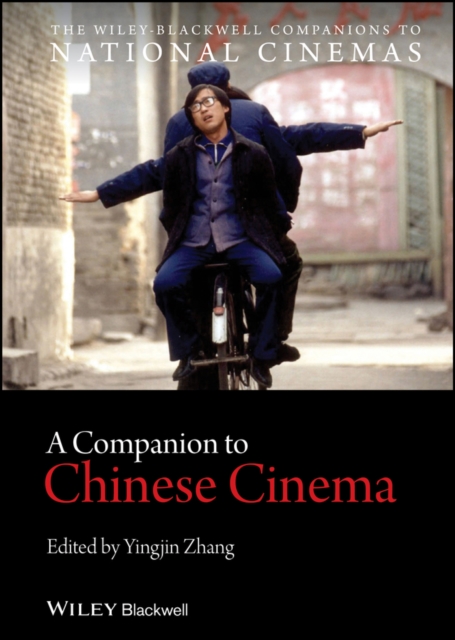
A companion to Chinese cinema
\"This outstanding anthology offers an encyclopedic coverage of Chinese cinema from multiple angles, and will be the standard reference in Chinese cinema studies in the years to come.\" Sheldon Lu, University of California, Davis \"Like its editor, this Companion is reliable, encyclopedic, and friendly.
eBook

Divine Work, Japanese Colonial Cinema and its Legacy
For many East Asian nations, cinema and Japanese Imperialism arrived within a few years of each other. Exploring topics such as landscape, gender, modernity and military recruitment, this study details how the respective national cinemas of Japan's territories struggled under, but also engaged with, the Japanese Imperial structures. Japan was ostensibly committed to an ethos of pan-Asianism and this study explores how this sense of the transnational was conveyed cinematically across the occupied lands. Taylor-Jones traces how cinema in the region post-1945 needs to be understood not only in terms of past colonial relationships, but also in relation to how the post-colonial has engaged with shifting political alliances, the opportunities for technological advancement and knowledge, the promise of larger consumer markets, and specific historical conditions of each decade.
eBook

Envisioning Asia
The birth of cinema coincides with the beginnings of U.S. expansion overseas, and the classic Hollywood era coincides with the rise of the United States as a global superpower. In Envisioning Asia, Jeanette Roan argues that throughout this period, the cinema's function as a form of virtual travel, coupled with its purported \"authenticity,\" served to advance America's shifting interests in Asia. Its ability to fulfill this imperial role depended, however, not only on the cinematic representations themselves but on the marketing of the films' production histories—and, in particular, their use of Asian locations. Roan demonstrates this point in relation to a wide range of productions, offering an engaging and useful survey of a largely neglected body of film. Not only that, by focusing on the material practices involved in shooting films on location—that is, the actual travels, negotiations, and labor of making a film—she moves beyond formal analysis to produce a richly detailed history of American interests, attitudes, and cultural practices during the first half of the twentieth century.
eBook