
Catalogue Search | MBRL


Are you sure you want to remove the book from the shelf?

{{itemTitle}}
1,198
result(s) for
"Motion picture industry United States History."
Sort by:

Main Street movies : the history of local film in the United States
Prior to the advent of the home movie camer and the ubiquitousness of the camera phone, there was the local film. This cultural phenomenon, produced across the country from the 1890s to the 1950s, gave ordinary people a chance to be on the silver screen without leaving their hometowns. Through these movies, residents could see themselves in the same theaters where they saw major Hollywood motion pictures. Traveing filmmakers plied their trade in small towns and cities, where these films were received by locals as being part of the larger cinema experience. With access to the rare film clips under discussion, Main Street Movies documents the diversity and longevity of local film production and examines how itinerant filmmakers responded to industry changes to keep sponsors and audiences satisfied. From town-pride films in the 1910s to Hollywood knockoffs in the 1930s, local films captured not just images of local people and places but also ideas about the function and meaning of cinema that continue to resonate today.
Book
Screenwriting
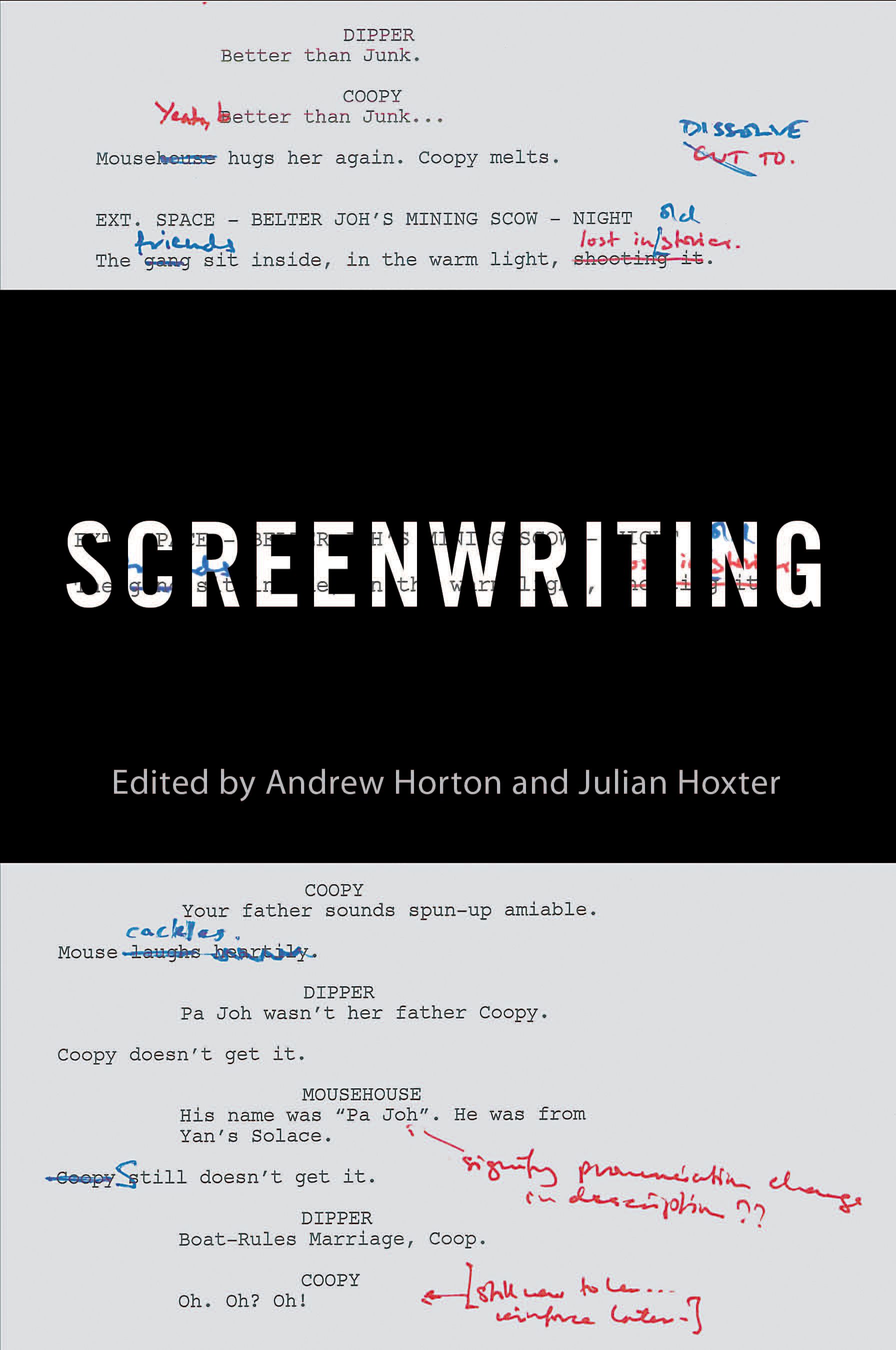
Screenwriters often joke that \"no one ever paid a dollar at a movie theater to watch a screenplay.\" Yet the screenplay is where a movie begins, determining whether a production gets the \"green light\" from its financial backers and wins approval from its audience. This innovative volume gives readers a comprehensive portrait of the art and business of screenwriting, while showing how the role of the screenwriter has evolved over the years.Reaching back to the early days of Hollywood, when moonlighting novelists, playwrights, and journalists were first hired to write scenarios and photoplays, Screenwriting illuminates the profound ways that screenwriters have contributed to the films we love. This book explores the social, political, and economic implications of the changing craft of American screenwriting from the silent screen through the classical Hollywood years, the rise of independent cinema, and on to the contemporary global multi-media marketplace. From The Birth of a Nation (1915), Gone With the Wind (1939), and Gentleman's Agreement (1947) to Chinatown (1974), American Beauty (1999), and Lost in Translation (2003), each project began as writers with pen and ink, typewriters, or computers captured the hopes and dreams, the nightmares and concerns of the periods in which they were writing.As the contributors take us behind the silver screen to chronicle the history of screenwriting, they spotlight a range of key screenplays that changed the game in Hollywood and beyond. With original essays from both distinguished film scholars and accomplished screenwriters, Screenwriting is sure to fascinate anyone with an interest in Hollywood, from movie buffs to industry professionals.
eBook

Exception taken : how France has defied Hollywood's new world order
This book examines the movements that have emerged in opposition to the homogenizing force of Hollywood in global filmmaking. While European cinema was entering a steady decline in the 1980s, France sought to strengthen support for its film industry under the Mitterrand government. Over the following decades, the country lobbied partners in the European Economic Community to design strategies to protect the audiovisual industries and to resist cultural free-trade pressures in international trade agreements. These struggles to preserve the autonomy of national artistic prerogatives emboldened many countries to question the benefits of accelerated globalization. Led by the minister of culture Jack Lang, France initiated a series of measures to support all sectors of the film industry. With the formation of the European Union in 1992, Europe passed a new treaty that extended its legal purview to culture for the first time, setting up the confrontation over the General Agreement on Trade and Tariffs (GATT) in 1993. Pushed by France, the EU fought the United States over the idea that countries should preserve their right to regulate cultural activity as they saw fit. France and Canada then initiated a campaign to protect cultural diversity within UNESCO that led to the passage of the Convention on Cultural Diversity in 2005. As France pursued these efforts to protect cultural diversity beyond its borders, it also articulated \"a certain idea of cinema\" that did not simply defend a narrow vision of national cinema. France promoted both commercial cinema and art cinema, disproving announcements of the death of cinema.
Book

Cinema Civil Rights
From Al Jolson in blackface to Song of the South, there is a long history of racism in Hollywood film. Yet as early as the 1930s, movie studios carefully vetted their releases, removing racially offensive language like the \"N-word.\" This censorship did not stem from purely humanitarian concerns, but rather from worries about boycotts from civil rights groups and loss of revenue from African American filmgoers.
Cinema Civil Rightspresents the untold history of how Black audiences, activists, and lobbyists influenced the representation of race in Hollywood in the decades before the 1960s civil rights era. Employing a nuanced analysis of power, Ellen C. Scott reveals how these representations were shaped by a complex set of negotiations between various individuals and organizations. Rather than simply recounting the perspective of film studios, she calls our attention to a variety of other influential institutions, from protest groups to state censorship boards.
Scott demonstrates not only how civil rights debates helped shaped the movies, but also how the movies themselves provided a vital public forum for addressing taboo subjects like interracial sexuality, segregation, and lynching. Emotionally gripping, theoretically sophisticated, and meticulously researched,Cinema Civil Rightspresents us with an in-depth look at the film industry's role in both articulating and censoring the national conversation on race.
eBook


The collaboration : Hollywood's pact with Hitler
To continue doing business in Germany, Hollywood studios agreed not to make films attacking Nazis or condemning persecution of Jews. Ben Urwand reveals this collaboration and the cast of characters it drew in, ranging from Goebbels to Louis B. Mayer. At the center was Hitler himself--obsessed with movies and their power to shape public opinion.
eBook

A history of film
\"This title examines film's origins at the turn of the twentieth century, the ways and styles in which it has expanded and changed, and how it has grown into such an integral part of Western culture.\"--Publisher's website.
Book
American showman
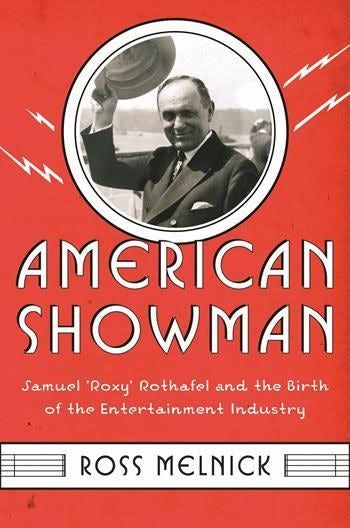
Samuel \"Roxy\" Rothafel (1882–1936) built an influential and prolific career as film exhibitor, stage producer, radio broadcaster, musical arranger, theater manager, war propagandist, and international celebrity. He helped engineer the integration of film, music, and live performance in silent film exhibition; scored early Fox Movietone films such as Sunrise (1927); pioneered the convergence of film, broadcasting, and music publishing and recording in the 1920s; and helped movies and moviegoing become the dominant form of mass entertainment between the world wars. The first book devoted to Rothafel's multifaceted career, American Showman examines his role as the key purveyor of a new film exhibition aesthetic that appropriated legitimate theater, opera, ballet, and classical music to attract multi-class audiences. Roxy scored motion pictures, produced enormous stage shows, managed many of New York's most important movie houses, directed and/or edited propaganda films for the American war effort, produced short and feature-length films, exhibited foreign, documentary, independent, and avant-garde motion pictures, and expanded the conception of mainstream, commercial cinema. He was also one of the chief creators of the radio variety program, pioneering radio broadcasting, promotions, and tours. The producers and promoters of distinct themes and styles, showmen like Roxy profoundly remade the moviegoing experience, turning the deluxe motion picture theater into a venue for exhibiting and producing live and recorded entertainment. Roxy's interest in media convergence also reflects a larger moment in which the entertainment industry began to create brands and franchises, exploit them through content release \"events,\" and give rise to feature films, soundtracks, broadcasts, live performances, and related consumer products. Regularly cited as one of the twelve most important figures in the film and radio industries, Roxy was instrumental to the development of film exhibition and commercial broadcasting, musical accompaniment, and a new, convergent entertainment industry.
eBook


China's Encounter with Global Hollywood
In recent years, the film industry in the People's Republic of China has found itself among the top three most prolific in the world. When the Chinese government introduced a new revenue-sharing system in 1994, the nation's total movie output skyrocketed with gross box-office receipts totaling billions of yuan. This newfound success, however, has been built on an alternately competitive and collaborative relationship between the ascendant global power of China and the popular culture juggernaut of America.
InChina's Encounter with Global Hollywood, Wendy Su examines the intertwining relationships among the Chinese state, global Hollywood, and the Chinese film industry while analyzing the causes and consequences of the rapid growth of the nation's domestic film production. She demonstrates how the Chinese state has consolidated power by negotiating foreign interest in the lucrative Chinese market while advancing its cultural industries. Su also reveals how mainland Chinese and Hong Kong filmmakers have navigated the often-incompatible requirements of marketization and state censorship.
This timely analysis demonstrates how China has cannily used global capital to modernize its own film industry and now stands poised to step clear of Hollywood's shadow. The country's debates -- on- and offscreen -- over cultural change, market-based economic reforms, and artistic freedom illuminate China's ongoing efforts to build a modern national identity.
eBook