
Catalogue Search | MBRL


Are you sure you want to remove the book from the shelf?

{{itemTitle}}
222
result(s) for
"Motion picture industry-United States"
Sort by:


The collaboration : Hollywood's pact with Hitler
To continue doing business in Germany, Hollywood studios agreed not to make films attacking Nazis or condemning persecution of Jews. Ben Urwand reveals this collaboration and the cast of characters it drew in, ranging from Goebbels to Louis B. Mayer. At the center was Hitler himself--obsessed with movies and their power to shape public opinion.
eBook

The marketing edge for filmmakers : developing a marketing mindset from concept to release
\"Written for working and aspiring filmmakers, directors, producers and screenwriters, The Marketing Edge for Filmmakers walks through every stage of the marketing process--from concept to post-production--and illustrates how creative decisions at each stage will impact the marketability of a film. In this book, marketing experts Schwartz and MacDonald welcome you behind the curtain into the inner workings of a studio marketing department and track films of different budgets (studio, genre, independent, and documentary) through the marketing process, examining how each discipline will approach your film. Featuring interviews with both marketers and filmmakers throughout, an extensive glossary and end-of-chapter exercises, The Marketing Edge for Filmmakers offers a unique introduction to film marketing and a practical guide for understanding the impact of marketing on your film\"-- Provided by publisher.
Book

Global Entertainment Media
A critical cultural materialist introduction to the study of global entertainment media.
In Global Entertainment Media, Tanner Mirrlees undertakes an analysis of the ownership, production, distribution, marketing, exhibition and consumption of global films and television shows, with an eye to political economy and cultural studies. Among other topics, Mirrlees examines:
Paradigms of global entertainment media such as cultural imperialism and cultural globalization.
The business of entertainment media: the structure of capitalist culture/creative industries (financers, producers, distributors and exhibitors) and trends in the global political economy of entertainment media.
The \"governance\" of global entertainment media: state and inter-state media and cultural policies and regulations that govern the production, distribution and exhibition of entertainment media and enable or impede its cross-border flow.
The new international division of cultural labor (NICL): the cross-border production of entertainment by cultural workers in asymmetrically interdependent media capitals, and economic and cultural concerns surrounding runaway productions and co-productions.
The economic motivations and textual design features of globally popular entertainment forms such as blockbuster event films, TV formats, glocalized lifestyle brands and synergistic media.
The cross-cultural reception and effects of TV shows and films.
The World Wide Web, digitization and convergence culture.
eBook

Main Street movies : the history of local film in the United States
Prior to the advent of the home movie camer and the ubiquitousness of the camera phone, there was the local film. This cultural phenomenon, produced across the country from the 1890s to the 1950s, gave ordinary people a chance to be on the silver screen without leaving their hometowns. Through these movies, residents could see themselves in the same theaters where they saw major Hollywood motion pictures. Traveing filmmakers plied their trade in small towns and cities, where these films were received by locals as being part of the larger cinema experience. With access to the rare film clips under discussion, Main Street Movies documents the diversity and longevity of local film production and examines how itinerant filmmakers responded to industry changes to keep sponsors and audiences satisfied. From town-pride films in the 1910s to Hollywood knockoffs in the 1930s, local films captured not just images of local people and places but also ideas about the function and meaning of cinema that continue to resonate today.
Book

Reservation Reelism
In this deeply engaging account Michelle H. Raheja offers the first book-length study of the Indigenous actors, directors, and spectators who helped shape Hollywood's representation of Indigenous peoples. Since the era of silent films, Hollywood movies and visual culture generally have provided the primary representational field on which Indigenous images have been displayed to non-Native audiences. These films have been highly influential in shaping perceptions of Indigenous peoples as, for example, a dying race or as inherently unable or unwilling to adapt to change. However, films with Indigenous plots and subplots also signify at least some degree of Native presence in a culture that largely defines Native peoples as absent or separate.
Native actors, directors, and spectators have had a part in creating these cinematic representations and have thus complicated the dominant, and usually negative, messages about Native peoples that films portray. InReservation ReelismRaheja examines the history of these Native actors, directors, and spectators, reveals their contributions, and attempts to create positive representations in film that reflect the complex and vibrant experiences of Native peoples and communities.
eBook

Exception taken : how France has defied Hollywood's new world order
This book examines the movements that have emerged in opposition to the homogenizing force of Hollywood in global filmmaking. While European cinema was entering a steady decline in the 1980s, France sought to strengthen support for its film industry under the Mitterrand government. Over the following decades, the country lobbied partners in the European Economic Community to design strategies to protect the audiovisual industries and to resist cultural free-trade pressures in international trade agreements. These struggles to preserve the autonomy of national artistic prerogatives emboldened many countries to question the benefits of accelerated globalization. Led by the minister of culture Jack Lang, France initiated a series of measures to support all sectors of the film industry. With the formation of the European Union in 1992, Europe passed a new treaty that extended its legal purview to culture for the first time, setting up the confrontation over the General Agreement on Trade and Tariffs (GATT) in 1993. Pushed by France, the EU fought the United States over the idea that countries should preserve their right to regulate cultural activity as they saw fit. France and Canada then initiated a campaign to protect cultural diversity within UNESCO that led to the passage of the Convention on Cultural Diversity in 2005. As France pursued these efforts to protect cultural diversity beyond its borders, it also articulated \"a certain idea of cinema\" that did not simply defend a narrow vision of national cinema. France promoted both commercial cinema and art cinema, disproving announcements of the death of cinema.
Book
Screenwriting
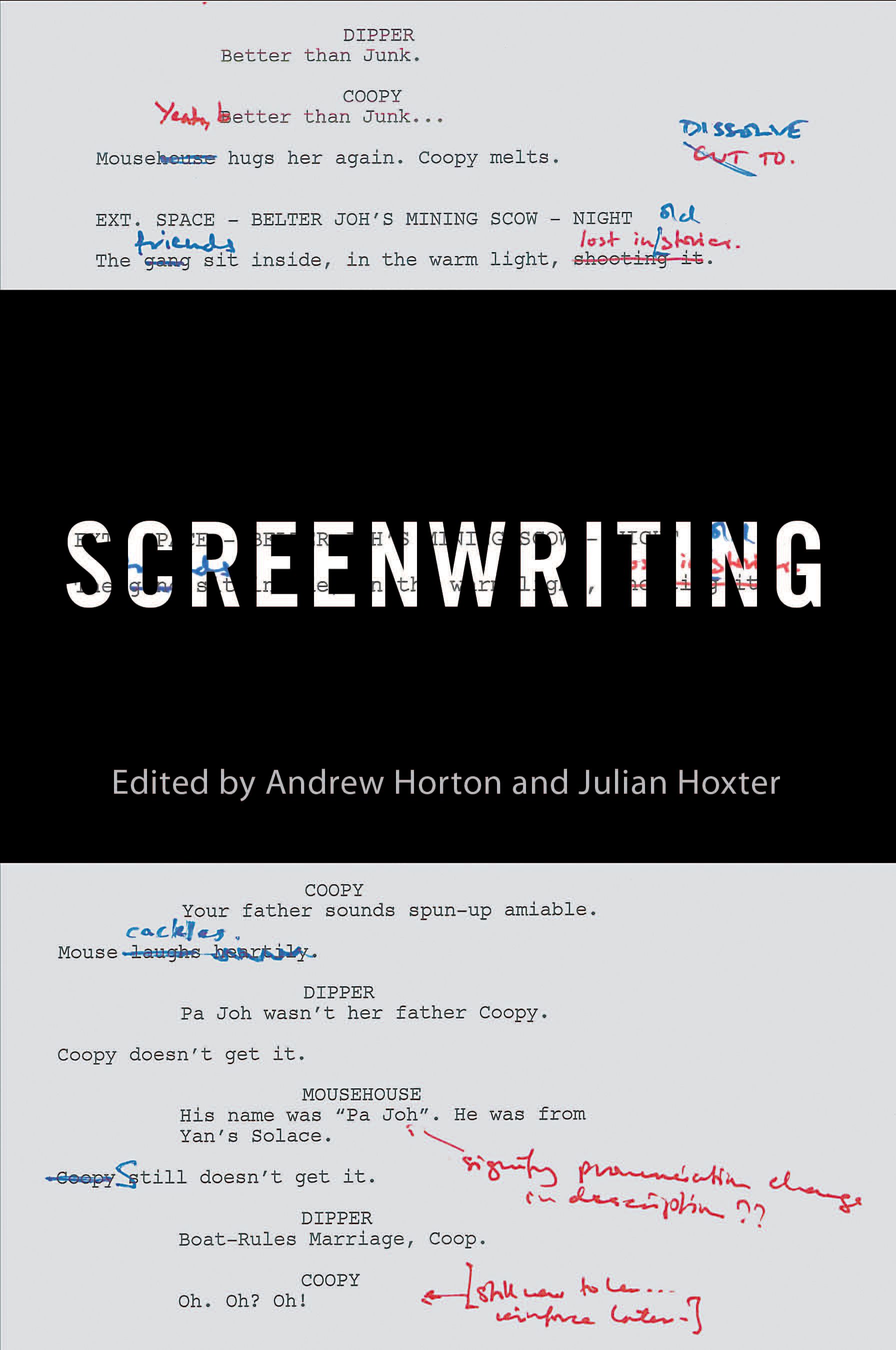
Screenwriters often joke that \"no one ever paid a dollar at a movie theater to watch a screenplay.\" Yet the screenplay is where a movie begins, determining whether a production gets the \"green light\" from its financial backers and wins approval from its audience. This innovative volume gives readers a comprehensive portrait of the art and business of screenwriting, while showing how the role of the screenwriter has evolved over the years.Reaching back to the early days of Hollywood, when moonlighting novelists, playwrights, and journalists were first hired to write scenarios and photoplays, Screenwriting illuminates the profound ways that screenwriters have contributed to the films we love. This book explores the social, political, and economic implications of the changing craft of American screenwriting from the silent screen through the classical Hollywood years, the rise of independent cinema, and on to the contemporary global multi-media marketplace. From The Birth of a Nation (1915), Gone With the Wind (1939), and Gentleman's Agreement (1947) to Chinatown (1974), American Beauty (1999), and Lost in Translation (2003), each project began as writers with pen and ink, typewriters, or computers captured the hopes and dreams, the nightmares and concerns of the periods in which they were writing.As the contributors take us behind the silver screen to chronicle the history of screenwriting, they spotlight a range of key screenplays that changed the game in Hollywood and beyond. With original essays from both distinguished film scholars and accomplished screenwriters, Screenwriting is sure to fascinate anyone with an interest in Hollywood, from movie buffs to industry professionals.
eBook

American showman
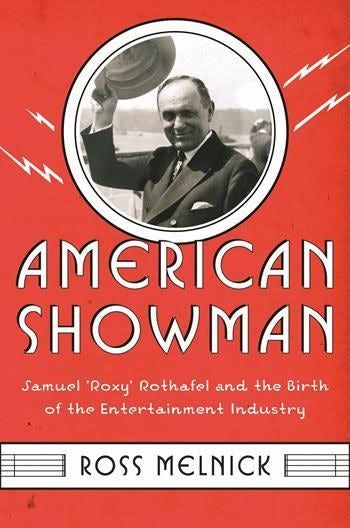
Samuel \"Roxy\" Rothafel (1882–1936) built an influential and prolific career as film exhibitor, stage producer, radio broadcaster, musical arranger, theater manager, war propagandist, and international celebrity. He helped engineer the integration of film, music, and live performance in silent film exhibition; scored early Fox Movietone films such as Sunrise (1927); pioneered the convergence of film, broadcasting, and music publishing and recording in the 1920s; and helped movies and moviegoing become the dominant form of mass entertainment between the world wars. The first book devoted to Rothafel's multifaceted career, American Showman examines his role as the key purveyor of a new film exhibition aesthetic that appropriated legitimate theater, opera, ballet, and classical music to attract multi-class audiences. Roxy scored motion pictures, produced enormous stage shows, managed many of New York's most important movie houses, directed and/or edited propaganda films for the American war effort, produced short and feature-length films, exhibited foreign, documentary, independent, and avant-garde motion pictures, and expanded the conception of mainstream, commercial cinema. He was also one of the chief creators of the radio variety program, pioneering radio broadcasting, promotions, and tours. The producers and promoters of distinct themes and styles, showmen like Roxy profoundly remade the moviegoing experience, turning the deluxe motion picture theater into a venue for exhibiting and producing live and recorded entertainment. Roxy's interest in media convergence also reflects a larger moment in which the entertainment industry began to create brands and franchises, exploit them through content release \"events,\" and give rise to feature films, soundtracks, broadcasts, live performances, and related consumer products. Regularly cited as one of the twelve most important figures in the film and radio industries, Roxy was instrumental to the development of film exhibition and commercial broadcasting, musical accompaniment, and a new, convergent entertainment industry.
eBook