
Catalogue Search | MBRL


Are you sure you want to remove the book from the shelf?

{{itemTitle}}
1,075
result(s) for
"Motion pictures - Russia"
Sort by:

Performing femininity : woman as performer in early Russian cinema
From Oriental dancers to ballerinas and opera singers, the figure of the female performer is ubiquitous in the cinema of pre-Revolutionary Russia. From Romashkov's Stenka Razin (1908), to Viskovsky's The Last Tango (1918), the female performer remains central. In this groundbreaking new study, Morley argues that early Russian film-makers used the character of the female performer to explore key contemporary concerns from changing conceptions of femininity and the emergence of the so-called New Woman, to broader questions concerning gender identity. Morley also reveals that the film-makers used this archetype of femininity to experiment and develop a unique cinematic language.
Book

Blockbuster History in the New Russia
Seeking to rebuild the Russian film industry after its post-Soviet collapse, directors and producers sparked a revival of nationalist and patriotic sentiment by applying Hollywood techniques to themes drawn from Russian history. Unsettled by the government's move toward market capitalism, Russians embraced these historical blockbusters, packing the American-style multiplexes that sprouted across the country. Stephen M. Norris examines the connections among cinema, politics, economics, history, and patriotism in the creation of \"blockbuster history\"-the adaptation of an American cinematic style to Russian historical epics.
eBook

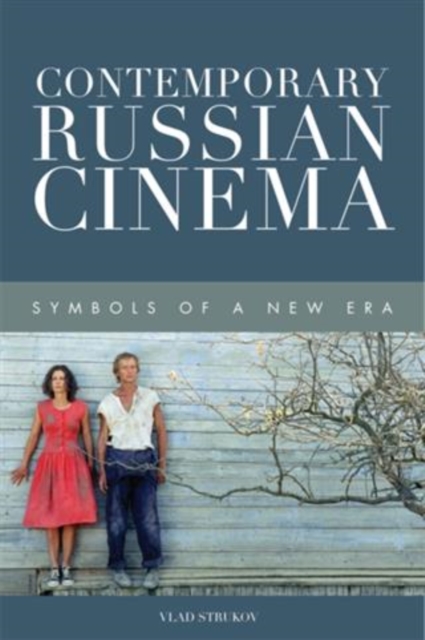
Contemporary Russian Cinema
Analysing films by established directors such as Sokurov and Zel'dovich, as well as lesser-known filmmakers like Balabanov and Kalatozishvili, this book explores the particular style of film presentation that has emerged in Russia since 2000, characterised by its use of highly abstract concepts and visual language.
eBook

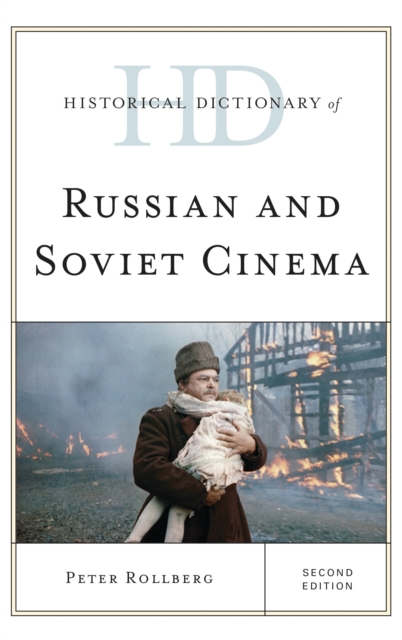
Historical dictionary of Russian and Soviet cinema
Russian and Soviet cinema occupies a unique place in the history of world cinema.Legendary filmmakers such as Sergei Eisenstein, Vsevolod Pudovkin, Dziga Vertov, Andrei Tarkovsky, and Sergei Paradjanov have created oeuvres that are being screened and studied all over the world.
eBook


Postcommunist Film - Russia, Eastern Europe and World Culture
A post-communist condition has arisen from the fall of the Berlin Wall and later the Soviet Empire: this book looks at how this condition has manifested itself globally in the production of post-communist film. It argues post-communism is a shared experience on a geopolitical level, unlimited by national state borders, and examines post-communist cross culturalism and global totalitarianism within film.
The book examines different national cinemas and dissimilar cinematic modes - from Russian blockbuster cinema to Chinese independent cinema; from Serbian city films to revolutionary films of Mozambique - all formulated as within the postcommunist condition. It considers the postcommunist film in terms of transnational and World cinema. It covers a wide range of films from small and independent filmmaking to mainstream, popular cinema, and explains post-communist signifiers as manifested in visual culture both inside and outside former, and current, communist countries.
eBook

