
Catalogue Search | MBRL


Are you sure you want to remove the book from the shelf?

{{itemTitle}}
5
result(s) for
"Motion pictures Censorship Egypt History"
Sort by:
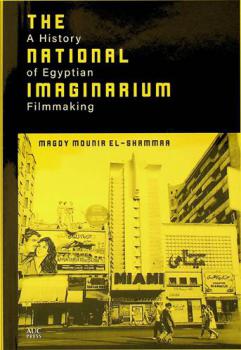
The national imaginarium : a history of Egyptian filmmaking
Spanning a century of Egyptian filmmaking, this work weaves together culture, history, politics, and economics to form a narrative of how Egyptian national identity came to be constructed and reconstructed over time on film. It goes beyond the films themselves to explore the processes of filmmakingı\"the artists that made it possible, the institutional networks, structures, and rules that bound them together, the changing social and political environment in which the films were produced, and the role of the state. In peeling back the curtain to reveal the complexities behind the screen, Magdy El-Shammaa shows cinema as at once both a reflection and a producer of larger cultural imaginings of the nation. 'The National Imaginarium' provides an in-depth description of the films discussed. It explores the construction of a populist consciousness that permeated and transcended class structures at mid-century in Egypt, and how this subsequently came undone in the face of the bewildering social, economic, and political transformations that the country underwent in the decades that followed.
Book

EGYPTIAN FILM: GENDER AND CLASS VIOLENCE THREE CYCLES
In this paper the researcher attempts to introduce the level of physical and verbal violence that aimed, intentionally or unintentionally, at women (gender) and Alsa'ayda (class). The paper argues that Egyptian films produced in the 1950's and through the 1960s and 1970s lured the film-goers and the public at large to a wrong direction when the women issue is involved. At the present time, the expanding accessibility of Egyptian films to an engrossed and addictive audience have allowed it to present a stronger influence and play a crucial role in the reconstruction of gender and class identities in response to a variety of political, social, and religious changes in the country.
Journal Article

Egypt through the looking-glass
Wassef discusses the development of Egyptian cinema and the way it has followed the vicissitudes of Egypt's life in the 20th century--from musicals in the 1930s to escapist films during WWII and violent films in the 1980s.
Journal Article