
Catalogue Search | MBRL


Are you sure you want to remove the book from the shelf?

{{itemTitle}}
10
result(s) for
"Motion pictures Ireland Criticism and interpretation."
Sort by:
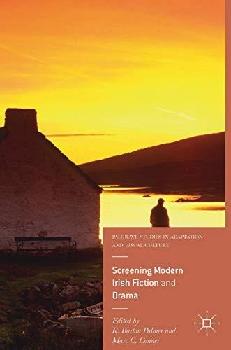
Screening modern Irish fiction and drama
This book offers the first comprehensive discussion of the relationship between Modern Irish Literature and the Irish cinema, with twelve chapters written by experts in the field that deal with principal films, authors, and directors. This survey outlines the influence of screen adaptation of important texts from the national literature on the construction of an Irish cinema, many of whose films because of cultural constraints were produced and exhibited outside the country until very recently. Authors discussed include George Bernard Shaw, Oscar Wilde, Liam O?Flaherty, Christy Brown, Edna O?Brien, James Joyce, and Brian Friel. The films analysed in this volume include THE QUIET MAN, THE INFORMER, MAJOR BARBARA, THE GIRL WITH GREEN EYES, MY LEFT FOOT, THE PICTURE OF DORIAN GRAY, THE SNAPPER, and DANCING AT LUGHNASA. The introduction features a detailed discussion of the cultural and political questions raised by the promotion of forms of national identity by Ireland?s literary and cinematic establishments.
Book

100 greatest American and British animated films
Animation has been a staple of the filmmaking process since the early days of cinema. Animated shorts had been produced for decades, but not until 1937 did a major studio venture into animated features when Walt Disney produced Snow White and the Seven Dwarfs. Of the hundreds of animated feature films made since, many have proven their importance over the years while also entertaining generations of audiences. There are also many recent animated movies that promise to become classics in the field. In 100 Greatest American British Animated Films, Thomas S, Hischak looks at the most innovative, influential, and entertaining features that have been produced since the late 1930s—from traditional hand-drawn works and stop-motion films to computer-generated wonders. These movies have been selected not simply because of their popularity or critical acceptance but for their importance. Entries in this volume contain plot information production history critical reaction commentary on the film’s cinematic quality a discussion of the film’s influence voice casts production credits songs sequels, spin-offs, Broadway versions, and television adaptations awards and nominations Each movie is also discussed in the context of its original release as well as the ways in which the film has lived on in the years since. Familiar favorites and lesser-known gems are included, making the book a fascinating journey for both the avid animation fan and the everyday moviegoer. With a sweeping look at more than eight decades of movies, 100 Greatest American and British Animated Films highlights some of the most treasured features of all time.
eBook

Roll away the reel world : James Joyce and cinema
This title focuses on Joyce's interest and involvement in early modern cinema and his subsequent thematic and formal borrowing for this genre. It looks at cinema's interest in Joyce as seen in important film versions of his work.
Book

Modernism, Ireland and the Erotics of Memory
In Modernism, Ireland and the Erotics of Memory Nicholas Miller re-examines memory and its role in modern Irish culture. Arguing that a continuous renegotiation of memory is characteristic of Irish modernist writing, Miller investigates a series of case-studies in modern Irish historical imagination. He reassesses Ireland's self-construction through external or 'foreign' discourses such as the cinema, and proposes new readings of Yeats and Joyce as 'counter-memorialists'. Combining theoretical and historical approaches, Miller shows how the modernist handling of history transforms both memory and the story of the past by highlighting readers' investments in histories that are produced, specifically and concretely, through local acts of reading. This original study will attract scholars of Modernism, Irish studies, film and literary theory.
eBook

Humphrey Jennings
From dramatic reflections on the Blitz to insightful examinations of post-war conditions, Jennings' startling documentary films redefined the genre. The book carefully examines and explains the central components of Jennings' most significant films, and considers the relevance of his filmmaking to British cinema and contemporary experience.
eBook

Irish movies: a Renaissance
Films such as 'My Left Foot,' and 'Michael Collins,' among many others, herald a new prominence of Irish directors, writers, and actors in serious international films. The history of Irish films includes many with keen insights religion, human eccentricity, and the mystical side of life.
Magazine Article

FILM IN THE FIFTH PROVINCE
Leaving and the search for better lives are popular themes in Irish films. The themes focus on the taking advantage of opportunities to realize goals using characters such as maids, priests and prizefighters. Some of the films that depict quests to improve one's life include Ian and Brian FitzGibbon's 'Stranded,' Brendan Bourke's 'Fishing the Sloe Black River,' 'Knocknagow,' and Rex Ingram's 'The Four Horsemen of the Apocalypse.'
Magazine Article
A CONSTRUCTION SITE QUEERED: 'GAY' IMAGES IN NEW IRISH CINEMA
Gays are characterized as individuals with subcultural expression in Irish films. These films depicted the various problems faced by gays in society, including social exclusion, religious condemnation and political criminalization. Some of Irish films of gays that support excellent acting and directorship include Paula Crickard's 'The Happy Gordons,' 'Johnny Gogan's 'The Last Bus Home,' Liam McGrath's 'Boys for Rent' and 'Male Rape.'
Magazine Article
MYTH, MAMMON AND MEDIOCRITY: The Trouble with Recent Irish Cinema
Irish films and the level of film production in the country have been influenced by the degree of penetration by the mass media in the UK. It is said that British public-service television helped bring about the existence of Irish filmmaking. The complex association between television and drama has also promoted the way Ireland is depicted in motion pictures. In addition, smug liberal platitudes and mass-media cynicism have replaced conservative conformism that used to be evident in Irish films.
Magazine Article
Challenges and Problems in Contemporary Irish Cinema: The Protestants
Protestants are characterized and visually represented within Irish culture in Irish films. Many filmmakers are not attracted to do films on Protestants in the country because of backward looking-perceptions of unionism and loyalist communities associated with the people. However, there exist films that effectively portray Protestants with excellent acting and directorship. These include Edward Bennett's 'Ascendancy' and Pat O'Connor's 'Fools of Fortune.'
Magazine Article