
Catalogue Search | MBRL


Are you sure you want to remove the book from the shelf?

{{itemTitle}}
1,791
result(s) for
"Motion pictures Israel."
Sort by:

Casting a giant shadow : the transnational shaping of Israeli cinema
\"Film came to the territory that eventually became Israel not long after the medium was born. Casting a Giant Shadow is a collection of articles that embraces the notion of transnationalism to consider the limits of what is \"Israeli\" within Israeli cinema. As the State of Israel developed, so did its film industries. Moving beyond the early films of the Yishuv, which focused on the creation of national identity, the industry and its transnational ties became more important as filmmakers and film stars migrated out and foreign films, filmmakers, and actors came to Israel to take advantage of high-quality production values and talent. This volume, edited by Rachel Harris and Dan Chyutin, uses the idea of transnationalism to challenge the concept of a singular definition of Israeli cinema. Casting a Giant Shadow offers a new understanding of how cinema has operated artistically and structurally in terms of funding, distribution, and reception. The result is a thorough investigation of the complex structure of the transnational and its impact on national specificity when considered on the global stage\"-- Provided by publisher.
BOOK

More than Enough: Multilingual Film Exhibition in 1950s Israel
This article presents a triad analysis of film exhibition in 1950s Israel, focusing on the showcasing of Yiddish, German, and Arabic films. In addition to offering new perspectives on the heterogeneity of the film exhibition scene during this period, I demonstrate how cinema played a role in challenging the homogenizing impulse of early statehood. To this end, I draw upon newly collected film programming data and largely unexplored archival sources encompassing press and magazine articles, governmental correspondence, meeting minutes, and censorship records. The exhibition histories of the films in question, spoken in languages that were particularly charged with tension and contradictions, reveal breaks and sharp inclines and declines, due in large part to shifting state restrictions. To explain these dynamics, this study traces the changing pathways of these films and sheds light on the manner in which they were shaped by dialectical public contestation.
Journal Article

Identity, Place, and Subversion in Contemporary Mizrahi Cinema in Israel
InIdentity, Place, and Subversion in Contemporary Mizrahi Cinema in Israel, Yaron Shemer presents the most comprehensive and systematic study to date of Mizrahi (Oriental-Jewish or Arab-Jewish) films produced in Israel in the last several decades. Through an analysis of dozens of films the book illustrates how narratives, characters, and space have been employed to give expression to Mizrahi ethnic identity and to situate the Mizrahi within the broader context of the Israeli societal fabric. The struggle over identity and the effort to redraw ethnic boundaries have taken place against the backdrop of a long-standing Zionist view of the Mizrahi as an inferior other whose \"Levantine\" culture posed a threat to the Western-oriented Zionist enterprise.
In its examination of the nature and dynamics of Mizrahi cinema (defined by subject-matter), the book engages the sensitive topic of Mizrahi ethnicity head-on, confronting the conventional notion of Israeli society as a melting pot and the widespread dismissal of ethnic divisions in the country. Shemer explores the continuous marginalization of the Mizrahi in contemporary Israeli cinema and the challenge some Mizrahi films offer to the subjugation of this ethnic group. He also studies the role cultural policies and institutional power in Israel have played in shaping Mizrahi cinema and the creation of a Mizrahi niche in cinema. In a broader sense, this pioneering work is a probing exploration of Israeli culture and society through the prism of film and cinematic expression. It sheds light on the play of ethnicity, class, gender, and religion in contemporary Israel, and on the heated debates surrounding Zionist ideology and identity politics. By charting a new territory of academic inquiry grounded in an interdisciplinary theoretical framework, the study contributes to the formation of \"Mizrahi Cinema\" as a recognized and vibrant scholarly field.
eBook

Israeli Cinema
In the first anthology of its kind in English, leading Israeli film scholars explore how one of the world’s most exciting emerging cinemas has become a vibrant site for the representation of Israeli realities.
eBook

Zombies and Zionism
Horror films are often understood as a reflection of current cultural anxieties and national concerns. In Israel, where the military plays an outsized role, several horror films are set in the army. This article focuses on the two zombie films: Poisoned (2011) and Cannon Fodder (2013).
Unlike other monsters, zombies don’t come from the outside. They are part and parcel of the society consuming their fellow citizens. In Poisoned, the outbreak stems from an army-distributed vaccine. The infected soldiers turn into zombies and attack their own. In Cannon Fodder, the first zombies are Arabs, the traditional enemy of Israeli film. But later, the Israeli military is revealed as the real source of the deadly virus. As the infection spreads, both IDF soldiers and Israeli civilians turn into zombies. Thus, the army is turning into monsters the very society that it is supposed to protect, ironically, through excessive aggression against the enemy.
Within the horror genre, zombie films specifically take issue with the dominant social structures in a given society. If in the United States context, films about zombie outbreaks reflect popular distrust with Big Government and Big Business, Israeli films reflect a distrust with Big Army. The IDF zombies, then, represent a new symbol on Israeli screens. In contrast to the trope of the heroic “living-dead” (ha-met ha-khai) of earlier Israeli culture—the warrior whose death is sanctified by national agenda—the new undead is a symbol of a society that has turned on itself.
Journal Article
Who is Afraid of Khirbet Khizeh? A Microhistory of Audio-visual Anxiety
In 1978 Israeli director Ram Loevy adapted S. Yizhar's novel Khirbet Khizeh into a film made for television. The film, portrayed the story of the IDF's expulsion of the residents of an Arab village during the 1948 war, was produced by the government-funded Israel Broadcasting Authority. This article delves into the tumultuous reception of the film in Israel, employing a thorough analysis of primary historical sources. Drawing from a corpus of paratexts, including production records, petitions, op-eds, official transcripts, and personal correspondence, this study seeks to shed light on a range of voices, including those sometimes overlooked in the historiography of Israeli film and television, such as religious audiences, Mizrahim, women, and Arabs. The article contends that the public discourse on Khirbet Khizeh was characterized by audio-visual anxiety related both to the adaptation of a work of literature to an audio-visual format and to the Israeli public's fear of adopting a perspective that challenged the overarching Zionist narrative at a time of escalation in the Israeli-Palestinian conflict. It demonstrates a discrepancy between the anxiety of the influence of the audio-visual medium and the medium's actual ability to shape the historical consciousness of spectators.
Journal Article

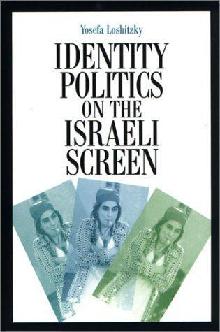
Identity Politics on the Israeli Screen
The struggle to forge a collective national identity at the expense of competing plural identities has preoccupied Israeli society since the founding of the state of Israel. In this book, Yosefa Loshitzky explores how major Israeli films of the 1980s and 1990s have contributed significantly to the process of identity formation by reflecting, projecting, and constructing debates around Israeli national identity. Loshitzky focuses on three major foundational sites of the struggle over Israeli identity: the Holocaust, the question of the Orient, and the so-called (in an ironic historical twist of the Jewish question) Palestinian question. The films she discusses raise fundamental questions about the identity of Jewish Holocaust survivors and their children (the second generation), Jewish immigrants from Muslim countries or Mizrahim (particularly the second generation of Israeli Mizrahim), and Palestinians. Recognizing that victimhood marks all the identities represented in the films under discussion, Loshitzky does not treat each identity group as a separate and coherent entity, but rather attempts to see the conflation, interplay, and conflict among them.
eBook

What does a Jew Want?
In the hopes of promoting justice, peace, and solidarity for and with the Palestinian people, Udi Aloni joins with Slavoj Zizek, Alain Badiou, and Judith Butler to confront the core issues of the Israeli-Palestinian conflict. Their bold question: Will a new generation of Israelis and Palestinians dare to walk together toward a joint Israel-Palestine? Through a collage of meditation, interview, diary, and essay, Aloni and his interlocutors present a personal, intellectual, and altogether provocative account rich with the insights of philosophy and critical theory. They ultimately foresee the emergence of a binational Israeli-Palestinian state, incorporating the work of Walter Benjamin, Edward Said, and Jewish theology to recast the conflict in secular theological terms.
eBook
The Emergence of Israeli Orthodox Women Filmmakers
Israeli Orthodox Jewish women are, for the first time, using film to speak and reflect in a public voice upon various challenges and aspects of their lives that were previously taboo. This article, which draws upon in-depth interviews with twenty-six Orthodox Jewish women filmmakers, gives the reader a sense of the upheaval that these filmmakers are already creating and will continue to create both within the Orthodox Jewish world and within Israeli society. Many of the Orthodox Jewish women's films focus on subjects that are voice-less in their community, and topics concerning women's sexuality are especially noteworthy here. Each in her own way, the filmmakers discussed at length in this article proclaim agency and ask questions concerning the traditionally silenced topic of sexuality. These women are devoted not to religion's status quo but to Judaism and to their Jewish community. The filmmakers know about the oppression of women in Orthodox Judaism, and they want change. They tend not to view their filmmaking as their inner voice versus their community's voice—they embrace both and build a home for both.
Journal Article