
Catalogue Search | MBRL


Are you sure you want to remove the book from the shelf?

{{itemTitle}}
7
result(s) for
"Motion pictures Moral and ethical aspects United States History 20th century."
Sort by:


Better Left Unsaid
Better Left Unsaid is in the unseemly position of defending censorship from the central allegations that are traditionally leveled against it. Taking two genres generally presumed to have been stymied by the censor's knife—the Victorian novel and classical Hollywood film—this book reveals the varied ways in which censorship, for all its blustery self-righteousness, can actually be good for sex, politics, feminism, and art. As much as Victorianism is equated with such cultural impulses as repression and prudery, few scholars have explored the Victorian novel as a \"censored\" commodity—thanks, in large part, to the indirectness and intangibility of England's literary censorship process. This indirection stands in sharp contrast to the explicit, detailed formality of Hollywood's infamous Production Code of 1930. In comparing these two versions of censorship, Nora Gilbert explores the paradoxical effects of prohibitive practices. Rather than being ruined by censorship, Victorian novels and Hays Code films were stirred and stimulated by the very forces meant to restrain them.
eBook

Film and the American Moral Vision of Nature
With his square, bulldoggish stature, signature rimless glasses, and inimitable smile-part grimace, part snarl-Theodore Roosevelt was an unforgettable figure, imprinted on the American memory through photographs, the chiseled face of Mount Rushmore, and, especially, film. At once a hunter, explorer, naturalist, woodsman, and rancher, Roosevelt was the quintessential frontiersman, a man who believed that only nature could truly test and prove the worth of man. A documentary he made about his 1909 African safari embodied aggressive ideas of masculinity, power, racial superiority, and the connection between nature and manifest destiny. These ideas have since been reinforced by others-Jesse \"Buff alo\" Jones, Paul Rainey, Martin and Osa Johnson, and Walt Disney. Using Roosevelt as a starting point, filmmaker and scholar Ronald Tobias traces the evolution of American attitudes toward nature, attitudes that remain, to this day, remarkably conflicted, complex, and instilled with dreams of empire.
eBook

Monitoring the Movies
As movies took the country by storm in the early twentieth century, Americans argued fiercely about whether municipal or state authorities should step in to control what people could watch when they went to movie theaters, which seemed to be springing up on every corner. Many who opposed the governmental regulation of film conceded that some entity—boards populated by trusted civic leaders, for example—needed to safeguard the public good. The National Board of Review of Motion Pictures (NB), a civic group founded in New York City in 1909, emerged as a national cultural chaperon well suited to protect this emerging form of expression from state incursions. Using the National Board’s extensive files, Monitoring the Movies offers the first full-length study of the NB and its campaign against motion-picture censorship. Jennifer Fronc traces the NB’s Progressive-era founding in New York; its evolving set of “standards\" for directors, producers, municipal officers, and citizens; its “city plan,\" which called on citizens to report screenings of condemned movies to local officials; and the spread of the NB’s influence into the urban South. Ultimately, Monitoring the Movies shows how Americans grappled with the issues that arose alongside the powerful new medium of film: the extent of the right to produce and consume images and the proper scope of government control over what citizens can see and show.
eBook

The black stork : eugenics and the death of \defective\ babies in American medicine and motion pictures since 1915
In the late 1910s Dr. Harry J. Haiselden, a prominent Chicago surgeon, electrified the nation by allowing the deaths of at least six infants he diagnosed as “defectives”. Seeking to publicize his efforts to eliminate the “unfit”, he displayed the dying infants to journalists, wrote about them for the Hearst newspapers, and starred in a feature film about his crusade. Prominent Americans from Clarence Darrow to Helen Keller rallied to his support. The Black Stork tells this startling story, based on newly-rediscovered sources and long-lost motion pictures, in order to illuminate many broader controversies. The books shows how efforts to improve human heredity (eugenics) became linked with mercy-killing (euthanasia) and with race, class, gender and ethnic hatreds. It documents how mass culture changed the meaning of medical concepts like “heredity” and “disease”, and how medical controversies helped shape the commercial mass media. It demonstrates how cultural values influence science, and how scientific claims of objectivity have shaped modern culture. While focused on the formative years of early 20th century America, The Black Stork traces these issues from antiquity to the rise of Nazism, and to the “Baby Doe”, “assisted suicide” and human genome initiative debates of today.
eBook

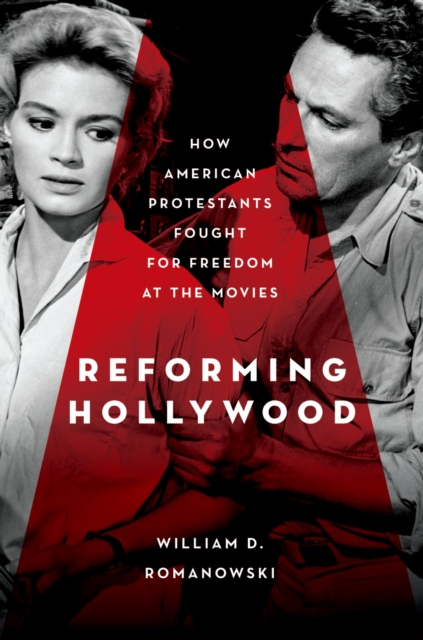
Reforming Hollywood : how American Protestants fought for freedom at the movies
This book chronicles for the first time the long and varied efforts of American Protestants—from Presbyterians and Episcopalians to fundamentalists and evangelicals—to influence the film industry. Representing the reigning religious and cultural establishment at the dawn of the cinema, Protestants struggled to formulate a constructive approach to Hollywood, which was a crucial site where non-Protestant and non-Christian players gained a new voice in the public arena. Drawing on personal interviews and previously untouched archival sources, this interdisciplinary study describes how mainline church leaders lobbied filmmakers to promote the nation’s moral health and, perhaps surprisingly, how they have by and large opposed government censorship, preferring instead self-regulation by both the industry and individual conscience. Tensions with Catholics, too, loomed large—many Protestant clergy feared the influence of the Legion of Decency more than Hollywood’s corrupting power. The rise of the evangelical movement in the 1970s radically altered the picture in contradictory ways. Even as born-again clergy denounced “Hollywood elites,” major studios began exploiting the emergence of a lucrative evangelical market. This book presents an original historical exploration that provides a corrective to the overemphasis on Catholic influence and makes a compelling case for a reassessment of the role that Protestants played in film regulation throughout the last century.
eBook