
Catalogue Search | MBRL


Are you sure you want to remove the book from the shelf?

{{itemTitle}}
10
result(s) for
"Motion pictures Production and direction United States Fiction."
Sort by:

The making of another major motion picture masterpiece
\"From the Academy Award-winning actor and best-selling author: his debut novel. The story of the making of a colossal, star-studded, multimillion-dollar superhero action film...and the humble comic book that inspired it. PART ONE of this story takes place in 1947. A troubled soldier, returning from the war, meets his talented five-year-old nephew, leaves an indelible impression, and then disappears for 23 years. Cut to 1970: The nephew, now drawing underground comic books in Oakland, California, reconnects with his uncle and, remembering the comic book he saw when he was five, draws a new version with his uncle as a World War II fighting hero. Cut to the present day: A commercially successful director discovers the 1970 comic book and decides to turn it into a contemporary superhero movie. Cue the cast: We meet the film's extremely difficult male star, his wonderful leading lady, the eccentric writer/director, the producer, the go-fer production assistant, and everyone else on both sides of the camera. Funny, touching, and wonderfully thought-provoking, this is a novel not only about the making of a movie, but also about the changes in America and American culture since World War II. Bonus material: Interspersed throughout are the three comic books that are featured in the story - all created by Hanks himself - including the comic book that becomes the official tie-in to this novel's \"major motion picture masterpiece.\"\"-- Provided by publisher.
Book

The Comic Book Film Adaptation
In the summer of 2000X-Mensurpassed all box office expectations and ushered in an era of unprecedented production of comic book film adaptations. This trend, now in its second decade, has blossomed into Hollywood's leading genre. From superheroes to Spartan warriors,The Comic Book Film Adaptationoffers the first dedicated study to examine how comic books moved from the fringes of popular culture to the center of mainstream film production.
Through in-depth analysis, industry interviews, and audience research, this book charts the cause-and-effect of this influential trend. It considers the cultural traumas, business demands, and digital possibilities that Hollywood faced at the dawn of the twenty-first century. The industry managed to meet these challenges by exploiting comics and their existing audiences. However, studios were caught off-guard when these comic book fans, empowered by digital media, began to influence the success of these adaptations. Nonetheless, filmmakers soon developed strategies to take advantage of this intense fanbase, while codifying the trend into a more lucrative genre, the comic book movie, which appealed to an even wider audience. Central to this vibrant trend is a comic aesthetic in which filmmakers utilize digital filmmaking technologies to engage with the language and conventions of comics like never before.
The Comic Book Film Adaptationexplores this unique moment in which cinema is stimulated, challenged, and enriched by the once-dismissed medium of comics.
eBook

Capturing Digital Media
Why are filmmakers such as J.J. Abrams, Christopher Nolan and Quentin Tarantino continuing to shoot their movies on celluloid in the digital age of cinema? Are these filmmakers choosing the photochemical process of celluloid images purely for aesthetics purposes? Or could their preference for celluloid have something to do with analogue’s intimate connection to the subject of lack and desire? Capturing Digital Media: Perfection and Imperfection in Contemporary Film and Television examines the relationship between the perfection of the digital form and the imperfection of the human subject in recent film and television. Using a number of a key psychoanalytic terms and new media concepts, Capturing Digital Mediashows that the necessity of imperfection is where we locate the human subject of desire within the binary logic of the digital. It argues that the perfection of digital must be wounded by forms of imperfection in order to make media texts such as film and television desirable. But even as films and television texts incorporate forms of imperfection, digital perfection remains a powerful attraction in our engagement with moving images, such as high definition screens, spectacular digital effects, and state-of-the-art sound
eBook

Maximum Movies—Pulp Fictions
In the words of Richard Maltby . . . \"Maximum Movies--Pulp Fictions describes two improbably imbricated worlds and the piece of cultural history their intersections provoked.\" One of these worlds comprises a clutch of noisy, garish pulp movies--Kiss Me Deadly, Shock Corridor, Fixed Bayonets!, I Walked with a Zombie, The Lineup, Terror in a Texas Town, Ride Lonesome--pumped out for the grind houses at the end of the urban exhibition chain by the studios' B-divisions and fly-by-night independents. The other is occupied by critics, intellectuals, cinephiles, and filmmakers such as Jean-Luc Godard, Manny Farber, and Lawrence Alloway, who championed the cause of these movies and incited the cultural guardians of the day by attacking a rigorously policed canon of tasteful, rarified, and ossified art objects. Against the legitimate, and in defense of the illegitimate, in an insolent and unruly manner, they agitated for the recognition of lurid sensational crime stories, war pictures, fast-paced Westerns, thrillers, and gangster melodramas were claimed as examples of the true, the real, and the authentic in contemporary culture--the foundation upon which modern film studies sits.
eBook

More Than Meets the Eye
A rare look at the role of special effects in creating
fictional worlds and transmedia franchises From comic book
universes crowded with soaring superheroes and shattering
skyscrapers to cosmic empires set in far-off galaxies, today's
fantasy blockbusters depend on visual effects. Bringing science
fiction from the studio to your screen, through film, television,
or video games, these special effects power our entertainment
industry. More Than Meets the Eye delves into the world of
fantastic media franchises to trace the ways in which special
effects over the last 50 years have become central not just to
transmedia storytelling but to worldbuilding, performance, and
genre in contemporary blockbuster entertainment. More Than Meets
the Eye maps the ways in which special effects build consistent
storyworlds and transform genres while traveling from one media
platform to the next. Examining high-profile franchises in which
special effects have played a constitutive role such as Star Trek,
Star Wars, The Matrix, and The Lord of the Rings, as well as more
contemporary franchises like Pirates of the Caribbean and Harry
Potter, Bob Rehak analyzes the ways in which production practices
developed alongside the cultural work of industry professionals. By
studying social and cultural factors such as fan interaction, this
book provides a context for understanding just how much
multiplatform storytelling has come to define these megahit
franchises. More Than Meets the Eye explores the larger history of
how physical and optical effects in postwar Hollywood laid the
foundation for modern transmedia franchises and argues that special
effects are not simply an adjunct to blockbuster filmmaking, but
central agents of an entire mode of production.
eBook

D.A. Pennebaker
This volume is the first book-length study of the extensive career and prolific works of D.A. Pennebaker, one of the pioneers of direct cinema, a documentary form that emphasizes observation and a straightforward portrayal of events. With a career spanning decades, Pennebaker's many projects have included avant-garde experiments (Daybreak Express), ground-breaking television documentaries (Primary), celebrity films (Dont Look Back), concert films (Monterey Pop), and innovative fusions of documentary and fiction (Maidstone)._x000B__x000B_Exploring the concept of \"performing the real,\" Keith Beattie's insightful analysis interprets Pennebaker's films as performances in which the act of filming is in itself a performative transgression of the norms of purely observational documentary. He examines the ways in which Pennebaker's presentation of unscripted everyday performances is informed by connections between documentary filmmaking and other experimental movements such as the New American Cinema. Through his collaborations with such various artists as Richard Leacock, Shirley Clarke, Norman Mailer, and Jean-Luc Godard, Pennebaker has continually reworked and redefined the forms of documentary filmmaking. This book also includes a recent interview with the director and a full filmography.
eBook
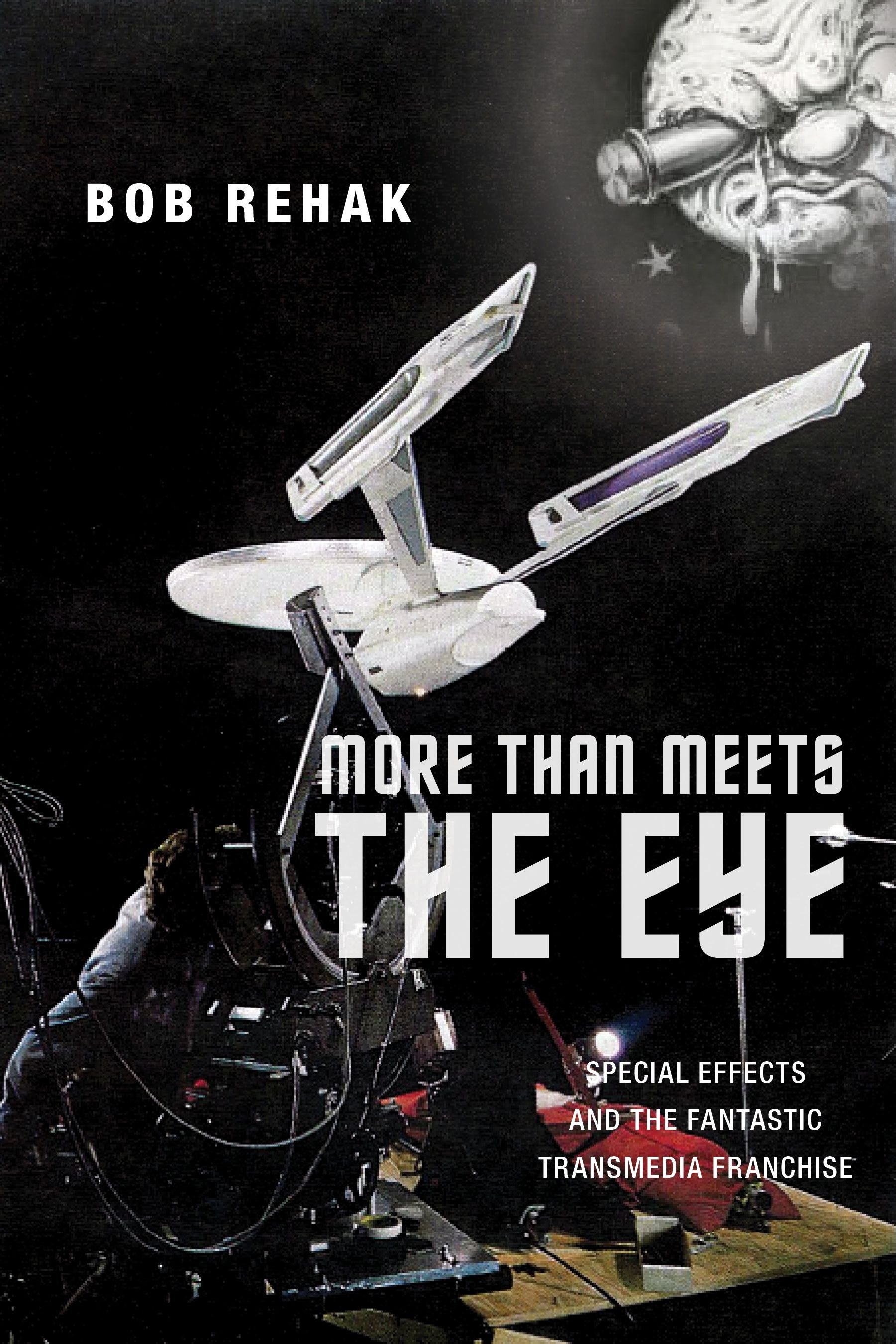
More Than Meets the Eye
A rare look at the role of special effects in creating fictional worlds and transmedia franchises From comic book universes crowded with soaring superheroes and shattering skyscrapers to cosmic empires set in far-off galaxies, today’s fantasy blockbusters depend on visual effects. Bringing science fiction from the studio to your screen, through film, television, or video games, these special effects power our entertainment industry. More Than Meets the Eye delves into the world of fantastic media franchises to trace the ways in which special effects over the last 50 years have become central not just to transmedia storytelling but to worldbuilding, performance, and genre in contemporary blockbuster entertainment. More Than Meets the Eye maps the ways in which special effects build consistent storyworlds and transform genres while traveling from one media platform to the next. Examining high-profile franchises in which special effects have played a constitutive role such as Star Trek, Star Wars, The Matrix, and The Lord of the Rings, as well as more contemporary franchises like Pirates of the Caribbean and Harry Potter, Bob Rehak analyzes the ways in which production practices developed alongside the cultural work of industry professionals. By studying social and cultural factors such as fan interaction, this book provides a context for understanding just how much multiplatform storytelling has come to define these megahit franchises. More Than Meets the Eye explores the larger history of how physical and optical effects in postwar Hollywood laid the foundation for modern transmedia franchises and argues that special effects are not simply an adjunct to blockbuster filmmaking, but central agents of an entire mode of production.
eBook

Company of Contradictions: Puerto Rico's Tropical Film Company (1916-––1917)
In 1916, Rafael Colorado D'Assoy, Nemesio Canales and Luis Lloréééns Torres formed the Tropical Film Company in Puerto Rico, one of the first motion picture production company to be organized there by local residents. The essay discusses how Tropical's small number of fiction and non-fiction releases aligned with the founders' social and political agenda, and suggests reasons for the company's ultimate demise in 1917.
Journal Article

The Influence of Fiction and Cinematic Excess on the Factual
Many popular Hollywood films about Oceania or set in the Pacific have been criticised and dismissed by Pacific scholars and film-makers as grossly misrepresentative of the region. Nevertheless, both critically acclaimed and populist films form an integral part of the mediascape within which more contemporary factual films by and about Pacific communities are situated. In many cases the dialectic between Hollywood and contemporary performance in the Pacific is strategic and self-conscious; however, in documentary formats, this dialectic can be problematic and consequently overlooked or repressed. Drawing upon the operations of irony in contemporary Pacific screen production, Thompson's description of cinematic excess and Nichols's elaboration of documentary excess, this paper examines how the critically acclaimed, anti-colonial, pro-self-determination factual film Act of War: Overthrow of the Hawaiian Nation reflects the return of repressed Hollywood imagery in its discursive practices.
Journal Article