
Catalogue Search | MBRL


Are you sure you want to remove the book from the shelf?

{{itemTitle}}
2,966
result(s) for
"Motion pictures-History"
Sort by:

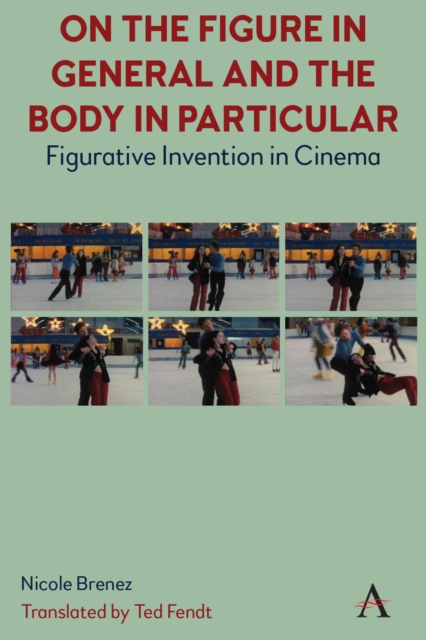
On The Figure In General And The Body In Particular
Films fill our imagination with figures, figurines, and talismans. They ceaselessly rework the same archetypes and invent troubling prototypes – especially when they establish a deeper relationship to reality. How do we understand these presences that are both so characteristic and so diverse in cinema? How does film deal with bodies, movements, and gestures? Why are we so drawn to these shadows, silhouettes, and hypothetical beings? What organizes the figurative values at work in a film? How do cinematic creatures circulate from film to film and image to image? How does film articulate the links between the abstract and figurative? Is it possible to write a history of figurative forms? Starting from films themselves and works that are both classical (Sergei Eisenstein, Roberto Rossellini, Orson Welles) and contemporary (Abel Ferrara, Brian DePalma, Patricia Mazuy), celebrated (Robert Bresson, John Cassavetes, Ken Jacobs, Paul Sharits) and overlooked (Al Razutis, Jean Genet, Monte Hellman, and John Travolta), from auteurs as well as aesthetic questions (representations of dance, the naked body, character development…), the essays in this volume, most available for the first in English, aim to open a field that has been neglected by analysis, while also suggesting the tools necessary to understanding figurative phenomena specific to cinema.
eBook


Mussolini’s dream factory
The intersection between film stardom and politics is an understudied phenomenon of Fascist Italy, despite the fact that the Mussolini regime deemed stardom important enough to warrant sustained attention and interference. Focused on the period from the start of sound cinema to the final end of Fascism in 1945, this book examines the development of an Italian star system and evaluates its place in film production and distribution. The performances and careers of several major stars, including Isa Miranda, Vittorio De Sica, Amedeo Nazzari, and Alida Valli, are closely analyzed in terms of their relationships to the political sphere and broader commercial culture, with consideration of their fates in the aftermath of Fascism. A final chapter explores the place of the stars in popular memory and representations of the Fascist film world in postwar cinema.
eBook

Ethnic minority children in post-socialist Chinese cinema : allegory, identity and geography
\"This book examines the surprisingly large number of films about ethnic minority children in China, considering key questions such as Why are ethnic minority children becoming more intriguing to Chinese filmmakers? What are their roles in the films literally and allegorically? And how are they placed on screen geographically and why? It argues that ethnic minority children's appeal lies in their special relationship with childhood, ethnicity, nationalism and rurality; and that for dominant Han urban adults and elite ethnic minorities they serve as \"the other\" for these people's construction of themselves as self-conscious modern subjects during China's rapid social-political transformations. This book explores the diversity of ways in which both Han and ethnic minority filmmakers take up the special features of ethnic minority children to facilitate their expression of certain ideas or ideals, as well as the roles of these films in their directing careers\"-- Provided by publisher.
Book

Constructing the Image of the Mexican Revolution
With a cast ranging from Pancho Villa to Dolores del Río and Tina Modotti, Constructing the Image of the Mexican Revolution demonstrates the crucial role played by Mexican and foreign visual artists in revolutionizing Mexico’s twentieth-century national iconography. Investigating the convergence of cinema, photography, painting, and other graphic arts in this process, Zuzana Pick illuminates how the Mexican Revolution’s timeline (1910–1917) corresponds with the emergence of media culture and modernity. Drawing on twelve foundational films from Que Viva Mexico! (1931–1932) to And Starring Pancho Villa as Himself (2003), Pick proposes that cinematic images reflect the image repertoire produced during the revolution, often playing on existing nationalist themes or on folkloric motifs designed for export. Ultimately illustrating the ways in which modernism reinvented existing signifiers of national identity, Constructing the Image of the Mexican Revolution unites historicity, aesthetics, and narrative to enrich our understanding of Mexicanidad.
eBook

Moments that made the movies
In his first fully illustrated work, David Thomson breaks new ground by focusing in on a series of moments?which his readers will also experience in beautifully reproduced imagery?from seventy-two films across a 100-year-plus span. An indispensable counterpart to both his classic Biographical Dictionary of Film (called ?a miracle? by Sight and Sound) and his lauded recent history, The Big Screen (?a pungently written, brilliant book? according to David Denby), Moments takes readers on an unprecedented visual tour, where the specifics of the imagery the reader is seeing are inextricably tied to the text. Thomson?s moments range from a set of Eadweard Muybridge?s pioneering photographs to sequences in films from the classic?Citizen Kane, Sunset Boulevard, The Red Shoes?to the unexpected?The Piano Teacher, Burn After Reading. The excitement of Moments?s dynamic visuals will be matched only by the discussion it incites in film circles, as readers revisit their own list of memorable moments and then re-experience the films?both those included on Thomson's list and from their own life?as never before. Moments That Made the Movies will undoubtedly reaffirm Thomson's place as?according to John Banville??the greatest living writer on the movies.?
Book

Fiery Cinema
What was cinema in modern China? It was, this book tells us, a dynamic entity, not strictly tied to one media technology, one mode of operation, or one system of aesthetic code. It was, in Weihong Bao's term, an affective medium, a distinct notion of the medium as mediating environment with the power to stir passions, frame perception, and mold experience. InFiery Cinema,Bao traces the permutations of this affective medium from the early through the mid-twentieth century, exploring its role in aesthetics, politics, and social institutions.
Mapping the changing identity of cinema in China in relation to Republican-era print media, theatrical performance, radio broadcasting, television, and architecture, Bao has created an archaeology of Chinese media culture. Within this context, she grounds the question of spectatorial affect and media technology in China's experience of mechanized warfare, colonial modernity, and the shaping of the public into consumers, national citizens, and a revolutionary collective subject. Carrying on a close conversation with transnational media theory and history, she teases out the tension and affinity between vernacular, political modernist, and propagandistic articulations of mass culture in China's varied participation in modernity.
Fiery Cinemaadvances a radical rethinking of affect and medium as a key insight into the relationship of cinema to the public sphere and the making of the masses. By centering media politics in her inquiry of the forgotten future of cinema, Bao makes a major intervention into the theory and history of media.
eBook

Directory of world cinema. Volume 3, Australia & New Zealand
Offers an in-depth look at the cinema produced in these two countries since the turn of the 20th century. Through essays about prominent genres and themes, profiles of directors, and more, this guide explores the diversity and distinctiveness of films from Australia and New Zealand from Whale Rider to The Piano to Wolf Creek.
Book
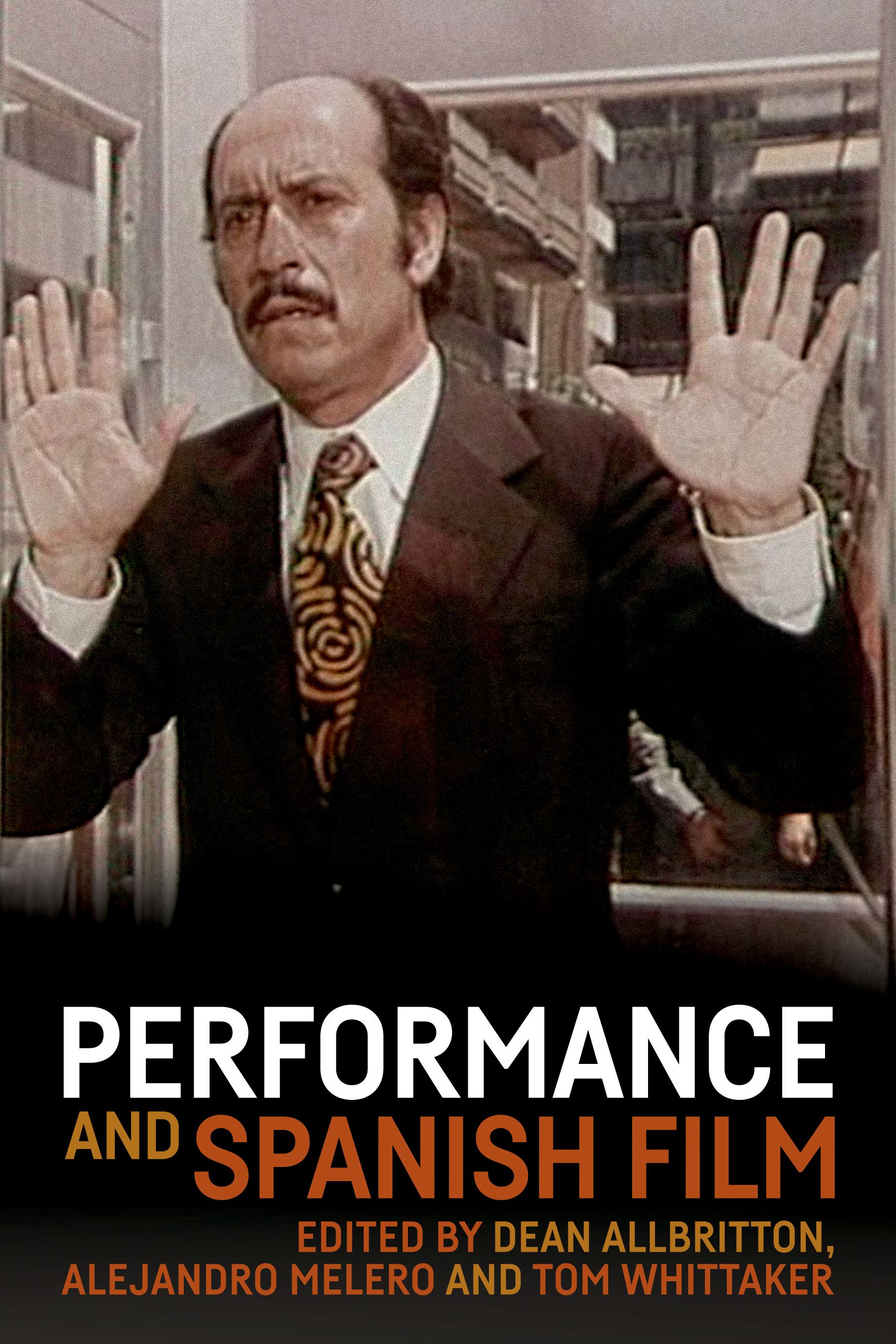
Performance and Spanish film
Performance and Spanish film is the first book to provide a detailed study of screen acting in Spanish film. With fifteen original essays by leading scholars of Spanish film, the book casts light on the manifold meanings, methods and influences of Spanish screen performance, from the silent era to the present day. In doing so, the book provides bold new readings of the work of significant Spanish actors and filmmakers, from Javier Bardem, Penélope Cruz and Alfredo Landa, to Pedro Almodóvar, Carlos Saura and Alejandro Amenábar. The fine-grained study of acting in each chapter also provides a means of exploring broader questions surrounding Spanish film practices, culture and society.Performance and Spanish film will be essential reading for both students and scholars of Spanish film alike, as well as to those more broadly interested in the history of screen acting.
eBook