
Catalogue Search | MBRL


Are you sure you want to remove the book from the shelf?

{{itemTitle}}
10,975
result(s) for
"Mountain ecosystems"
Sort by:

Biodiversity of alpine zones
\"Discusses the variety of living things in the ecosystem of alpine regions\"--Provided by publisher.
Book

Land use and land cover change in a tropical mountain landscape of northern Ecuador: Altitudinal patterns and driving forces
Tropical mountain ecosystems are threatened by land use pressures, compromising their capacity to provide ecosystem services. Although local patterns and interactions among anthropogenic and biophysical factors shape these socio-ecological systems, the analysis of landscape changes and their driving forces is often qualitative and sector oriented. Using the Driver-Pressure-State-Impact-Response (DPSIR) framework, we characterized land use land cover (LULC) dynamics using Markov chain probabilities by elevation and geographic settings and then integrated them with a variety of publicly available geospatial and temporal data into a Generalized Additive Model (GAM) to evaluate factors driving such landscape dynamics in a sensitive region of the northern Ecuadorian Andes. In previous agricultural land located at lower elevations to the east of the studied territory, we found a significant expansion of floriculture (13 times) and urban areas (25 times), reaching together almost 10% of the territory from 1990 to 2014. Our findings also revealed an unexpected trend of páramo stability (0.75–0.90), but also a 40% reduction of montane forests, with the lowest probability (<0.50) of persistence in the elevation band of 2800–3300 m; agricultural land is replacing this LULC classes at higher elevation. These trends highlight the increasing threat of permanently losing the already vulnerable native mountain biodiversity. GAMs of socio-economic factors, demographic, infrastructure variables, and environmental parameters explained between 21 to 42% of the variation of LULC transitions observed in the study region, where topographic factors was the main drivers of change. The conceptual and methodological approach of our findings demonstrate how dynamic patterns through space and time and their explanatory drivers can assist local authorities and decision makers to improve sustainable resource land management in vulnerable landscapes such as the tropical Andes in northern Ecuador.
Journal Article
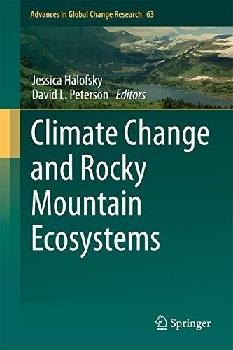
Climate change and Rocky Mountain ecosystems
\"This book is the result of a team of approximately 100 scientists and resource managers who worked together for two years to understand the effects of climatic variability and change on water resources, fisheries, forest vegetation, non-forest vegetation, wildlife, recreation, cultural resources and ecosystem services. Adaptation options, both strategic and tactical, were developed for each resource area. This information is now being applied in the northern rocky Mountains to ensure long-term sustainability in resource conditions. The volume chapters provide a technical assessment of the effects of climatic variability and change on natural and cultural resources, based on best available science, including new analyses obtained through modeling and synthesis of existing data. Each chapter also contains a summary of adaptation strategies (general) and tactics (on-the-ground actions) that have been developed by science-management teams\"--Back cover.
Book

Study on the Water and Heat Fluxes of a Very Humid Forest Ecosystem and Their Relationship with Environmental Factors in Jinyun Mountain, Chongqing
The high-humidity mountain forest ecosystem (HHMF) of Jinyun Mountain in Chongqing is a fragile ecosystem that is sensitive to climate change and human activities. Because it is shrouded in fog year-round, illumination in the area is seriously insufficient. However, the flux (energy, water) exchanges (FEs) in this ecosystem and their influencing factors are not clear. Using one-year data from flux towers with a double-layer (25 m and 35 m) eddy covariance (EC) observation system, we proved the applicability of the EC method on rough underlying surfaces, quantified the FEs of HHMFs, and found that part of the fog might also be observed by the EC method. The observation time was separated from day and night, and then the environmental control of the FEs was determined by stepwise regression analysis. Through the water balance, it was proven that the negative value of evapotranspiration (ETN), which represented the water vapor input from the atmosphere to the ecosystem, could not be ignored and provided a new idea for the possible causes of the evaporation paradox. The results showed that the annual average daily sensible heat flux (H) and latent heat flux (LE) ranged from −126.56 to 131.27 W m−2 and from −106.7 to 222.27 W m−2, respectively. The annual evapotranspiration (ET), positive evapotranspiration (ETP), and negative evapotranspiration (ETN) values were 389.31, 1387.76, and −998.45 mm, respectively. The energy closure rate of the EC method in the ecosystems was 84%. Fog was the ETN observed by the EC method and an important water source of the HHMF. Therefore, the study area was divided into subtropical mountain cloud forests (STMCFs). Stepwise regression analysis showed that the H and LE during the day were mainly determined by radiation (Rn) and temperature (Tair), indicating that the energy of the ecosystem was limited, and future climate warming may enhance the FEs of the ecosystem. Additionally, ETN was controlled by wind speed (WS) in the whole period, and WS was mainly affected by altitude and temperature differences within the city. Therefore, fog is more likely to occur in the mountains near heat island cities in tropical and subtropical regions. This study emphasizes that fog, as an important water source, is easily ignored in most EC methods and that there will be a large amount of fog in ecosystems affected by future climate warming, which can explain the evaporation paradox.
Journal Article

Topographic-mediated climate-NPP relationships in subtropical mountain heterogeneity units
Mountain ecosystems have experienced significant anthropogenic disturbances, resulting in severe degradation. Due to their intricate topography, climatic zonation, and spatial heterogeneity, the spatial and temporal evolution of net productivity in mountain ecosystems and the underlying driving factors remain unclear. This study focuses on the Southern Hilly Mountainous Belt of China (SHMB) to investigate the trends in net primary productivity (NPP) and its response mechanism from 2001 to 2020. The study employs Mann–Kendall trend test, Convergent Cross Mapping analysis, Pearson correlation analysis, and Geographical Detectors. The findings of this study are as follows: (1) The spatial distribution of NPP in the entire SHMB is significantly influenced by LULC (0.43 > q > 0.14, p < 0.005). (2) Human activities have significantly enhanced the carbon sequestration capacity in low-altitude areas (< 650 m) and gentle slope areas (< 16°). (3) Temperature, as the primary driving factor, has influenced the changes in NPP in the SHMB region over the 20 years. However, in the steep slope areas of the eastern and central regions of the SHMB, precipitation has significantly hindered the increase in NPP (-0.17 > q > -0.32, p < 0.05). In summary, human activities have significantly and positively driven the increase in NPP. However, in the central and eastern regions of SHMB, it is also necessary to guard against the ecological degradation caused by increased precipitation. These findings contribute to an enhanced understanding of the carbon cycle process crucial for achieving carbon neutrality, enhancing ecological functions, and studying global change.
Journal Article

Airborne HySpex Hyperspectral Versus Multitemporal Sentinel-2 Images for Mountain Plant Communities Mapping
Climate change and anthropopression significantly impact plant communities by leading to the spread of expansive and alien invasive plants, thus reducing their biodiversity. Due to significant elevation gradients, high-mountain plant communities in a small area allow for the monitoring of the most important environmental changes. Additionally, being a tourist attraction, they are exposed to direct human influence (e.g., trampling). Airborne hyperspectral remote sensing is one of the best data sources for vegetation mapping, but flight campaign costs limit the repeatability of surveys. A possible alternative approach is to use satellite data from the Copernicus Earth observation program. In our study, we compared multitemporal Sentinel-2 data with HySpex airborne hyperspectral images to map the plant communities on Tatra Mountains based on open-source R programing implementation of Random Forest and Support Vector Machine classifiers. As high-mountain ecosystems are adapted to topographic conditions, the input of Digital Elevation Model (DEM) derivatives on the classification accuracy was analyzed and the effect of the number of training pixels was tested to procure practical information for field campaign planning. For 13 classes (from rock scree communities and alpine grasslands to montane conifer and deciduous forests), we achieved results in the range of 76–90% F1-score depending on the data set. Topographic features: digital terrain model (DTM), normalized digital surface model (nDSM), and aspect and slope maps improved the accuracy of HySpex spectral images, transforming their minimum noise fraction (MNF) bands and Sentinel-2 data sets by 5–15% of the F1-score. Maps obtained on the basis of HySpex imagery (2 m; 430 bands) had a high similarity to maps obtained on the basis of multitemporal Sentinel-2 data (10 m; 132 bands; 11 acquisition dates), which was less than one percentage point for classifications based on 500–1000 pixels; for sets consisting of 50–100 pixels, Random Forest (RF) offered better accuracy.
Journal Article

Soil organic carbon stock and chemical composition along an altitude gradient in the Lushan Mountain, subtropical China
Soil organic carbon (SOC) stock in mountain ecosystems is highly heterogeneous because of differences in soil, climate, and vegetation with elevation. Little is known about the spatial distribution and chemical composition of SOC along altitude gradients in subtropical mountain regions, and the controlling factors remain unclear. In this study, we investigated the changes in SOC stock and chemical composition along an elevation gradient (219, 405, 780, and 1268 m a.s.l.) on Lushan Mountain, subtropical China. The results suggested that SOC stocks were significantly higher at high altitude sites (1268 m) than at low altitude ones (219, 405, and 780 m), but the lower altitude sites did not differ significantly. SOC stocks correlated positively with mean annual precipitation but negatively with mean annual temperature and litter C/N ratio. The variations in SOC stocks were related mainly to decreasing temperature and increasing precipitation with altitude, which resulted in decreased litter decomposition at high altitude sites. This effect was also demonstrated by the chemical composition of SOC, which showed lower alkyl C and higher O-alkyl C contents at high altitude sites. These results will improve the understanding of soil C dynamics and enhance predictions of the responses of mountain ecosystem to global warming under climate change.
Journal Article

Residents' Versus Visitors' Knowledge and Valuation of Aquatic Mountain Ecosystems in the Catalan Pyrenees
Understanding the perceptions of local residents of and visitors to mountain protected areas in terms of their knowledge of and the value they place on aquatic ecosystems is crucial to assess whether nature management and conservation actions will be accepted. This study analyzed the perceptions of visitors to and local residents of the Aigüestortes i Estany de Sant Maurici National Park and the Alt Pirineu Natural Park, both in the Catalan Pyrenees, in relation to aquatic mountain ecosystems. A 10 question survey was conducted on their knowledge and valuation of aquatic mountain ecosystems. Generalized linear models were applied to the responses, testing users' resident/visitor status and sociodemographic trends as predictor variables. Residents reported a greater level of knowledge of aquatic ecosystems than visitors, which contrasts with the higher valuation given by visitors. Specifically, young residents reported the lowest knowledge, and older residents valued the ecosystems least. Residents of Alt Pirineu Natural Park valued aquatic ecosystems lowest overall, and women residents valued specific aquatic ecosystems lowest. Respondents also highly valued conservation actions linked to the LIFE+ LimnoPirineus project, although residents placed less value on these than visitors. This study helps to fill a gap in the literature on users' knowledge and valuation of aquatic mountain ecosystems in protected areas. In addition, it provides helpful background for the development of nature management and conservation actions for mountain protected areas.
Journal Article

Multitrophic diversity and biotic associations influence subalpine forest ecosystem multifunctionality
Biodiversity across multiple trophic levels is required to maintain multiple ecosystem functions. Yet it remains unclear how multitrophic diversity and species interactions regulate ecosystem multifunctionality. Here, combining data from 9 different trophic groups (including trees, shrubs, herbs, leaf mites, small mammals, bacteria, pathogenic fungi, saprophytic fungi, and symbiotic fungi) and 13 ecosystem functions related to supporting, provisioning, and regulating services, we used a multitrophic perspective to evaluate the effects of elevation, diversity, and network complexity on scale-dependent subalpine forest multifunctionality. Our results demonstrated that elevation and soil pH significantly modified species composition and richness across multitrophic groups and influenced multiple functions simultaneously. We present evidence that species richness across multiple trophic groups had stronger effects on multifunctionality than species richness at any single trophic level. Moreover, biotic associations, indicating the complexity of trophic networks, were positively associated with multifunctionality. The relative effects of diversity on multifunctionality increased at the scale of the larger community compared to a scale accounting for neighboring interactions. Our results highlight the paramount importance of scale- and context-dependent multitrophic diversity and interactions for a better understanding of mountain ecosystem multifunctionality in a changing world.
Journal Article

Mowing Facilitated Shoot and Root Litter Decomposition Compared with Grazing
Shoot and root litter are two major sources of soil organic carbon, and their decomposition is a crucial nutrient cycling process in the ecosystem. Altitude and land use could affect litter decomposition by changing the environment in mountain grassland ecosystems. However, few studies have investigated the effects of land use on litter decomposition in different altitudes. We examined how land-use type (mowing vs. grazing) affected shoot and root litter decomposition of a dominant grass (Bromus inermis) in mountain grasslands with two different altitudes in northwest China. Litterbags with 6 g of shoot or root were fixed in the plots to decompose for one year. The mass loss rate of the litter, and the environmental attributes related to decomposition, were measured. Litter decomposed faster in mowing than grazing plots, resulting from the higher plant cover and soil moisture but lower bulk density, which might promote soil microbial activities. Increased altitude promoted litter decomposition, and was positively correlated with soil moisture, soil organic carbon (SOC), and β-xylosidase activity. Our results highlight the diverse influences of land-use type on litter decomposition in different altitudes. The positive effects of mowing on shoot decomposition were stronger in lower than higher altitude compared to grazing due to the stronger responses of the plant (e.g., litter and aboveground biomass) and soil (e.g., soil moisture, soil bulk density, and SOC). Soil nutrients (e.g., SOC and soil total nitrogen) seemed to play essential roles in root decomposition, which was increased in mowing plots at lower altitude and vice versa at higher altitude. Therefore, grazing significantly decreased root mass loss at higher altitude, but slightly increased at lower altitude compared to mowing. Our results indicated that the land use might variously regulate the innate differences of the plant and edaphic conditions along an altitude gradient, exerting complex impacts in litter decomposition and further influencing carbon and nutrient cycling in mountain grasslands.
Journal Article