
Catalogue Search | MBRL


Are you sure you want to remove the book from the shelf?

{{itemTitle}}
287,651
result(s) for
"Mountains"
Sort by:

Mountains
Explores the world's mountains, discussing formation, the plants and animals that live there, and how they are used by people.
Book

Religion on the Rocks
We are nearly all intrigued by the petroglyphs and pictographs of the American Southwest, and we commonly ask what they “mean”. Religion on the Rocks redirects our attention to the equally important matter of what compelled ancient peoples to craft rock art in the first place. To examine this question, Aaron Wright presents a case study from Arizona's South Mountains, an area once flanked by several densely populated Hohokam villages. Synthesizing results from recent archaeological surveys, he explores how the mountains' petroglyphs were woven into the broader cultural landscape and argues that the petroglyphs are relics of a bygone ritual system in which people vied for prestige and power by controlling religious knowledge. The features and strategic placement of the rock art suggest this dimension of Hohokam ritual was participatory and prominent in village life. Around AD 1100, however, petroglyph creation and other ritual practices began to wane, denoting a broad transformation of the Hohokam social world. Wright’s examination of the South Mountains petroglyphs offers a novel narrative of how Hohokam villagers negotiated a concentration of politico-religious authority around platform mounds. Readers will come away with a better understanding of the Hohokam legacy and a greater appreciation for rock art's value to anthropology.
eBook

Where on earth are mountains?
Discusses how mountains form and explores different mountain ranges around the world.
Book

Himalayan perceptions
In the 1970s and 1980s many institutions, agencies and scholars believed that the Himalayan region was facing severe environmental disaster, due primarily to rapid growth in population that has caused extensive deforestation, which in turn has led to massive landsliding and soil erosion. This series of assumptions was first challenged in the book: The Himalayan Dilemma (1989: Ives and Messerli, Routledge). Nevertheless, the environmental crisis paradigm still commands considerable support, including logging bans in the mountain watersheds of China, India, and Thailand, and is constantly being promoted by the news media. Himalayan Perceptions identifies the confusion of misunderstanding, vested interests, changing perceptions, and institutional unwillingness to base development policy on sound scientific knowledge. It analyzes the large amount of new research published since 1989 and totally refutes the entire construct. It examines recent social and economic developments in the region and identifies warfare, guerrilla activities, and widespread oppression of poor ethnic minorities as the primary cause for the instability that pervades the entire region. It is argued that the development controversy is further confounded by exaggerated reporting, even falsification, by news media, environmental publications, and agency reports alike.
Jack D. Ives is Senior Advisor on Sustainable Mountain Development at The United Nations University, Tokyo.
1. The Myth of Himalayan Environmental Degradation 2. The Himalayan Region: An Overview 3. Status of the Mountain Forests 4. Geomorphology of Agricultural Landscapes 5. Flooding in Bangladesh: Causes and Perceptions of Causes 6. Mountain Hazards 7. Development of Tourism and its Impacts 8. Conflict, Tension, and the Oppression of Mountain Peoples 9. Prospects for Future Development: Assets and Obstacles 10. What are the facts? Misleading Perceptions, Misconceptions, and Distortions 11. Conclusions: Redefining the Dilemma; is there a way out?
eBook

At home in the mountains
Introduces some of the animals that call mountains home, discussing how they find food, what kind of structures they build to live in, and the threats to their habitat.
Book

Origins and Migrations in the Extended Eastern Himalayas
Origins and migration are core elements in the histories, identities and stories of Tibeto-Burman-speaking populations in the extended eastern Himalayas. These essays explore theories of explaining origins and migration, methods for studying them and expressions of them in local cultures.
eBook

The Rocky Mountains
Learn about the Rocky Mountains, how they were formed, where they are, and who and what live there.
Book

Foragers and Farmers of the Northern Kayenta Region
Foragers and Farmers of the Northern Kayenta Region presents the results of a major archaeological excavation project on Navajo tribal land in the Four Corners area and integrates this new information with existing knowledge of the archaeology of the northern Kayenta region. The excavation of thirty-three sites provides a cross section of prehistory from which Navajo Nation archaeologists retrieved a wealth of information about subsistence, settlement, architecture, and other aspects of past lifeways. The project’s most important contributions involve the Basketmaker and Archaic periods, and include a large number of radiocarbon dates on high-quality samples. Dating back to the early Archaic period (ca. 7000 BC) and ranging forward through the Basketmaker components to the Puebloan period, this volume is a powerful record of ancient peoples and their cultures. Detailed supplementary data will be available on the University of Utah Press Web site upon publication of this summary volume.
eBook
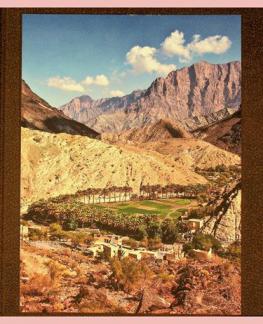

Ice, Fire, and Nutcrackers
Why do quaking aspens grow in prominent clumps rather than randomly scattered across the landscape? Why and how does a rufous hummingbird drop its metabolism to one-hundredth of its normal rate? Why do bull elk grow those enormous antlers? Using his experience as a biologist and ecologist, George Constantz illuminates these remarkable slices of mountain life in plain but engaging language. Whether it sketches conflict or cooperation, surprise or familiarity, each story resolves when interpreted through the theory of evolution by natural selection.
These provocative accounts of birds, insects, rodents, predators, trees, and flowers are sure to stir the reader’s curiosity. Who wouldn’t be intrigued by a rattlesnake’s ability to hunt in total darkness by detecting the infrared radiation emitted by a mouse? Or how white-tailed ptarmigan thrive in their high, treeless alpine environments -- even through the winter? The narratives, often brought home with a counterintuitive twist, invite readers to make new connections and broaden perspectives of a favorite outdoor place.
eBook