
Catalogue Search | MBRL


Are you sure you want to remove the book from the shelf?

{{itemTitle}}
1,148
result(s) for
"Mourning customs."
Sort by:

Mortuary Dialogues
Mortuary Dialogues presents fresh perspectives on death and mourning across the Pacific Islands. Through a set of rich ethnographies, the book examines how funerals and death rituals give rise to discourse and debate about sustaining moral personhood and community amid modernity and its enormous transformations. The book's key concept, \"mortuary dialogue,\" describes the different genres of talk and expressive culture through which people struggle to restore individual and collective order in the aftermath of death in the contemporary Pacific.
eBook


Death in the New World
Reminders of death were everywhere in the New World, from the epidemics that devastated Indian populations and the mortality of slaves working the Caribbean sugar cane fields to the unfamiliar diseases that afflicted Europeans in the Chesapeake and West Indies. According to historian Erik R. Seeman, when Indians, Africans, and Europeans encountered one another, they could not ignore the similarities in their approaches to death. All of these groups believed in an afterlife to which the soul or spirit traveled after death. As a result all felt that corpses-the earthly vessels for the soul or spirit-should be treated with respect, and all mourned the dead with commemorative rituals. Seeman argues that deathways facilitated communication among peoples otherwise divided by language and custom. They observed, asked questions about, and sometimes even participated in their counterparts' rituals. At the same time, insofar as New World interactions were largely exploitative, the communication facilitated by parallel deathways was often used to influence or gain advantage over one's rivals. In Virginia, for example, John Smith used his knowledge of Powhatan deathways to impress the local Indians with his abilities as a healer as part of his campaign to demonstrate the superiority of English culture. Likewise, in the 1610-1614 war between Indians and English, the Powhatans mutilated English corpses because they knew this act would horrify their enemies. Told in a series of engrossing narratives,Death in the New Worldis a landmark study that offers a fresh perspective on the dynamics of cross-cultural encounters and their larger ramifications in the Atlantic world.
eBook

The book of resting places : a personal history of where we lay the dead
\"In the aftermath of his father's untimely death and his family's indecision over what to do with the remains, [the author] became obsessed with the type and variety of places where we lay the dead to rest. The result is a singular collection of essays that weaves together history, mythology, journalism, and personal narrative into the author's search for a place to process grief\"--Amazon.com.
Book

The new death : mortality and death care in the twenty-first century
The New Death brings together scholars who are intrigued by today's rapidly changing death practices and attitudes. New and different ways of treating the body and memorializing the dead are proliferating across global cities. Using ethnographic, historical, and media-based approaches, the contributors to this volume focus on new attitudes and practices around mortality and mourning—from the possibilities of digitally enhanced afterlives to industrialized \"necro-waste, \" the ethics of care, the meaning of secular rituals, and the political economy of death. Together, the chapters coalesce around the argument that there are two major currents running through the new death—reconfigurations of temporality and of intimacy. Pushing back against the folklorization endemic to anthropological studies of death practices and the whiteness of death studies as a field, the chapters strive to override divisions between the Global South and the Anglophone world, focusing instead on syncretization, globalization, and magic within the mundane.
eBook

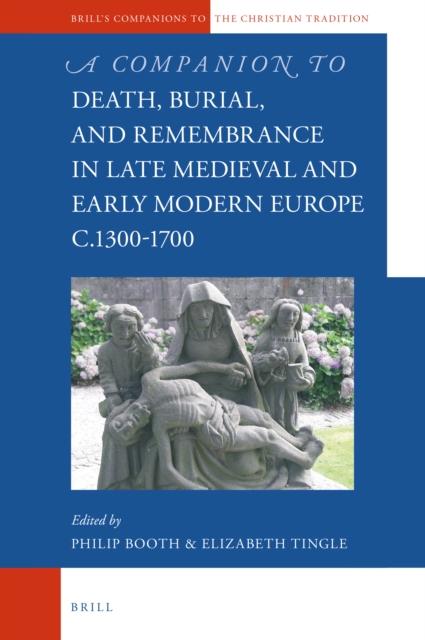
A Companion to Death, Burial, and Remembrance in Late Medieval and Early Modern Europe, c.1300-1700
This companion volume seeks to trace the development of ideas relating to death, burial, and the remembrance of the dead in Europe from ca.1300-1700.
eBook

Agonistic Mourning
Through an ethnographic account of the urban feminist and antinationalist movement Women in Black of Belgrade during the Yugoslav wars, Athanasiou shows that we might understand their dissident politics of mourning as a means to refigure political life beyond sovereign accounts of subjectivity and agency.
eBook